Network APIs: The business benefits of engaging with the API ecosystem

By Guy Daniels
Jun 10, 2025
To embed our video on your website copy and paste the code below:
<iframe src="https://www.youtube.com/embed/V_oVK8tcNY4?modestbranding=1&rel=0" width="970" height="546" frameborder="0" scrolling="auto" allowfullscreen></iframe>
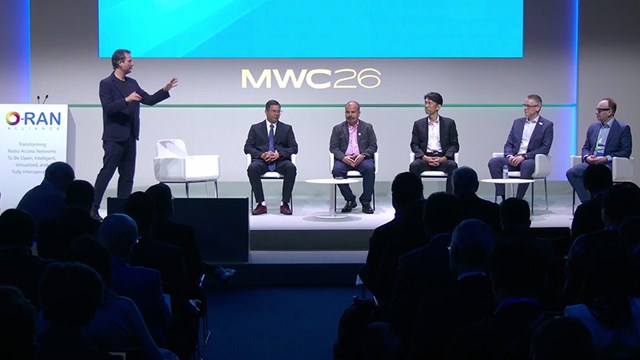
Welcome back everybody. Welcome back. Please take your seats, take your coffees, and enjoy the next hour and a half. We've got two back-to-back sessions now for you before we break for lunch. Now our next session builds on yesterday's coverage of network APIs and now we're going to look at the business benefits of engaging with the API ecosystem. We've already discussed the technical challenges of creating an AI first approach, but how does this lead to commercial opportunities? What are the best industry engagement strategies for service providers and can they move APIs beyond exposure and capture vertical specific monetization opportunities? Big questions there. So let's meet our guests who are going to help address them and I'm going to ask them to briefly introduce themselves starting on my far left with Henry.
Henry Calvert, GSMA (01:23):
Hi, I am Henry Calvert. I'm head of networks at the GSMA. I'm also the industry lead for open gateway. And open gateway is the exposure of network capabilities through APIs.
Geoff Hollingworth, Rakuten Symphony (01:37):
Geoff Hollingworth, I work with Rakuten Symphony,
Alex Reichl, Liberty Global (01:42):
Alex Reichl. I'm VP of Mobile and API services at Liberty Global.
Peter Arbitter, Aduna (01:47):
Peter Arbitter, the chief commercial officer of Aduna, a joint venture of 12 leading telcos. And Ericsson,
Guy Daniels, TelecomTV (01:56):
Thank you very much. Thank you everybody. Well, Peter has kindly agreed to be our co-host for this session, so I'm going to ask Peter to take to the lectern for a special DSP leaders address, which will frame our discussion. So Peter, if like to go towards the lectern. Thank you.
Peter Arbitter, Aduna (02:10):
Yeah, thanks a lot. So I wanted to reflect on yesterday's evening. I think it was really a great thing. Perfect location, good discussion. So I was in a discussion with Otter from Orange when Anne came by and are you there? Saw you earlier from vt. And she asked that one question and said, I mean, you know what? APIs, that's probably not really new and it wasn't that successful if we look back over the past years. So what's now different? And I was so glad that she asked that question because this is exactly what I would like to talk about. So let's look back over the past 10 to 15 years. So we have made many mistakes. So I put down a list and I stopped at five. So we definitely missed the chance for standardization and even if we had standards like for example with Mobile Connect, we decided as the telco industry to implement them slightly differently here and there.
(03:23):
We missed the global reach. So 10 years later, I'm staying with the Mobile Connect example. 10 years later after the introduction in 2015, we still don't have a huge coverage. We probably also have missed the chance to really focus on our customers with what we have been doing. So the developers. So it's really a full nightmare for a developer to interact with us as a very complex industry, not talking about the security vulnerabilities here and there. We saw things in the press in Australia, we saw them in the us but also at the end of the day, our legacy really didn't help us because if we look at today's capabilities of every telco, I'd say 50% on their yet to really expose APIs. And if we want to have a discussion on this one, let's talk about consent management, then probably the number is even higher than 50%.
(04:41):
So this is the challenges we have seen in the past and in the past years. And what does that let two and actually two things which I want to call out. On the one side we have had heard about the hyperscalers and if we leave some va, they're going to step into that, probably not with the same technology we have in mind while we talk about out authentication and number ification and Silent Oath and enhanced number ification and 0.31 and one oh and two oh, they just have pass keys that's probably a little easier to handle than the complexity we are showing with our API activities. And the second thing I would like to call out, we have opened the door for a full new industry to get born, the CPAs industry. And if I just compare Twilio, four billions in revenue, a few thousand of employees, and I take the largest telco based on subscribers, 40 billion in revenue, a hundred thousand employees unfortunately market cap wise on eye level, what does that tell us?
(06:17):
We are investing into our capabilities and others to monetize them. So we really have to make things different. And while I had a shirt saying bullish yesterday, this shirt says still bullish. So there's also now the positive part of the story. And yes, Henry, there's a T missing. It's bullish. There's a positive part of that story because we really changed a few things. We came up with Camara that was addressing and is addressing the developer focus, which probably wasn't there to the extent needed in the past. An open source community, a lot of software companies being engaged. So intent driven APIs, not just technical capabilities. Also open gateway helping and supporting. And I was glad that Henry committed, I think it was committed 60 markets covered end of this year's, okay, 57. But we are really getting there with open gateway and Camara and also aduna really is a different play that 12 leading companies came together to create a joint venture was probably something not everyone had expected to happen. So I think we learned from the past, adapted a few things. So are we now on a safe tool? Unfortunately not there yet. Let me first call out the things which aren't working and then I want to end with the things which are working to not end low. Let's look at what's not working. So we are talking about standardization and everyone really acknowledges the need for standards and is fully supportive left as long as it's their standards.
(08:31):
As soon as we start discussing why an NDA, which we have sent out to a hundred telcos, a standard NDA should now be adapted for telco number 101 a one pager. This is where standardization starts and actually it doesn't hurt talking about the NDA example. So we are really very egocentric in our way in moving things forward and we have not really learned to collaborate. We are still in competition mode in the countries and that's fine in our core business, but when it's all around creating new markets, it's probably not the best thing to directly start to compete while we are creating this new market. When we have a create upon to release version, wondered, oh, but then all at a sudden four weeks prior the launch date, one of the three CSPs decides to rather skip version 1.0 and directly moves to 2.0, which unfortunately isn't backwards compatible and at the end we don't have an aggregated product to sell as we have planned.
(09:50):
So collaboration is still not there where it could be if you really want as a telco industry create a new market. Now that's still bullish shirt. And let me now move to the things which are working means that we are still and that we are on a good path because as I said, looking at Aona for me is a remarkable step change of this industry. The creation of a joint venture amongst 12 telcos, which are really in high competition mode, be the three Americans, be the two Indians is a step change. Also the interests we are seeing on the demand side and especially Google did us a great favor with Google Fire base and the announcements because all at a sudden the first big one really jumped onto network APIs and talked about the plans in betting on a number verification as well as the CSPs reaching out, be it now to us or starting with their plans in exposing APIs. Still I have three ask and I want to finish with my three ask. So we need to shift gears. We can't accept, again, looking back at mobile connect, define 2015 still with limited revenue in 20, 25, 10 years is something we can't accept again. So we need to be in the market with a network APIs within the next one or two years so that we have really shortened that cycle significantly. Second, we need to accept standards which aren't our standards.
(11:54):
And third, this is around collaboration. If we want to build the marketplace and create that market, it's on us how we jointly work together. Looking forward to the panel. Peter, thank you
Guy Daniels, TelecomTV (12:12):
Very much. Want to have a applause, Peter? Great, thanks Peter for honest assessment of where we are and where we're going to. So I'd like to introduce our other guests into the discussion now and the biggest question I've got really is what does success look like? We're talking about the business benefits of engaging with the API ecosystem. What do we mean? How do we know we're actually engaging in the right way? So in the first few years of an API LED business, what KPIs should operators be looking at to measure against how do you measure value creation? How do you measure yourself against other digital natives out there? It's a fast changing world. Alexandra, perhaps we could start by asking you as an operator, what do you see success as?
Alex Reichl, Liberty Global (13:02):
Yeah, I mean I think ultimately it depends where you are in the journey. When we kick us off first at Liberty global success was one API launched $1 earned. That was success in early year. I think that changes as you evolve. As Peter said, we are now on a journey where we need to expand, get wider reach, and it's actually not thinking about, it's not simple enough to have an API launched. It's having the right APIs launched that are driving the demand in the industry that are launched in partnership with our peers, especially these early use cases. It very much seems that they lend themselves towards joint go to markets collective collaboration. And yes, that absolutely is in our markets, but the advantage of Open Gateway and everything we're going through at the moment should be that we are not insular and fragmented and okay, great. The UK actually did make a success of some previous iterations of these standards, but it didn't spill out cross borders and how do we do that? How do we think even within our group about how that translates? And we have that mapping and that ability to take advantage of successes in market one and move them into market two by doing things collaboratively and collectively.
Guy Daniels, TelecomTV (14:19):
Great, thanks very much. I'm going to go straight to Henry as well because we're not creating and collating APIs for the sake of it. There was a name as a business benefit here. What from your perspective is success? How do we measure success?
Henry Calvert, GSMA (14:34):
I think there is certainly to pick up on Peter's point and around the collaboration, but the collaboration around alignment. Enterprises want a simple way to be able to engage with the operators. A bank, for example, in the FinTech we've used this use case many a times. They don't distinguish their customer base through where the operators, which network their customers are on. They want access to every single network and they want that in a very simple, consistent way. So for me, the main KPI that we can do on the technical delivery is ensure that in every market that we're looking at that each operator has launched the same APIs at the same version, relatively at the same point in time because people mature at a different rate. But that will allow the enterprises to get trust and confidence back in the operators that they know that they can operate a service to all the endpoints and the end customers out there. I think that really is one of the essence that enterprises and developers are looking for assurity that they can actually reach the endpoint at the end of the day through these APIs.
Guy Daniels, TelecomTV (15:44):
Thanks Henry. And Geoff, from your perspective, what do you see, see with your customers as success in the API business?
Geoff Hollingworth, Rakuten Symphony (15:52):
I think success has got nothing to do with APIs at all. And I think I've really enjoyed yesterday afternoon and the conversations. I think success is real world attachment. So I think as an industry we have to ask the question, what is it that we are giving the world that the world actually turns around and goes, thank God you're here. That's really valuable. And then everything that Alexandra, Peter, Henry said is we've got to remove friction out of that, but if we don't have that starting point, it doesn't really matter how shiny our API is and how smooth and how good it is For the first time last night, as I'm sure many of you, I experienced ai, native beer.
(16:52):
It was life changing for me. It was followed by ai, native whiskey and it's thanks to Danielle that all here this morning, the world is turning on its head in a really exciting and then really frightening way. And the last two panels yesterday I found them really entertaining the API panel where for the first time there were two people on a panel that said let's focus on dealing with keeping people safe online and fraud followed by a FinTech panel that said fraud, fraud, fraud, fraud, fraud, fraud, fraud. And Ray said, what about networks licensing? And they said fraud, fraud, fraud, fraud, fraud. I think we have a massive opportunity to play a role in the future that orchestrates safety online and I don't think anybody else can do it. I'm just a bit confused as an industry why we're not doubling down and focusing on something that's so important, so big and it's going to increase.
Guy Daniels, TelecomTV (17:57):
Yeah, and APIs as an enabler of what the business outcome needs to be for customers. Peter, Peter, you've heard some responses from other guests there. I bring you back in.
Peter Arbitter, Aduna (18:08):
Yeah, but I want to build on what Geoff just said. So at the end of the day it's all around how we get to new monetization pools and how we get up the value chain and escape from being a commodity and an infrastructure player only. So this is a great enabler as you just said, and at the end of the day, then you can measure this one in dollars. I mean this is when everything comes together and now not looking at the McKinsey prognosis, but I think the vast maturity of the analysts have a agreed upon that this market could EA size of 8, 7, 8 to 10 billion by 2030. So you can really measure whether we get there. Now this happens at the end of your business transaction if you'd look at some early leading indicators. This is then all around do we have supply? Is there something to sell to customers? So this goes back to what Henry said. So we need to have the APIs available in somehow the same vision or at least something you can normalize or orchestrate. And then as always in the platform business, do you first need demand or supply? But I think it's a good idea, especially after now from an UNA perspective, after we have found this company with these leading telcos, then supply is probably the thing want to stipulate for then demand kicking in.
Guy Daniels, TelecomTV (19:51):
Okay. Okay. You mentioned a source of some well-known market data then I think it's often dangerous to look at some of these figures because the assumption is that APIs and going to Geoff's point, the APIs will generate this phenomenally large market potential. But it's not, Geoff you're saying it's not the API that's generating that market potential. It's leading to it.
Geoff Hollingworth, Rakuten Symphony (20:14):
Yeah. There's nothing ative about APIs at all. So being in any software first company you deliver through APIs for the last 20 years, the hard bit is understanding what it is that you're delivering and why people care. And there is, I think as an industry we are both challenged and blessed from the fundamental structure that we have. We're localized, we're fragmented, we're not global. That's always been a challenge and a friction to delivery because of the required coordination, but in actual fact that fragmentation is orchestrated around nation state borders, which is highly, highly valuable, the ADO initiative, there are things in place here that haven't existed before that should give us a large amount of hope, but that's all that is. It's just hope at the moment. Hope without execution is a Disney movie. It's a fantasy. So I think we have to honestly ask ourselves how we attach very violently to the immediate needs.
Guy Daniels, TelecomTV (21:29):
So we heard from Peter at the start of this session about what's working and what's not working. That was absolutely terrific. So kind of build on that, Alexandra, you are heavily involved in this area as well. There is work still to be done. We talked about shifting gears and accelerating. What do you think that you need to do as a group to accelerate this and actually deliver this time?
Alex Reichl, Liberty Global (22:02):
Actually, I think this slightly builds on what Geoff's been saying, but this is not a build it and they will come no matter what scale we're doing at. Even if every telco globally launched the same API that API doesn't translate to anything much for a consumer. If you say, oh, we have an API, it's called sim swap, people go, great, what does that mean? What does that do for me? Where's the value? So I think there's still a lot of work to do in thinking about how those solve customer pain points, whoever that customer be, be it an enterprise, be it an individual. Are we thinking about designing products around it and selling those, using those as a marketing mechanism and advocacy where 10 things that we as the telco ecosystem have worked with or communicated with the banks. You said yesterday even they said fraud, fraud, fraud, fraud, fraud.
(22:59):
Are they even aware how those APIs could solve the fraud? Is that a conversation we need to get more embedded in? I think certainly the last two years for me, I felt we've done a lot of developer advocacy explaining to the developers what are these APIs? Have we also been doing the same to the end customer and is that something that we need to step further into and actually think about that. It's very easy for me as a telco, and I've definitely been guilty of this as sitting and saying, oh, I can think about communication products. What do I know about a banking product? But equally, what does the bank know about the Teleco toolkit and do we really expect the developers to play that intermediary role or do we need to step over that boundary and sit in a room and have those conversations? How do we become customer centric in a way that develops the product, that makes these shiny toys that not toys that's unfair. Tools that we are developing valuable to those out there.
Guy Daniels, TelecomTV (24:01):
I want to come on about, talk about developers in a moment. Just before I do, I want to just bring it back to Henry. I was fascinated when you were talking about versioning and issues. There is a bottleneck in a way, coordination between telcos and the messaging to get everyone on the same page at the same time. I mean that must be a lot of work.
Henry Calvert, GSMA (24:27):
There is the coordination challenge, but actually this time around, because we've tried this a number of times, there seems to be a desire from the operators to coordinate. But again, in everything that we discuss in the telco industry and the GSMA just as bad as everyone else, we start from the supply side. We have to start as Geoff pivoted, as we've got to understand from the demand side, and it is the old carrot and stick type thing. You can have the GMA, you can have NGMN, you can have telecom TV all saying you need to do this, you need to do this because you've got to improve your balance sheets or your profitability or your shareholder value. You need to do this. That's the stick drive to there's value out there, go sell it. But if we don't actually understand where the pain points are in the industries of what they actually need to do to survive in the future, nor where their opportunities are going to come from in the future, and we'd start designing networks.
(25:36):
I mean we all talk about telco for ai. How do we design what we are actually doing through standardization and collaboration? So not only we just take a, yeah, there are local requirements, there are always local requirements, there's regulations, governments, there's people that are driving the GDPs of their industry. But how do we take more of a global standard? I mean, we talk to many global industries and I noticed in your survey before we talk about who's going to create the best revenue or the profitability and we are all saying the hyperscalers why they're on the global platform. Are we still going to be a global market or are we going localization again? So there's that stress that's being put forward. But if we don't understand the global businesses, what they actually need, we talk to the FinTech industries, they're multinational corporations. They don't want just APIs from one market.
(26:34):
They want APIs from many market. If you think about Visa and MasterCard and the fraud, the FinTech industry, they don't want just want the availability in the UK that they have today for scam signal, et cetera like that to stop fraud activities. They want it everywhere. And you'll hear some statements coming out very shortly from those industries that basically say, I would like these anti-fraud APIs not just here. I want it in these 20 markets for example, or eight 11 markets. That's the coordination effort because if the carrot's there and they can see the value, then that will actually bring the operators to alignment because they know they need to actually serve it. The SLAs will be a duna structure will bring that resilience that is actually needed. We're very young, everyone thinks we're a super athlete at the moment. We know we're just a little child at the moment and we need to mature into these things. So let's flip the conversation to what are those demand things that are required and how do we design the networks to actually deliver on that rather than build it and they'll come.
Geoff Hollingworth, Rakuten Symphony (27:43):
So can I give an example of a real world attachment? I think this is where it becomes interesting, and this is, I'd like to take credit for this, but this is guy Glenn Ver that's working in this business in Telefonica who went to speak to the banks, one of their, and he asks a simple question, it's not my success KPIs, what's your success KPIs? One of the most important success KPIs to the banks is the reduction of false positives. Do you know the cost of a false positive? Because if I get a transaction rejected, it's your immediate levels of hatred go up. I have to call them. Do they know who I am? I mean this is, and at the same time, if money is stolen from me, my levels of hatred go up. So what he learned was that we can reduce the cost of false positives every time there's a false positive that's a cost of $60 or whatever it is, call centers. But it's also that people don't like using that card. They'll go to a different card.
(28:54):
The research simple understanding of where you can insert and measure, not by our success criteria. No one cares about our success, but they care desperately about their own success. Then just very quickly, I think this is a bigger problem. This isn't about credit card. This is a bit about whether we can each trust ourselves online in the future to behave and make sure that we are transacting, interacting, seeing, hearing what we think is true. 91% of us don't answer calls anymore if we don't recognize the number. We're providing a service that our customers don't use 90% of the time because they dare, they're scared. And I'm right in that category. Turning around that whole paradigm is this isn't a fringe opportunity for me. This is the opportunity and value for the networks and we are unique in the data we have. So I just hope that we appreciate the potential value and jump on it as quickly as possible. I think then as you say, if you set a direction, everything aligns. Everyone comes in behind.
Guy Daniels, TelecomTV (30:19):
Thanks Geoff. Peter, you are providing this framework structure for the TURs to go and deliver this. But as Henry said earlier, are we closer to understanding the pain points of the people who we actually using and building these services?
Peter Arbitter, Aduna (30:33):
I think so, but it's always hard that if you don't know what you don't know to really give a precise answer. So I believe we are sitting on so much valuable information what goes significantly beyond any kind of authentication, fraud use cases. I mean, I think Marco yesterday talked about H and the age information we have and we can provide with, and there are so many use cases at MWC that was probably the API had discussed most in the business context. What for me was fully surprising. I thought that the next big one might be all around device about location information, but I was really surprised to enter or to end up in so many discussions about age and not only just this kind of regulative, Australia has now done something also dating platforms and they sit on a huge, huge market, but they really are challenged that people forget about the real age when they enter that information in their profile and they wanted to come up with somehow a certificate and ticked age information and thought about a process where you hold up your passport in a camera and they have a huge call center sitting behind.
(32:11):
And then when we entered that discussion all around KYCH for them it was mind blowing. It's just a click away and it's so much easier for their users to then accept a process like that. So these are things, if it had asked me this one before, I never came up with the idea. So there are a lot of things and that's all around the developer discussion where I strongly believe, sure, you need to understand how you interact with the developer because you just have a few minutes with them and if you have messed it up, they probably find a different solution. But the business demand itself is not generated by the developer. You really need to understand the core processes of your customers, the problems they are facing. You need to map their problems with your capabilities. And that's something where I believe that we need to stronger engage with the business side. If we can't do that as the telco industry, we probably need to think about the role of the system integrators and how they could help us. Yes. So I'm going to pause there because I took your answer and moved it slightly
Guy Daniels, TelecomTV (33:26):
Into, you've moved it in a very nice way. It allows me to move the conversation on a little to actually have that developer discussion. And Alexandra, you talked about this a few minutes ago about the outreach work you are doing there. I wanted to ask who owns the developer relationship? But maybe the question is, is it that important? Is it that important at all? I mean, we hear that about hyperscale partnerships will bring millions of developers they've got on board, but do telcos actually need that? Do telcos need to be concerned about the developer? Should they be more concerned about their customers, enterprise customers?
Alex Reichl, Liberty Global (34:03):
I think it's interesting. I think when all this bubbled up and became this big talk topic, one of the fears from the telco space was we don't know how to sell to developers. Developers are suddenly the customer. And actually I'm not sure that as this is evolving, the developers aren't really the customers, the end user is the customer, the enterprises, the customer, the developers are the those who need to be educated in what is available and how it's usable. But the person who's ultimately going to make the decision on whether to take this opportunity, put it within their products, take advantage of it, take advantage of the age verification, the dating, which again, I wouldn't know to think about that is going to be the person signing off on the cost line in the dating company, dating website company, not the developer that they hire to do that. Absolutely the developer they hire to do that. We still have a job to do in explaining what our API keys look like, how they can be integrated, what the options available are, and if we talk about versioning, what version 1.0 does differently to version 3.5, but the person who's making that decision, and maybe we need to do more about out persuading is the person with the checkbook and maybe they don't know to ask the telcos if we even have a toolkit that they could use.
Guy Daniels, TelecomTV (35:41):
Interesting. Peter, have you got any thoughts on this?
Peter Arbitter, Aduna (35:44):
We are going to do some announcements in two weeks
(35:47):
Where we interest three strategic partnerships with global sis because we are really doubling down in their impact on our further success because we believe we really need to preach that and we can't as a douna, we are too small. I don't believe that the telcos, I want to be a little provocative here, but I hardly believe that the telcos really have access to the business sides. Since telcos typically are in a commodity business. You probably have created access to the procurement department and your technical counterparts on the other side, but who really has a good relationship to the sales organization, to the logistics organization and so on. But this is where you need to get connected to. Otherwise that's not preached. They have the problems, you have the capabilities, but that doesn't come together and this is why we are now doubling down on the system integrators to help us there.
Guy Daniels, TelecomTV (36:50):
Thanks Peter. Henry, what are you seeing from your side and what relationships are important to you?
Henry Calvert, GSMA (36:57):
Well, there's a couple of things for me quite clearly. We know where we are. So the known knowns operators and telcos have a very difficult relationship talking to developers. And then we all think developers are these people that are sitting in basement at 2:00 AM in the morning writing code. As far as I understand, and I've seen in my limited experience that I've been in life is that enterprises have changed. They're not buying boxes anymore. They have departments full of software developers and they are fully virtualized. They're using cloud infrastructure. And when we talk to these, I mean I had a chat with EA games and they want to move to a lot of their infrastructure into the cloud, stop selling boxes, gaming boxes or putting software on PlayStations and Microsoft onebox, but I have it in the cloud and they're struggling with the economics of that and now all their developers are writing software on top.
(37:58):
And simple question is what about your connectivity and how do you control that connectivity and how do you get the best out that connectivity and oh, we haven't thought about that yet. We're still wondering about the economics of the infrastructure. Going back to my point, these enterprises now are full of software developers and they may have a direct relationship with an operator. They may have a direct relationship with a CPAs. I think CPAs is almost, and I'm going to get absolutely shouted at for this statement, but I think CPAs is there to try to solve, put a bandaid across that operators are very complex. We're either selling a pipe or we're selling an enhanced service on top of that pipe. And CPAs, people are bandaids to be able to explain to enterprises and developers how they can utilize network capabilities and how important it is to what they're doing.
(38:56):
So there's a huge job to educate developers and actually say, well, what you can do, and my last statement to this is we also think sometimes I feel, we think in the industry we talk about why don't you buy sim swap API or why don't you buy device location API? No, operators are creating new digital companies like OSIS in MTN who are mashing up APIs. This is taking the network capability plus taking some other data from another thing and creating a solution. So there is always going to be a layer of solutioning out there for enterprises, whether that happens in the enterprise directly with an operator or whether it happens with an intermediate. I don't want to set any one model out there in the standardization because you just don't know. There are so many use cases, you just don't know where the innovation's going to come from. But if we can make it simply available northbound so that we're in sandboxes in very, very normal ways that developers and enterprises act, they can have a go and they can create this innovation and we have to reduce those barriers so that value can be created.
Guy Daniels, TelecomTV (40:12):
Thanks very much Henry. I want to bring up one more talking point before we have to end this session and we've, Geoff talked about fraud, anti-fraud measures early in this conversation, the importance of that. We heard that yesterday, we've seen a lot of anti-fraud APIs so far, but I want to move on to where we might see the next wave. I was looking at some research, I think it was from India looking at the market to 2030 and they were saying that about 50% of the market value will be around subscriber identity in some way. That's a significant number. Isn't that, Alexandra, you talked to me quite recently about the next wave of capabilities. Where are you seeing it going?
Alex Reichl, Liberty Global (40:58):
Well, I think there's two sides and you've said this is supply and demand, right? On the supply side, the standardization is going at pace. There are increasing number of APIs out there that gives us a lot of options for what that wave could like. But then it comes back to, I think someone mentioned Google fire base's statement. It's activated people and I think the next wave will come from wherever that demand arises. So we need to be looking for pools of industries or enterprises out there that have a large pain point that they think it's worth putting their existing budget into resolving such that there suddenly is a revenue stream out there and that will activate the industry to move forward. There are lots of proactive operators out there are those who've partnered with aduna. There are other smaller operators who are playing in this space, but to get the reach and make it a substantial size revenue stack that does become the next wave. It needs to be something that's demand driven to get the full sort of telco cohort to sit up and say, oh yeah, it's worth us putting some investment into that. It's worth us launching that because there is an actual customer out there. There is someone who I can sell this to.
Guy Daniels, TelecomTV (42:20):
Great, thanks. And Geoff, it's wherever enterprises and customers have problems, have need, we will follow.
Geoff Hollingworth, Rakuten Symphony (42:28):
Yeah, it makes me laugh. The analogy I'll use, it's a bit like imagine we're in Google in about 2001 and we're saying, yeah, we've got this way to find the best information online for the users and someone asks us, yeah, but what next kind? What should we do after that? And Google goes, yeah, maybe you're right. We won't focus on solving the world's information problem just yet. We'll go off and try and find 9, 10, 15 other things that we don't think people want, but we'll discover. They didn't do that. Of course, they focused on what they knew was incredibly valuable, but coming out of that became so much more value. I believe we will embed all the other aspects of deterministic networks. We heard it yesterday from transactions and everything else through the discovery of really solving problems that then always comes to, well, can you do this? Can you do this? Can you do this? And you grow a business that way. I dunno why we keep trying to find the unicorn answers beyond our own engagement and real world value creation. It's bizarre to me. It's completely bizarre. It's like we've been given a gift, can we just take it and really become good at doing that and then we can become good at doing something else. Thanks Geoff.
Guy Daniels, TelecomTV (43:58):
Henry,
Henry Calvert, GSMA (43:58):
We've even just changed. I mean Camara has been absolutely brilliant. A couple of months ago we were saying we need to make money out of the quality on demand API, because we've got loads of use cases for quality on demand. You can Alipay in the last 15 seconds, I think lose about 20 to 25% of their transactions and they want for 15 seconds. They just want to reassure that the network's there so the transaction can happen. We're all doing bank verifications using a face ID now and passport control is always on the face id and there's a real problem in getting that face ID back to the central services. But they've created a portfolio called Communications Quality, which is all different aspects of what people actually saying is can I get a reliable connectivity in? How do I get that? How do I get the insights about it?
(44:50):
How do I actually make sure that that communications and what's the nearest edge server that I can actually start to load the applications? I think that's really exciting and the fact that we're now shaping Camara is shaping their portfolio of APIs to actually look at the pain points that are actually happening and say, okay, what can I actually represent to that? You can expand that out into AI if you like, and the data sets and things like that. But comms quality, communications quality I think is the one thing we can offer out there that enterprises are going to say, yeah, that's a bit of a pain that I'm going to solve.
Guy Daniels, TelecomTV (45:22):
Thanks very much Henry and Peter, we're going to wrap it. So after 45 minutes of discussion, are you still bullish?
Peter Arbitter, Aduna (45:29):
Absolutely, and I believe there's a huge potential. I mean authentication, anti-fraud, we have not even seen everything. What is possible, and I strongly believe that the next wave in Europe will be all around hyper personalization in retail because we are adding so much additional info can add so much additional information from our network. Unfortunately, QOD, due to our discussions on net neutrality in Europe, might fly there in the next years, but if it look at Asia and also with the new legislation in the us, I'm a strong believer that QOD will see a massive pickup in these two markets. So yes, and this is why I
Guy Daniels, TelecomTV (46:15):
Am still bullish. Peter, thank you very much indeed. We're out of time. We need to start our next session now. So I'm going to ask our guests if they could leave a stage and for our next panelists to come on, but a round of applause for our guests, please. Thank you.
Please note that video transcripts are provided for reference only – content may vary from the published video or contain inaccuracies.
Panel Discussion
This panel discussion dives into the business case for network APIs and what telcos must do to move beyond exposure toward real monetisation. With insights from Aduna, the GSMA, Liberty Global and Rakuten Symphony, the experts explore what success looks like in the API ecosystem –whether that be enabling fraud prevention, identity verification or developer engagement. Speakers examine how telcos can align APIs with enterprise pain points, embrace standardisation, and unlock new revenue through collaboration and value-driven use cases.
Broadcast live 4 June 2025
Featuring:

CO-HOST
Peter Arbitter
CCO, Aduna

Alexandra Reichl
VP, Mobile & API Services, Liberty Global

Geoff Hollingworth
CMO, Rakuten Symphony

Henry Calvert
Head of Networks, GSMA