The AI-Native Telco: Improving efficiency and profitability through AI and automation

By Ray Le Maistre
Jun 10, 2025
To embed our video on your website copy and paste the code below:
<iframe src="https://www.youtube.com/embed/ONn3FP7yYts?modestbranding=1&rel=0" width="970" height="546" frameborder="0" scrolling="auto" allowfullscreen></iframe>
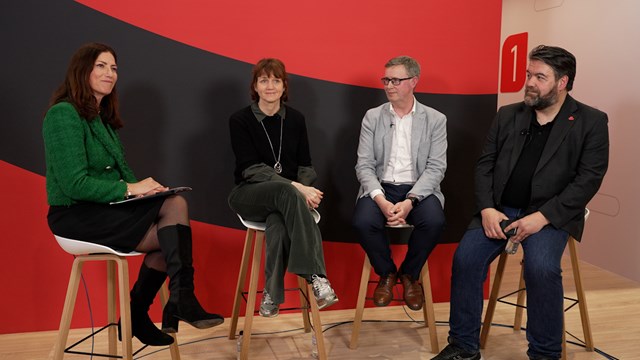
This next session builds on yesterday's AI native telco debate. Today we're looking at improving efficiency and profitability through AI and automation. Now the increased use of AI throughout the network is helping to deliver improved automation, yet AI is evolving at an unprecedented rate. So what are the best strategies for deploying future-proofed ai? And just how far can AI improve automation and what will this mean to telco operations? So let's meet our expert panelists. I'm going to ask them to briefly introduce themselves starting on the fire side with Nektaria.
Nektaria Efthymiou, BT Group (01:16):
Hello, I'm Nektaria Efthymiou network platform and security research director for bt.
Prof. Mohammad Zoualfaghari, AWS (01:24):
So my name is Mo. I'm the global head of emerging technology for AWS telecom and I'm privileged actually to work with the customers and partners, many of them in the room for anything and everything on and above and beyond connectivity and those kind of emerging technologies like AI and JI that brings value on top for the telcos.
Ray Le Maistre, TelecomTV (01:49):
Okay, thank you Mo. Neil?
Neil Bowden, Dell Technologies (01:50):
Yeah, so my name is Neil Bowden. I am part of our AI solutions team in Dell and we're working on building the biggest AI platforms globally for our customers, including a lot of the telcos. So it's great to be here.
Vivek Murthy, Rakuten Symphony (02:08):
Yeah, Vivek Murthy here. So I head the OSS group for Rakuten Symphony, which is a bunch of assets that they not only deploy in Rakuten Mobile but also sell to other telcos. And what we do really is assess is obviously build all the products and with all the AI things that are coming, which we'll talk about, not just deployed in Rakuten Mobile but worldwide with our customers. So very, very interesting place to be. Okay,
Ray Le Maistre, TelecomTV (02:35):
Thank you for that.
Sana Ben Jemaa, Orange (02:37):
So, hello, my name is Sana Ben Jemaa. I'm working at Orange Innovation and I am leading a program, transversal program that aims at leading the transformations with all over the group for the integration of AI in networks and tools.
Ray Le Maistre, TelecomTV (02:58):
Okay, fantastic. Thank you very much for joining us this afternoon. So we're going to get straight into the panel discussion here and start with a bit of a broad overview on network automation. And I'd like to find out from the panel where they believe we are in terms of the roadmap to automation and towards full network autonomy, which many people would regard as level four to five on the autonomy scale and what kind of measurable operating and capital expenditure milestones can we expect to reach at each kind of step. So Sana, maybe I can start with you at Orange. You've been going down this path for quite a while already, haven't you?
Sana Ben Jemaa, Orange (03:51):
Yes, yes. So we are working on first understanding where we are at the group level because we have very heterogeneous and diverse profiles of telcos. So we have performed the assessment, we are around from two to 3.5, so it's rather heterogeneous on some domain we can claim that we are already level four, but it's partial now. The second part of the question was about
Ray Le Maistre, TelecomTV (04:26):
If there are particular opex CapEx gains already at each step that you're recognizing.
Sana Ben Jemaa, Orange (04:33):
So what we see as a huge gain would be the impact on the intervention because AI will help of course field intervention, flow, augmented technician tooling, et cetera. But it'll also by optimizing the operations itself. So you will have much less tickets, much more optimized field interventions. And as we are having very high cost of intervention today, we believe that this is the domain where we can have quick and efficient cuts.
Ray Le Maistre, TelecomTV (05:10):
Okay, so real impact on opex there.
Sana Ben Jemaa, Orange (05:13):
Yeah.
Ray Le Maistre, TelecomTV (05:14):
If I can come to you next, obviously AWS is working with a lot of operators in a number of different domains, but also including the ran.
Prof. Mohammad Zoualfaghari, AWS (05:24):
Yeah, so we have witnessed that the automation, basic automation have shifted to fully autonomous operations in the last few months. So recently we have seen the agent TKI, we have seen the gen AI protocols and like cps and then while MCP actually enabling you to access to the external functionality and resources on top of the genetic agent ai, this combination actually can create a huge opportunity for the telcos to unlock the horizons for the lots of autonomous operations. So TMF has reported that the autonomous operation has increased to 35% and this is 20% raise only from last year. And as AWS actually we working with many customers like BT, orange Telos and Telenor, where we help the customers actually to create this network automation all the way from infrastructure all the way to the network operations. What we have witnessed is that by level two we have seen the opex has been reduced, the total cost of operation between 15 to 20%. Level three, it's usually 25 to 30% reduction, and level four usually is between 40 to 50% reduction, especially on the energy and power consumption reduction on the networks.
Ray Le Maistre, TelecomTV (07:03):
Well that ties in quite neatly with the discussion it was had just before lunchtime there on the focus energy consumption in NextGen ran nectar From your role at the BT group, how do you see this journey towards autonomous networks developing?
Nektaria Efthymiou, BT Group (07:25):
Yes, so if I may take a step back. So if we think that these networks we have today, we have rules as to how to configure to manage to operate and methodologies. And we have developed and optimize those ones for the last 20 years. So now what we need to do, we need to start thinking why do we need to change? It's not about automation for the sake of automation is automation for what? And then if we look at industry, the capital intensity of industry, meaning the money we make for the money we spend is declining. So one of the reasons we want to move to automation is to effectively optimize our spending and then we talk a lot about APIs, but these APIs cannot do much unless the network has elasticity to be able to actually expose the capability so the customers and the developers can consume them.
(08:33):
So effectively, the other reason we do that is to drive growth now, but also the networks we have today, they are not manual. We have a lot of tools, we have a lot of capabilities that they automate certain functions in the network in either domains or sub-domains. So now then where we are we thinking, okay, if we want to move to a state where we can drive efficiencies and provide elasticity to drive growth, we need to move from what you said level three to level four, level three to level four means we need to start thinking how we can integrate domains, subdomains and actually across domains. So this actually, it's not as simple as let's do it and tomorrow we have a network that can do all these things. We need to make sure we have the right foundations in place and the right foundations in place is we now we start from networks that are built for the last so many years in a very silo monolithic way.
(09:44):
We need now to start thinking how we can integrate them. So the first fundamental part we need to fix is our data. So now we are all, and I believe most of the operators now they're in the journey as to how they can fix the fundamentals, the basics which is data, how we can create this data layer that we can build on top of that and knowledge we need to drive intelligence. And of course we have a lot of tools that they do certain functions today that we need also to think how we can move them and integrate them either in this wider picture or rationalize them. So I think where we are now, we are still in the journey building the basics and fundamentals and I don't think we should be in a hurry. We need to make sure we do this, we don't do this for let's do A POC and then let's move on.
(10:36):
Go back to where we were before. I think we need to really do it right because we need to be able to scale it. And for me the question really is where will you be in the next three to five years? And I think in three to five years as an industry, we all aim high, we all aim to create these flexible networks, elastic networks to drive growth and optimize our costs. And I think it's a good journey. We're in the right track and I think this is where I see we are in terms of savings. I think more the predictions are when you move from level three to level four automation you are about 30 to 40 on noex and 20 on savings. But obviously this is still to be seen. But I think we need to really take the time to make sure we do things rather than just rushing and do something A POC or make a big pr. But let's do this. I think the important thing is we all do it right for the customer as well, right? Absolutely
Ray Le Maistre, TelecomTV (11:36):
Right. Okay. Neil, from the Dell perspective, you're obviously as a company working with again quite a lot of operators that are shifting into a new way of building out their networks. How does that help them achieve these levels of automation?
Neil Bowden, Dell Technologies (11:56):
Yeah, I mean I agree with Nick Darina and I thought a lot of the conversation yesterday was quite clear that we have to have that cloud operating model built out before we can really start to move up the tiers in terms of automation and bringing AI into the network. So I think that's probably the first step. Agent AI as MO refers to is very interesting as well. Some of the protocols like MCP, they're not quite ratified yet, but I think it's promising, but potentially you can layer that on top of even a mixed network to start getting insights from it. But yeah, you have to have that first cloud-like layer horizontally across network first. If you get that right, then there are opex and I think probably power and cooling cost savings to be made. I think the one article that sticks my mind is I think at and t last year announced with Ericsson that they're moving forward to trying to really automate their network and they reckon they'd see about of 1.5 billion in savings over five years. So I think savings are there, but there is a foundation to be put in place and I kind of disagree in that I think we kind of need to accelerate further into that than maybe we are today.
Ray Le Maistre, TelecomTV (13:21):
Okay, so move faster of course, but take it easy.
Nektaria Efthymiou, BT Group (13:26):
Well I think a
Ray Le Maistre, TelecomTV (13:26):
Few different perspectives
Nektaria Efthymiou, BT Group (13:27):
If I may add actually I think we also need to, it's quite interesting times we live, so it's the first time we actually see a technology advancing so quickly. Last year we were talking about Zen AI and LLMs earlier this year we were talking about drug, then we start talking about gent. KI, now we're talking about MCP. It's amazing. So we are in a fast pace of innovation and I agree with you, we cannot take really our time, but we need to make sure we do it because this technology is changing and if you just try to do something now for what it is now, unless you stop and reflect to make sure you do the right things, you probably tighten into a specific
Neil Bowden, Dell Technologies (14:14):
Thing
Nektaria Efthymiou, BT Group (14:15):
And then you need to go back and refix it. So I think we need really to also step back a little bit and reflect and then move, I agree with you with pace, but make sure we do the right foundations in places.
Ray Le Maistre, TelecomTV (14:30):
Sure, you need to be cautious. Absolutely. Vivek, you've got an interesting perspective because you are at Rakuten Symphony, which obviously has Rakuten Mobile all part of the same group. So you have that, but you have previous experience of other telco operations as well. So can you give us your perspective on how you see this advancing and not just at Rakuten Mobile, which obviously as I think we all know as a greenfield operator was able to start where others would hope to be in a few years?
Vivek Murthy, Rakuten Symphony (15:07):
Yeah, I mean that's right. I mean spent a number of years with one of the large telcos in UK and many other telcos. They are in that kind of autonomous level between two and three. It's hard to move to three and beyond without having a fundamentally different approach. And what I mean by that is there's a lot of very good automation that is going on in islands because of the way telcos are historically, there's so many different parts of the network and they're all doing their things, but they are quite disconnected and they all have their own data, their own islands like I say, and lots of automation. I mean we have had anomaly detection and statistical machine learning stuff for years now, but it's in that isolated thing. But the customer is actually taking a connected service, which is actually a aggregation of all these different networks behind the scenes, just fake transport, mobile wifi, a backhaul, fronthaul.
(16:09):
These are all coming together to provide that connected service. And if you don't have that sort of end-to-end view and collection of all that data on which the AI is going to be built or the automation to be built, it's very hard to move beyond 2.5, 2.7 into the threes and thereof. So that's been my experience. Obviously in Rakuten it's been a different company. It's very, very software centric, cloud native disaggregated brands and so on. So it's a very different world and the data that is collected is coming indeed from all these different networks. All the infrastructure is coming together in one place and therefore it's got the right foundations to be able to do that kind of automation. And I mean this whole autonomous levels are actually, you can't jump from two to four or whatever. It's a very planned systematic way to take these baby steps to get there.
(17:02):
And I'm certainly seeing that there is that potential for us to, we are upwards of three and the reason for that is because all these networks are together in one place and all the infrastructure and the data and now we are building on that to move to the next level, which obviously is all the AI that we build on top of it. So it is been a very refreshing thing. I mean our experience is the same as what someone talking about to build that kind of all these latest, greatest technologies of age intake and all that. And Duke can get to autonomous level four is not an easy thing. You have the technologies, but a lot of this boils down to being able to ultimately trust
(17:44):
Because nobody wants to lose control. And so even in the last many years when all this automation was done, you'd actually run it in parallel to the manual for many, many months and be absolutely certain that what the machines are telling you recommending are indeed what the people were seeing before you started to roll that out. And it's going to be the same. So the pace at which AI is developing, the technologies are developing, that's amazing. But I don't see the telco industry and adopting at the same pace. It just has to be right. It has to be measured and the humans will be involved in trusting as we make those changes and move on. So I think we'll get there, but it's got to be as we trust and build that trust as we go along.
Ray Le Maistre, TelecomTV (18:31):
Yeah, there's a real balancing act isn't there because the levels of opex savings are obviously incredibly attractive at a time when the sector is quite cash constrained, capital constrained, but at the same time you don't want to break things and you always have to think of the customer, the end user experience as well. So we've talked in general there, but it'd be nice to dig down into some specifics and look at what kind of zero touch provisioning or day zero network rollouts have already gone live and which efficiency or time to revenue KPIs have improved as a result. So s if I can start again with you. It was interesting you mentioned earlier on you're different if we use this numbering level, these levels of autonomy. You are at some stages, you're at certain levels with some things and other levels with others. So where have you seen the most progress? Have you reached any zero touch provisioning operations just yet?
Sana Ben Jemaa, Orange (19:41):
No, I don't think we are at that point yet. But we have different, as I said, levels of maturity. So we are reaching higher levels where we have automation, multi-domain correlation also. And it relies on this idea of having the data at least accessible, not necessarily in the same data lake or in the same platform, but at least accessible to be processed and to bring very, very fast analysis. And yes, putting AI on top of it helps. So for the time being, it's really domain per domain. So our priority is more to work for example, for network assurance on the maintenance and the change management which are, which will help to avoid the main critical incidents in the network and then we'll extend to the other domains.
Ray Le Maistre, TelecomTV (20:44):
Vivek, maybe we can come to you with the Rakuten experience and what kind of KPIs and measures you can see from the zero touch provisioning capabilities.
Vivek Murthy, Rakuten Symphony (20:59):
Yeah, I mean as you know, Rakuten has been one of the pioneers in kind of the open ran, which has been massively instrumental in getting to the zero touch provisioning basically because it's all cloud centric and software centric in the way the rans are built, our kind of automation journey starts from day zero where we are planning building these mobile networks and it's a one-time activity to put the hardware out there and it's basically after that it's all remote pushing of software and we have seen that sort of zero touch provisioning work really, really well. It is hard work because it requires a lot of design in terms of the configurations. It's not just pushing it. Once you got to then the whole life cycle of maintenance of that software, like the Tesla model, it requires you to be really clear, super clear about the design process end to end, but it's a path that you can't be halfway.
(21:57):
Once you go into that path, you embrace it fully. And that's what we have done and it has served us really well. It's allowed us to reduce our headcount in terms of how we plan and build the network. So massive efficiencies in the way we build the networks. And again, just to like any other infrastructure, any other software platform. We also have our own technical debt. It's been five years, six years, and our hardware, all this Dell and disaggregated kind of hardware on which software sits, they are now going out of end of service. They're getting out of capacity. We are getting more and more subscribers in Japan or network, but it's the world of software that we deal with now as opposed to hardware and the kind of old legacy networks. This is very, very software-centric. So we deal with that legacy but we deal it in the world of software with CICD pipelines and refresh and all that. So it's a different world, lot more efficient definitely compared to the old world, but you have to deal with it in a proper structured, scientific way with all the kind of software methodologies that are there to support it.
Ray Le Maistre, TelecomTV (23:07):
And this has an impact as well on time to be able to deliver services to new services to customers.
Vivek Murthy, Rakuten Symphony (23:13):
Absolutely. I mean the moment you get into that sort CICD and agile methodologies, you're able to drop software pretty quickly. You're talking about weeks and maybe months obviously depending on the scale. A big network change in the radio is going to be four months, six months, but it's still so fast in agile compared to the old hardware world and small features, you can drop it much, much faster as long as you have your regression test packs and automation, all the good stuff that comes with software. So yeah, it serves us really well in terms of the speed at which we can roll out features and also extremely lean in terms of the operational cost and everything that goes to support it.
Ray Le Maistre, TelecomTV (23:54):
And you've got some insights as well into specific sort of live examples?
Prof. Mohammad Zoualfaghari, AWS (24:00):
Yes, so especially on the zero touch we are talking about for the network's four specific elements, zero touch connection, zero touch attestation, bidirectional from the device of network and network back to the device, zero touch device management and zero touch bootstrapping. So we are working very closely with Intel, Dell and many other partners in industry to create zero touch solutions all the way for different aspects of the network. So give you examples. So NTT actually we launched actually our open run automations together. They're expecting actually to see around 30% reduction in the total cost of ownership because of these zero touch on boarding of this or and solutions and 50% reduction in the power consumption. Same with the O2 Telefonica Germany, this was our cloud-based 5G core. We launched with full autonomous day one and day zero automation. So we have seen site onboarding actually reduced from weeks to days and the software updates actually goes from days to minutes.
(25:28):
And the default recovery now actually we are looking at to have fully self-healing recovery using the gen AI also on the other sides of the network, one NEC. So brought their IUT sims and e sims on the connectivity management platform CMPs on AWS and they can actually see a huge saving on how we can provision automatically and securely millions of the SIMS enabled devices into network. The last part I want to actually mention is coming all the way to the heart of the telco powers in the consumer's home. That's where with TELUS actually we have launched the managed integrations features of the AWS IT service where enables the consumer devices like smart lamps, cameras to be onboarded securely safely to the TELUS network and TELUS hubs. So all the way from the IOT devices, peripheral devices to the onboarding the sites, we are exploring different cost savings and energy savings solutions with zero touch for the customers.
Ray Le Maistre, TelecomTV (26:55):
Okay. Neil, any other examples that you can bring to light?
Neil Bowden, Dell Technologies (27:02):
Well to be honest, to do my best impression of a politician, the biggest example I would see is probably Rakuten. We help a lot of customers with this. We bring partners and telcos into our hotel labs to help build out that platform to enable this. And it's something we've a lot of experience in because it's something we've done a lot in the IT side of the business for many, many years. So I don't have any other examples to give you, but I do think it is something that will drive cost savings over time.
Ray Le Maistre, TelecomTV (27:35):
Okay. And Nectar, is this something that you are looking at and helping the broader BT group to bring it into their plans in the future?
Nektaria Efthymiou, BT Group (27:48):
Xta actually calling this morning, he mentioned the global fabric with is a BT product, but I think, sorry, zero tats we have seen already in certain domains or in certain capabilities like BSS or how you can onboard the device. I think this is probably already happening For me, the interesting thing is, and from where I am in BT research is how can we drive really zero trust and intent based networking because this is what zero trust is intent based networking. How can you drive this from the BSS layer all the way down to the stack and cross domain and how do you, for example, any intent like I dunno in location X, all the 5G AR VR devices, they get high priority, which is the intent, how this is then translated down to become a service and then going to the network layer and the infrastructure layer for configuration. And for me, this is if you like from where I am, the interesting part is how do we build this data model that can abstract the complexity of the network to translate the intent to something then that is meaningful to go to the layers underneath to translate this to a service, to translate this to the network capability like slicing and then go and configure all the different things. Because this is where I believe that gen ai, we talk about that earlier.
(29:27):
This is where I think also there's a role for agen AI where you can combine different functions together with agents and they can make a decision. But again, going back to my original point, this is not magic, right? This is science. So we cannot just throw data to agenda AI and hope for the best. We have to make sure we build the right data model, the network ontology to make sure they use this to drive the right decisions. And for that, that's why I keep going on about we need to have the foundations right to make this. Sure.
Ray Le Maistre, TelecomTV (30:00):
Yeah, no, absolutely. I mean we've heard that so many times even here in the last couple of days about that foundation layer of data and how important data management is. I want to get to because time really flies in these sessions, so we haven't got too much longer, but I want to get a sense, first of all if there are any particular examples of where generative AI applications have been put into practice in terms of automating particular workflows such as order management. Are we there yet in terms of these kind of not just trials and tests, but actually putting it into work with the operations teams at operators vi vec? Maybe could you start us off there?
Vivek Murthy, Rakuten Symphony (30:52):
Yeah, I mean it's here mean the way our users, operational users interact with the systems is going to change fundamentally with Genai and why not? I mean they're dealing with real situations. So having a natural NLP based system where they can actually say for example, people in the no and say or tell me the sites which are having call drops today and so on feels like the most obvious thing to provide as a interface and a service. And we are absolutely seeing that sort of need. And so at least in our area, we are seeing that across all the functions. So even in terms of the network build out, when we do this kind of plan and build of networks, which runs for months and many months, there are certain kinds of projects which get delayed, there are delays and that's really important for the customer because they want to obviously roll out faster the services and grab the customers. And what we are seeing is there, there's a big, if you start to get all the data and try to analyze that from an AI perspective, you can find that certain kinds of jobs are more prone to delays than others. And then you start to get under that
(32:02):
And provide more kind of insights and that then can be used to build that kind of interactive layer to the customer where the users are actually saying, okay, tell me where these projects, tell me the projects which are in jeopardy today and what can I do about it? So yeah, there's absolutely a very, very strong use case there. You go to operations like I already said. So I think across the board we are definitely seeing that in the need to build this kind of a chatty layer AI layer on top of everything that we provide. And I think it's not just for telco industry, I think it's true for all industries.
Ray Le Maistre, TelecomTV (32:38):
Yeah, absolutely. And Sana, I know that the tech management team at Orange is very keen on getting everybody engaged with generative AI platforms and finding the ones that best suit them. Is this something that's permeated down into the network operations teams already?
Sana Ben Jemaa, Orange (33:00):
Yes, indeed. So to come back maybe to the example where we see gene AI today very efficient is to assist the decisions. So making decision and agent, maybe we are too early in the journey, but assisting the decision is, I mean we have several use cases, some of them are already in production. The main topic is accessing to avision use data, meaning you have a lot of data sources, you don't need to know how to access to the different databases. You are talking to your network, getting the information and also some, so accessing to data and also accessing to historical data to get recommendations as well. So all what is inside talk to your network. We have already several use cases there that help knock teams and that have also fuel teams. And we have also some use cases combining, so text and also image analysis.
(34:01):
For instance, one of the use cases which is built by Orange France is, okay, you are a customer, you are seeing that there is a damage in the network in the external infrastructure, wherever you are and you signal it and it's analyzed post processes and it can trigger some tickets for the intervention teams. So today we are mainly working use case based. So we are exploring performing box, the time to market for this gen AI based use cases is very short compared to the traditional ai. So we have a lot of tests, we have a lot of box that are moving to production and used by operational teams. Now the idea of having a platform and thinking about the security of the data, the trust making things common, I mean common platform for all the group take into account also the regulation constraints which are different. This is the message is there and this is work in progress.
Ray Le Maistre, TelecomTV (35:04):
Okay, fantastic. And then in the final couple of minutes, I just want to get a sense from the panel from each of you about how AI investments can be prioritized because there's an awful lot of demand on budgets that aren't getting any bigger, let's face it. So how are the network operators and their partners making decisions about which areas to prioritize first, which are the areas where the investment will go to deliver the best and short-term immediate returns and nectar? Maybe we can start with you.
Nektaria Efthymiou, BT Group (35:45):
Okay, so I think obviously the way to assess your investment requirement is not changing because it's AI is always the same recipe. If you like, you assess what are your needs, you balance short term with long term and then you look your face investment. Now in terms of ai, again looking, what do you need? So the first thing is we need to make sure where do we want to go? We want to go to an automated autonomous network that provides elasticity for growth but also has efficiency. So what do we need to fix first? And also what are the low hanging fruits? For example, gen ai, it's a low hanging fruits. In fact we have a gen ai, Amy that we are using it for our customer services. And then what is the phase investment that you need to have? What actually in there, and it was discussed yesterday in one of the sessions, what I believe there is quite important as well is in our industry we are used to very long programs.
(36:56):
Five years, 10 years, this is not going to work for AI because it's changing every three months. So what we need here is we need to have something that is agile, we can deliver and demonstrate the benefit, but also it is in a good shape once we demonstrate the benefit to scale it up. So on this one, maybe the KPIs to track our investment maybe need to be a little bit more dynamic to demonstrate the benefits and why we need to scale it up. One of the things actually, I have to say on the ai, one of the low hanging fruits that I also see this quite important as well is in fact we can make investment decisions using AI more insightful. So instead of us going and deploy something in the whole network, we can apply a better way. We can look and get data and analyze where do we need to do what so we can do more targeted investment. And that is probably a low hanging fruit of how we can direct our investment on ai. Right.
Ray Le Maistre, TelecomTV (38:05):
Fantastic. And very quickly, and then Neil,
Prof. Mohammad Zoualfaghari, AWS (38:10):
So we have been witnessing that many telcos has started to put the bets on the infrastructure. So buying GPUs and the infrastructures there. Personally, I think the first thing actually we should address is the customer experience. One single wrong experience that the consumer has is cause of 25% of our chance. So putting the focus there, I'll give you one example. Amazon Connect actually giving you capabilities for the call centers and customers. It reports back 50% reduction in the total cost of ownership and also 70 plus percent reduction in the chair. The next one, because I want to be quick, is the network automation. I don't drill into that because we discuss it in detail that how we can save the CapEx and opex and it's clear how we can do that. And the third one is that how we monetize the solutions, new solutions revenues using genai on top of the connectivity for the customers, for the telcos. So that's the order I'll go for personally.
Neil Bowden, Dell Technologies (39:23):
Okay, thanks Mo and Neil. Well, I think you need to think about what it is your best at in your business. So if you're a telco, you have to invest in the network, but the first thing you need to do is build that cloud operating model and then layer AI on top of that. Outside of that, think about what it is that is your, what you are best at, what it is your go-to market, what is your specialty? Because that is the piece where if you invest, it'll have an outsized impact on your business. We're all going to have AI tools for everything. So you've got to think about what is the bit that moves the needle for you as a business In Dell, it's our sales, it's our services, it's our research and development and our supply chain. So if we make a change in any of those four areas that impacts the entire business, we'll still give everyone an AI assistant, we'll still apply AI to recruitment, to legal and everywhere else. But if we hit those areas, it impacts the entire organization.
Ray Le Maistre, TelecomTV (40:32):
And very quickly, we do have to wrap up vi that. Can you give us a quick thought?
Vivek Murthy, Rakuten Symphony (40:37):
Yeah, no, very quickly. I think investment is not the issue that we deal with because you can go into Amazon and our bedrocks and Vertex and all that and do stuff and trial. The real prioritization for us is do we have the right foundations, the right data, and so on. And then on top of it, do we have the ability to, because it's all about doing experimentation right now, it's very much in the experimentation world. So are we building the right frameworks and approaching it in the right way so that everybody can actually optimize and build their AI stuff in different parts of the systems that stack that we have. So it's all about platforms, frameworks, and the signs of how you build these AI features. That's where the focus is not so much on money.
Ray Le Maistre, TelecomTV (41:22):
And Sana, final thoughts on investment very
Sana Ben Jemaa, Orange (41:24):
Quickly? Yes. So we have two, I mean we are evolving in this domain in two speeds. I would say the quick wins. So we are all working on use cases, trying to evaluate their value, et cetera. And the long-term transformation, if you imagine the network of tomorrow with a lot of slices, hopefully a lot of services, et cetera. The complexity is that big, that you cannot manage your network without a high level of automation and without ai. So it's a must have at some point. And what we have to build is a trajectory towards that. So I think we are doing the work today to reduce the opex and the CapEx, et cetera. So it's really small steps that will bring some immediate gain, but we will need to invest. And I agree with my colleagues that platforming for instance is very important. Putting the foundations, I mean building the foundations to be ready for the global transformation of the networks of tomorrow.
Ray Le Maistre, TelecomTV (42:22):
Okay, fantastic. Well we do need to end up that session there as we're out of time and we need to get onto our next topic. So I'm going to ask our panel guests here to leave the stage and for our next set of panelists to come up. But let's give our AI panelists a round of applause please. Thank you very much. Thank you.
Please note that video transcripts are provided for reference only – content may vary from the published video or contain inaccuracies.
Panel Discussion
In this debate experts from BT Group, Orange, AWS, Dell Technologies and Rakuten Symphony explore how AI and automation are reshaping telco operations. The panel dives into the realities of network autonomy, zero-touch provisioning and generative AI-driven efficiencies – emphasising the need for strong data foundations, cloud-native architectures and measured, scalable deployment strategies. With insights on the impact of capital and operating expenditure, trust in AI and how to prioritise investments, this session is a must-watch for telcos on the path to intelligent automation.
Broadcast live 4 June 2025
Featuring:

Prof. Mohammad Zoualfaghari
Global Head of Emerging Technologies for Telecom, AWS

Neil Bowden
AI Business Development Executive, Dell Technologies

Nektaria Efthymiou
Network Platform and Security Research Director, BT Group

Sana Ben Jemaa
Technical lead of AI Empowered Networks Program, Orange

Vivek Murthy
President, OSS Business Unit, Rakuten Symphony