The Green Network: Driving energy efficiency, from network core to edge

By Guy Daniels
Jun 6, 2025
To embed our video on your website copy and paste the code below:
<iframe src="https://www.youtube.com/embed/3vTrPWaSqIs?modestbranding=1&rel=0" width="970" height="546" frameborder="0" scrolling="auto" allowfullscreen></iframe>
Well, welcome back everybody. We are about to start our afternoon sessions. Hope you enjoyed your lunch. If you want to get your coffees, teas, soft drinks, take a seat and enter our online audience. Welcome back to you as well. We have two back-to-back sessions for you now and this next session is on the Green Network driving energy efficiency from the Network Edge network core to the edge or the network edge to the core, whichever way around you want it. It's very important that we do drive efficiency and it's all about energy efficiency. So the requirement for energy efficiency is becoming stronger and stronger. We know this, every aspect of the network needs to be optimized to drive efficiency and this requires industry wide collaboration plus add to this, the rapid growth of AI and its associated network requirements. It creates even more uncertainty. So how do we move forward? And we really want to move forward. The point of this session is to move forward, find a way to move forward. Before we get into the actual talking points, let me introduce the guests we have for you. So I'm going to start on my left with Lee, but Lee if you can introduce yourself and we'll move down the line.
Lee Jones, Vodafone UK (01:42):
Yeah. Lee Jones, Vodafone uk. I'm the energy lead for the UK and also Net zero lead for uk.
Guy Daniels, TelecomTV (01:49):
Thanks, Lee.
Neil McRae, Juniper Networks (01:50):
Hey, I'm Neil McRae. I work at Juniper Networks. I run strategy for service providers.
Guy Daniels, TelecomTV (01:55):
Thank you, Neil. Anita,
Anita Döhler, NGMN Alliance (01:56):
Anita Döhler, CEO of the NGMN Alliance
Suzana Grujev, Liberty Global (02:00):
And Suzana Grujev. I'm the VP for mobile technology strategy and Liberty Global and also an NGMN board member.
Guy Daniels, TelecomTV (02:07):
Great, well welcome all of you. Good to have you on our session this afternoon. So I'd just really start by asking about how we basically decouple data from energy. How can operators reduce their total network electricity demands whilst the network traffic is still growing? I know growth may not be as what it was, but it's still on the upside, it's still growing and if we decouple bites from kilowatt hours, how do we know we're succeeding? What new KPIs should we be adopting to help us with our procurement choices and operational processes as well? Suzana, can I start with you and get your thoughts on this first.
Suzana Grujev, Liberty Global (02:52):
I think first where we are being a little bit successful and we can still get a lot of more success, it's starting to decommission the two G and 3G networks. So really decommissioning the old stuff. I call it the old stuff. It's really something important and it can help in reducing the energy efficiency especially and also moving the traffic from 4G to 5G. I mean we know that every new generation is more energy efficient or spectrum efficient and it'll have a more, give us more energy efficiency as well. I think I compare this with when I redid my kitchen like three years ago and I put a new appliance into the kitchen and I suddenly realized actually that my energy went a little bit down and I measured that because I had a lot of sensors everywhere, smart at home, all the stuff that you can do. And it's the same as if in the mobile network, if you just put the new stuff there, when you do a hardware refresh, which is not always the case, you cannot do every three years, you will gain some efficiency on the network, especially on the run site. And I think also some cooling technologies that are more there. I believe my colleague from Vodafone can talk a lot about that.
Guy Daniels, TelecomTV (04:24):
Well we'll hear from Lee. That's great. And we'll talk about metering and monitoring during the conversation as well. So Lee, do you want to pick up on
Lee Jones, Vodafone UK (04:32):
That? Yeah, there's a fundamental that we need to keep track of as well as we deploy new stuff, we're also turning off old stuff and we need to make sure it's turned off properly. So any mobile network, we've got hundreds of thousands, tens of thousands of sites in each network there's a churn and shutting off a site from paying the bill isn't always that easy and it isn't always checked and it sometimes goes unnoticed. And we found out just recently doing a piece of discovery work that we're finding we're paying for sites that have been decommissioned and that's over-inflating this already quite strained budget line as well. So keeping your housekeeping right is a big thing. Yes, moving to 5G is more energy proficient per buyer and things like that, but you've got to turn off the old stuff. You've got to remove the legacy, you've got to actually track it all the way through to that payment to the energy company or the landlord to make sure you've stopped it, reduced it and you're managing that properly, otherwise you're not saving anything. Anita?
Anita Döhler, NGMN Alliance (05:35):
Yeah, so when it comes to energy efficiency, so in NGMN and all the companies sitting here actually contributed to what we are doing in the Green Future Networks project published several guidance documents already on energy efficiency in the past, the last one in 24. And we identified a separate several ways how to improve energy efficiency either by process changes or by real new technologies like advanced cooling mechanisms and so on and so forth. And another topic we are discussing now also in the alliance is how big the increase in data traffic actually will be in the future. So what is really needed? Also, what is the impact of AI on the network? So network for AI and AI for networks AI also to steer energy efficiency and there is a strong belief that at the moment the data traffic actually is not really increasing because many markets are saturated. We have improvements in media codex, which is leading to a kind of stable data traffic. But of course everyone knows that when we go forward with AI traffic with quantum technologies, we don't really know yet how this will impact the data traffic. And one thing is clear, we need to improve energy efficiency and we need to continue that route to improve it and to measure it.
Guy Daniels, TelecomTV (06:59):
Sure, absolutely. And it's a good point you raised there. I mean we went 2K, 4K, there's no pressing demand per certainly we're all going to go eight K into our pockets, is there? So where's that growth coming from? It's not there. Neil, what's your thoughts?
Neil McRae, Juniper Networks (07:14):
Well, I'll say the obvious thing, turn off the old stuff. I mean how hard is that? But I would start, what do our customers expect? What service do they expect? What do they expect to see? And they all expect to see cost reduction. So you're tied into this whether you like it or not because energy is one of the biggest slices of network costs. When was the last time you were in a brand new telco facility 10 years ago, 11 years ago, 13 years ago. Air conditioning design of the layout, even how you do cabling which can affect airflow. If you really want to grasp this in the most sustainably future sustainable way, you've got to start really at the basics. The data center guys are amazing this, they have AI apps that help 'em lay out everything, literally every bit of cable, every bit of metal where you put a server where you don't put a server, where you put a switch, where you put fiber.
(08:19):
They've got some amazing tools that I think our industry could learn from and actually we see some operators doing that actually notably in Asia. But then of the modern stuff, one of the big things that's happened is over the last four or five years is there's a whole lot of new protocols around routing, around shutting stuff off, but no one's using them because they don't want to upgrade. And that's a challenge for us as network vendors. We need to make the quality of our code better. But there's one operator I work with in Japan really aggressively pushed on this and by deploying just some new code and what we call power, they decide routing based on the cost of energy as well as other metrics. And they've taken out a ton of carbon and carbon usage but actually also made the network much more resilient.
(09:15):
So this is a game of inches. There's the obvious big inch, which is turn old stuff off, but you've got to take customers on that journey. I think you've got to meter it and monitor it and then measure what you're buying and where and how you're putting it in the network. We don't talk a lot about disaggregation actually in every experience disaggregation I've seen that increases energy usage. So how are you managing that? And again, the great guys at Intel and other people have got a whole load of new stuff in their latest chips to turn certain things off that often we just don't see enabled. Well this thing's using a lot of power. Why? Well you haven't turned on these three things that would basically half the power that you're using. So what that kind of leads to me to think about is actually the key part of, I don't like to call it the green network, I like to call it the sustainable network, is actually the people that are building it.
(10:08):
How are they thinking about this as part of this journey of making our network more sustainable? Do they know about the fact that you can almost half the power, half the power that used in an intel server by changing three things on the bios? Do they actually know that? Because actually often they don't. So is your team really thinking about energy usage at the forefront of everything that they're doing? And quite often because they're busy, they're under a lot of pressure and technology moves insane amounts of speed, do they really know what the opportunity is just by doing some simple software changes which aren't hard, they're really simple and you don't need to impact customers, you don't need to do heavy forklifts, you don't need to rero, but they can have massive impact especially on things like we see some cloud-based head ends. They're all intel based, they've got millions of customers connected to them. There's hundreds of thousands of 'em out there in the network, a few changes and bang, you're saving tons of energy.
Guy Daniels, TelecomTV (11:14):
I'll pick up on this one and Lee maybe start with you. Do you see is the message percolating down through the organization?
Lee Jones, Vodafone UK (11:24):
You have to have two conversations in the business. You have to have an active and passive conversation. The active one is the network elements, the radio, the servers and everything else. That's a different conversation. It's a different audience. The passive side is the building, the facilities guys, the calling, the power and things like that side that's been there forever. Everyone's been more focused now because energy price, my business cases look really good at the moment. So it's really quite easy for me to get funding for elements on energy stuff. We've really got, there's an appetite to use less and save more, which is really good. But translating that same enthusiasm into the active side that radio and the servers is a harder because like you say, they're focused on service delivery growth. We need to just pair those together. The trick I use is show them the money translate those change into power shooting and pants. So you can see how old, I'm sorry, Euro rose if you like, into real money because once you put that saving number in front someone, people start saying I want that. And you have to motivate. It's a different motivation.
Guy Daniels, TelecomTV (12:35):
Okay, thanks.
Suzana Grujev, Liberty Global (12:35):
Do you think that there will be really significant savings in that active part because it'll mostly OPEX site
Lee Jones, Vodafone UK (12:47):
Example? Yeah, in your software licenses you get from your radio vendors. Yeah, majority of them have energy saving software features.
(12:56):
Some people don't buy that license so don't get access to it. That can save a hell of a lot of it. The active, they've got active power on the 4G, you can shut down a high band when there's no traffic, it shuts it down automatically. Hold on a minute. I'm taking 15, 20% out of my energy consumption for that radio unit because I've got no traffic. Cities, beaches, weekends, think of all those places that go quiet at the wrong times of day. You look at the cell sites in London in the business es, you'll see that the energy profile will dip during the quiet hours. Obviously the trial in Valencia a long time ago and why isn't that working now it's winter and no one's at the beach. So we've turned it down. It makes perfect sense. So it's not that illogical.
Guy Daniels, TelecomTV (13:45):
So are you saying some of these energy saving functions are effectively optional add-ons for,
Suzana Grujev, Liberty Global (13:54):
But I think most of us already implemented some of those, the vendor specific energy saving functions,
Lee Jones, Vodafone UK (13:59):
But then do you track them on a site by site basis because they sometimes get turned off and turned on and we've got a dashboard that goes 1 million, 2 million, 3 million. This is what you're wasting right today by not having this active and is an active thing to promote awareness and action.
Neil McRae, Juniper Networks (14:18):
I have say my experience of service providers is they have, and I worked through one for many years and I can attest to this, you have what's called a program and everyone's running around, Hey BT, we called it October, we're turning everyone off in October and in November comes and everyone forgets about it and it's again, it's not a criticism, it's just human nature. This is about setting the right mindset and I challenge everyone says, well it's only a little bit and actually only a little bit if you do it a million times it's a lot. So I kind of feel that you've got to have that mindset. And actually the thing that I used to push for on this is Luke, if we save a million quid in power, that's four engineers we might be able to hire to help us go faster on other stuff. Do you want to give all this money to the power company or do you want to invest it in skills and capabilities? And I think when you look at it through that lens, actually this rack of kit is potential. If we were able to de power it is potentially 20 people that we could have working to create new services for customers. Then there's a simple thing is which is our customers expect us to be doing this. There's no debate about it.
(15:35):
People say, oh this is fashion with trendy. I don't see that. I see a constant push for it. Our marvis engine, our AI engine and our enterprise equipment, well actually flag stuff. Hey, this stuff's all powered up, I can turn it off for you, but the moment it's not being used and we can turn it off. And I think we need much more of that approach, which is actually you've got all these optics lit up but there's no one using them. How do you power them down? And again, this tends to be you have a phase where everyone's running around, oh we're going to miss the budget, let's have a quick fix, get the mindset so that when you're putting new stuff into the network or when you're building a new piece of the network, actually what does the actual building need to look like? And yeah, that can be a hard discussion in the short term, but in the medium to long term, which most telcos that are here today are probably be here in 20 years, it starts to make a lot more sense.
Guy Daniels, TelecomTV (16:28):
So Anita, are your operators members saying to you, look, there's a need for some energy management processes to be not standardized, but best practice or blueprinted, so shared and adopted. Is this something that operators are calling for as a group?
Anita Döhler, NGMN Alliance (16:49):
Yeah, absolutely. So I think we have several dimensions. One is the energy efficiency, the other one is the type of energy used, also variable renewable energy management and then of course the metering topics. So how to measure what we are doing, how to report what we are doing. And I think we have some kind of fragmentation in the industry when it comes to metering, when it comes to reporting and everyone agrees that it is absolutely needed because it's hard to improve something and to understand where the best levers are for improving energy efficiency if we are blind, if you have blind spots with regards to metering. So what we have done in NGMN just recently and we will publish, we published recently in environmental sustainability and reporting guidance, but now also we will publish very soon a new document guidance on metering and transport networks and energy management.
(17:47):
And when it comes to energy management, the hard part is that of course we are a global industry so we need global standards. But then at the end, every operator more or less operates in a national environment which is regulated, which has different situation when it comes to how much renewable energy is already available in the grid and how much renewable energy is available in the country as such wind energy, solar energy. So this is something where of course every company needs to adopt it for its own situation, but we do have published guidance when it comes to what needs to be considered by companies. I think that helps already because the reason we are there as an organization is of course to fix it before it breaks. So we work in a pretty competitive environment and I really like always to hear specific examples from my fellow panelists here because that's something where others can also learn. And I'm curious also to learn. So Neil, you spoke about the processes that people, human beings of course forget stuff and how much could automation help and how reliable data are available already for applying those type of automation. And I know it's easier said than done,
Guy Daniels, TelecomTV (19:04):
It is, but it's a good point to make, isn't it? People are fallible. So let's pick up what can we do about that?
Neil McRae, Juniper Networks (19:11):
I mean it is all about this is have this kind of network modernization approach, which is how are you building a network of the future where actually most of the networks in Western Europe aren't growing in the way that they were France last year at 10% growth. So what does that mean for networks? Because before we as vendors, we sold more kit based on capacity demands and if that goes away, that's a big challenge for us. So I look at network modernization, which is okay, how are you using the most power efficient equipment? Where are you putting it? What's your strategy around long distance? How are you using automation and automation's key? It affects all of these things. And it goes back to my point I've made on this stage at least twice before, humans can no longer run networks, just fact. So please stop having humans run your network because they get the power config wrong.
(20:11):
They get the security config wrong, they get the writing config wrong, they get the billing config wrong and it's not a criticism, it's just who we are as humans and we have to face into that. So accelerating everything that you can do in automation is crucially important. There was an event last week called auto con three. It was in Europe where some of the stuff that some operators are doing, it tends to be the smaller guys, it's just amazing in this area. But actually power management was a big focus, hence me learning about the bios changes that you could make. They've just got that automated as part of the rollout script. Hey we're going to push a new bio, here's the config. You can't manage that on a kind of box by box or individual basis. But I still see in my travels lots of operators trying to do that or not even realizing that they need to do it. So it's in your automation strategy, building from zero to production, what are the things that you're missing in energy, but what are the other things you're missing in routing or other stuff because it's costing you money or it's pissing your customer off more likely the second than the first. And that ultimately means your customer walks away
Guy Daniels, TelecomTV (21:30):
Do not want to do. Absolutely. Thanks Neil. Which brings us to another question. If we're not replacing our kit and look at the RAN based on every increasing network traffic, are we still seeing innovations in the RAN that can result in a step change in energy savings? Is this the way in for RAN innovation is looking at how energy savings can help push an RRI increase? Lee, have you seen anything yet on that area?
Lee Jones, Vodafone UK (21:58):
Yeah, a lot. So Vodafone UK is a 40-year-old network, had a 40th birthday not so long ago. It was quite a nice event and some of the sites are still the walking cabins that I think I installed in the nineties. Yeah, did
Neil McRae, Juniper Networks (22:13):
A good job there still. I
Lee Jones, Vodafone UK (22:13):
Know they still are. Leak still works still on. What you've seen is that evolve over time. We've done the S ramping, you've put your radio stuff out so there's no so much calling, you've still got sites with calling, they're still sitting there, they're still being managed by 10 vol free alarms. There's no intelligence there. Now we are putting some iot devices into these buildings now to try to optimize how we control that calling. You get a mains failure alarm, okay, is it the mains, is it the breaker, is it something else? I get a DC power system failure, okay, I send an engineer, it'd be nice to be able to send in with a rectifier or something to fix it. So we are deploying that sort of intelligence to manage those passive assets as well now. So we're drinking our own champagne, okay, so it's a Vodafone vodacom company that we purchased a while ago and we've taken that technology and we're putting it into all the networks.
(23:09):
So we've got to critical mass now we've got 1500 sites up and I can tell you if it's sneezes, I know about it now I'm taking that data now bringing it into the ops teams, what happened in Spain a couple of weeks ago when the power went off. Now the questions are riping down to us saying what battery backup we got? What happens if this, I dunno, 1500 sites, that's what's happening. Take that one step further and it links into the, I'm trying to link it into the API conversation. You are coming up, I'm talking to UK power networks. Can I give you an API to tell you where the mains has failed, how long it's failed for and how long my batteries have got left to last so you can fix my site first to keep your network up because they use the mobile networks to switch the power networks. Yeah, so why not work hand in hand. So on that side, on the actual pure ran kit, there's, I don't try to stay away from the brand, I'm more the mechanical side, but that's where we're going with that.
Neil McRae, Juniper Networks (24:09):
I mean there's definitely one thing on the ran. So we use, one of the biggest use cases for radio is fixed wireless access and it's probably the most inefficient way of delivering internet connect to it burns, tons of power, tons of capacity and there's actually a lot of other vendors out there that have got specific solutions for FW that are much more low power, much more higher bandwidth, much better use of spectrum. Tarana networks is one of 'em based out of the us but there's other guys that are creating alternatives to that and fixed wireless access traffic is probably, I don't know, well when LFBT it was about 60% of the traffic on the network. I can only imagine that's got worse. And also we're offloaded onto fiber. How do you ensure that customers that couldn't get a great service but can now how are you attacking that customer? Hey we've got fiber now you don't need this FW, we're going to do a deal. We can turn off this really expensive FWA solution and give you a fiber solution that's much more reliable, uses a hell of a lot less energy and actually saves capacity for the mobile users that need it.
Guy Daniels, TelecomTV (25:14):
Thanks very much for those examples.
Suzana Grujev, Liberty Global (25:16):
Can I come back a little bit on the real run stuff? I mean I get the fixed val access but I don't really believe in the fixed val access in Western Europe. There are only few countries that have really deployed that and we have tested around and they're efficient but not as efficient as for example, some other suppliers that you can get. But it doesn't matter, I mean on the run side you can really go and do what the equipment vendors are providing you, but you can also do what automation can provide you on the network level. So you can do an equipment level, all the features that the suppliers have. You can go mim o sleep deep sleep, well deep sleep, not yet, but we will be get there. But putting the cells into sleep at night, it's something that we are already doing for a couple of years. It was already there. I mean from most of the vendors and it's still there. I think putting the massive mime into sleep is also on the network level. You can go into more some type of solutions where you really go into automation and not eliminating the human and going towards the more dynamic stuff. I think that is where you can get some efficiency.
Guy Daniels, TelecomTV (26:30):
Okay, good. Well we will come back next year and we'll follow up and let's see how we're going because we're really interested in this. Thanks very much. We've got to move on to another talking point here. This is a slightly divisive one, AI traffic and the impact of AI traffic on energy consumption in our networks. And it seems to me personally that the statistic or the data changes so much as a report out just a day. I think about AI workloads and the need significantly more power than other cloud workloads and we're seeing what data centers do, but it comes down to look, if we're starting to get a grip on the RAN side, which is obviously a huge energy consumer on the network's, massive. If we're starting to get a grip on that and see the improvements there, how do we ensure that they don't suddenly become, we lose those gains with extra AI traffic or are we getting excited over nothing with AI traffic? Do we know the likely impact of AI traffic as that increases on our energy consumption in networks? Anybody on a hazard an approach at that?
Neil McRae, Juniper Networks (27:45):
So in our organization it's a constant discussion about what is the real impact of this. And actually we think that the pure AI control plaintiff, for what of a better word? It's probably not a huge amount, but it's what the applications might generate. So for example, there's a few AI apps out there that will create videos and clearly video drives traffic. So that's one aspect of it, but I don't think we're seeing a huge amount of all of a sudden this in the pie chart of traffic. Suddenly AI appears as a slice. I don't think anybody's seen that. However, I remember just before the BBC launched an online app and that changed the way we watch TV and actually with the ISP community, it caused a bit of a riot because they were saying, oh wait a minute, all of a sudden our usage has gone up and why is the BBC?
(28:43):
There's a big debate. This is where the net neutrality thing started and I think we're on the level of maturity. I think we're at that stage and there's a belief about what would happen with video traffic and what wouldn't. I always believed it would grow but then plateau because you've only got two eyes, but I think we're so early in the AI phase I think and certainly the generative AI phase we're super early. AI's been running a lot longer, but I think we're so early that anyone making a bold prediction on that is probably going to regret it. I can't help but think that there will be an increase in traffic, will it be noticeable like peak time traffic? I very much doubt it is my take, but I definitely think there will be a traffic impact and the data center is a huge impact. We see it already. You see these big fiber deals being announced to connect data centers together, but I don't see AI itself driving a massive amount of traffic. But the outcomes of ai, I hope it does drive traffic because I think we need it in the industry. Something new that a new killer app that drives interest and the networks that we're building.
Guy Daniels, TelecomTV (29:58):
Thanks Daniel Lee, do you want to comment in on that
Lee Jones, Vodafone UK (29:59):
As a whole, we're seeing network energy consumption, forget costs for the moment because that's a bit volatile. Consumption remain largely flat. I'm seeing it start to pick up in our models for next year and that's our sell site growth. It's not data center growth, but that's because don't want to blow my own horn. We're doing a really good job. So we're closing stuff down now it might be masking the effect of additional traffic, but we are removing legacy energy efficiency measure. We're doing all that, but it is remaining around about flat. I'm happy with that. I'm not seeing a spike in it. It stays flat fine. I wish the budget would stay flat, but that's a different
Neil McRae, Juniper Networks (30:38):
Question. You blow your own heart. I think you should actually, our industry has done a great job at reducing power consumption. I'm trying to remember, three or four years ago there was a start where telcos were one of the most aggressive as a group, one of the most aggressive organizations reducing energy usage. Actually that was a byproduct of what we were doing, but it set us up well for when at least here in Europe, when the electricity prices changed, it was kind of like, okay, how do we accelerate? So I think there's a lot for us to be proud about as a group compared to some other industries where it's either harder or longer. There's longer CapEx cycles. But again, what's driven that mostly is mindset. We need to keep pushing that mindset.
Guy Daniels, TelecomTV (31:24):
Great. Thanks very much Neil. Anita, do you want to?
Anita Döhler, NGMN Alliance (31:27):
Yeah, I think we are discussing probably the 1 billion question after the industry at the moment and
Guy Daniels, TelecomTV (31:31):
I
Anita Döhler, NGMN Alliance (31:32):
Think for sure will be affected, but how much, who knows? And I would like also to see, so I was triggered by Neil's statement that the energy consumption went up with virtualized networks because in principle the objective of virtualized networks and disaggregated networks was as the opposite. That we are able as an industry to dimension networks in an agile way that we use a commercial off the shelf service hardware and that we use intelligence steering to dimension the network. And of course it's probably a longer way to achieve this. And then it comes to the energy costs. It'll be really interesting from my perspective how much or how big the effect can be from renewable energies. And they of course also cost something so they're not for free. But the question how to balance the benefit coming with AI for energy efficiency at the same time AI consuming energy and increasing the traffic in the network compared to the different types of energy used in the networks. So the variable renewable energy management, all this together holistically in theory at least should lead to a better situation. But how to achieve this in practice, I believe that's something we will do hard work as an industry.
Guy Daniels, TelecomTV (33:10):
Oh yeah, absolutely. I'm sure you will. N-G-M-N-I did read on the weekend Mary Mika's latest report after a long absence has come out, some great stats in there and great stats on energy and AI energy and one of the surprising ones for me was how inference costs are just dropping massively and fast as well, which was going to be like inference at the edge, what's that going to do to our networks? But maybe on an energy side, maybe not too much.
Neil McRae, Juniper Networks (33:34):
I think there's something to learn though. So my wife works for A GPU as a service company and they're building data centers and GPU clusters at super pace, but every kind of new thing that they get has a power of benefit and it's kind of one of the leading things that they look at. So when they go build a new data center, they literally build a concrete block, they stick servers in it and they literally order all of the servers at once. And depending on who's one of the big key differentiators from us actually who's got the most efficient platform and I think some of the vendors in that space, and I think Intel as well have done a great job of continually driving out that cost because it's a barrier for them to sell. Again, I think we need to look more at how do we used to have the sign on the fridge with the different colors? Where's that for our network efficiency? Because I think having something as simple as that, imagine every EE store's got an energy efficiency and next door to it there's a Vodafone one that's got energy efficiency because I think instrumenting that for customers is one I think something they're appreciating. Two really sends a signal to the business that says, hey, you need to do better on this. And I definitely, it goes back to Anita's point about measurements and metering. We absolutely have to do that. Otherwise we'll fix something here only to find out there's a surprise.
Lee Jones, Vodafone UK (35:03):
I have an interesting stat just this is my ace in the hole. When business cases are threatened, 20% of bids to external business are now scored on your environmental credentials. So don't go cutting my net zero budget on my energy budget because you are your score in your bids and all of a sudden they let you have your budgets
Neil McRae, Juniper Networks (35:24):
Really
Lee Jones, Vodafone UK (35:25):
20% of the scores for new business and that's what we're here for to make. We are here to get business from customers, government, business, all that is gauged on your environmental credentials.
Guy Daniels, TelecomTV (35:36):
Great, thanks so much Lee for that. That's that we are approaching the end of the session. I did want to get on to talk about what's the practical payoff for real-time AI energy orchestration when you've got multivendor networks and what data gaps that exist and in particular Anita, I wanted to come to you on this one because I know you've been doing stuff on third party data and including third party data and the need for example, like prices of fuel or environmental factors or weather reports, what have you, but the need for that data to be absolutely trusted and verified because there's other data come into the mix, it just seems that there's a surprising amount of third party data coming into these decisions.
Anita Döhler, NGMN Alliance (36:19):
Yeah, exactly. So better forecast, but also the energy prices. They need to be extremely reliable if networks implement them in their models to react and how to steer the energy sources to which energy source, how to decide which energy sources are used. And of course we must not forget that the telecommunication industry, as Gabriela mentioned this morning already, we are operating in a highly regulated industry and no one wants to risk that we have a complete outage and this needs to be considered when renewable energies for instance, and there are reliance on third party data are in place. But I wanted to mention also something else when it comes to the metering. So we will publish a new guidance on the metering for run transport networks and the finding of the team is that actually there's a big blind spot there because the physical layers in transport and run transport networks and it comes to metering standards are done by different SDOs.
(37:26):
So that's because of history, because of the equipment is not used only in telecommunication. And so those SEOs of course have completely different cadence release cycles and so on and so forth. And how to come up with a reliable and a virtualized and disaggregated network with a reliable measurement of energy consumption is already a big challenge. And the other topics of course come on top. I'm sure it's something the industry in a collaborative way can achieve, but it needs really the learning also from a practical implementations and it needs collaboration across all the different networks we have and providers. We have vendors, operators and academia of course.
Guy Daniels, TelecomTV (38:14):
Are we optimistic about this? Are we optimistic that we can scale this to make progress fast because we have to scale and scaling is difficult. Just a final point in the last minute we've got Susanna. Are you optimistic that we can scale this across the industry and make the changes we require?
Suzana Grujev, Liberty Global (38:32):
I think if we work collaboratively and with the same goal, I think we can. It may be not tomorrow, but your time two years time. But still
Guy Daniels, TelecomTV (38:44):
We'll give it a go. Give it a go. Thank you. Optimistic, pessimistic, Neil.
Neil McRae, Juniper Networks (38:48):
I'm optimistic as long as we are honest about where we're starting from because everyone says, oh, we're doing brilliant at this. And then you go look at it and you think actually, are you? So what's our unvarnished veneer? Where are we really on this journey? Then we can face into the issues. But Luke scale is what we do in telcos better than any other organization in the world. If we can do it, no one can.
Guy Daniels, TelecomTV (39:10):
Thanks Neil Lee.
Lee Jones, Vodafone UK (39:11):
Optimistic it's the next Nirvana point to unlock really. I think if we can crack it, I think we can see some fundamental change in what energy the networks consume at the appropriate times.
Guy Daniels, TelecomTV (39:28):
But there's a challenge. First
Neil McRae, Juniper Networks (39:29):
We're up. There's one thing, sorry. So we're going to have a bit of a six G thing tomorrow for me. Six G is about coverage everywhere, but that's going to drive energy. So how do we pull energy from other places so that we can genuinely have coverage everywhere. I mean literally everywhere where we go because that will enable users and smart people to build apps that know that the network is everywhere. Great. We've done a great job of connecting iPhones be a great job of connecting everything else. That's what we need to do. And that will unlock huge new revenue streams for telcos.
Guy Daniels, TelecomTV (40:01):
And for the answer to that, you've got to tune in tomorrow, end of day tomorrow. And we real answer, there's our challenge everyone. Thanks so much indeed because we do need to wrap it up there because we need to start our next session. So I'm going to ask our guests to lead the stage and for our next panelist to come on, but let's give our guests a round applause. Thank you.
Please note that video transcripts are provided for reference only – content may vary from the published video or contain inaccuracies.
Panel Discussion
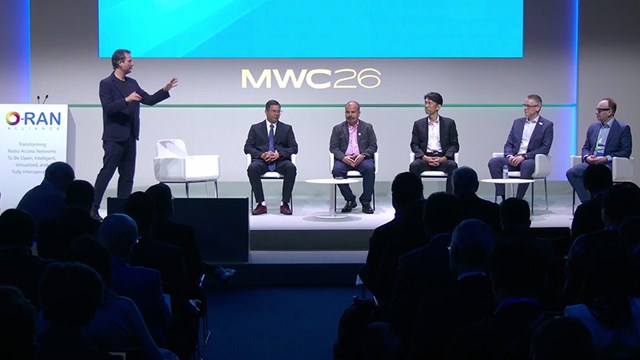
In this panel discussion, experts from Vodafone UK, Juniper Networks, Liberty Global and the NGMN Alliance explore practical strategies for making telecom networks more energy efficient. From decommissioning legacy infrastructure and leveraging automation to smarter radio access network deployments and AI-powered optimisation, they tackle both the challenges and the urgency of sustainable network operations – without compromising performance or customer expectations.
Broadcast live 3 June 2025
Featuring:

Anita Döhler
CEO, NGMN Alliance

Lee Jones
Senior Manager Energy & Net Zero, Vodafone UK

Neil McRae
Chief Network Strategist, Juniper Networks

Suzana Grujev
VP Mobile Access Strategy, Liberty Global