- Intel secures $2bn investment from SoftBank Group
- SoftBank lines up Stargate factory in Ohio
- Deutsche Telekom and Nvidia pitch 5G+ gaming
In today’s industry news roundup: Intel has landed an investment from Masayoshi Son’s SoftBank Group and may get a further equity boost from the US government; SoftBank Group has hooked up with Foxconn to make Stargate Project datacentre gear at a factory in Ohio; Deutsche Telekom is launching a 5G standalone-enabled gaming service with Nvidia; and much more!
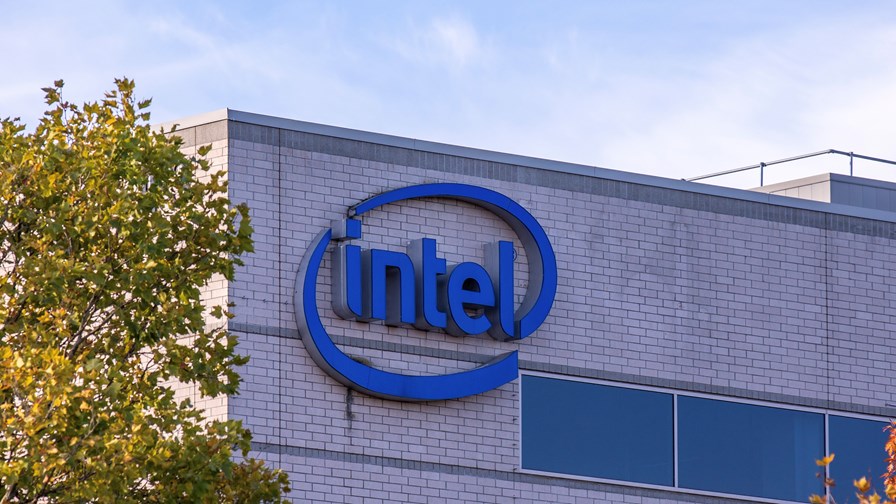
Intel received a welcome break on Monday when SoftBank Group, the giant Japanese tech and investment firm headed up by Masayoshi Son, announced a $2bn investment in the beleaguered chip giant, equivalent to an almost 2% stake in the firm. “The investment comes as both Intel and SoftBank deepen their commitment to investing in advanced technology and semiconductor innovation in the United States,” noted the Japanese firm in this announcement. (More on SoftBank’s US endeavours in a moment…) Intel, as a reminder, is scrambling to get back on its feet after a tumultuous couple of years that saw it sink into financial difficulty as various strategic decisions failed to pay off and as rival Nvidia emerged as the king of the AI processor world. CEO Lip-Bu Tan is revamping the company and recently announced that the chip vendor is to spin off “key elements” of its Network and Edge Group (NEX), the part of the company that is most relevant to the telecom sector, into a separate business as part of the company’s ongoing restructuring process. Tan has also been caught in the crosshairs of US President Donald Trump in recent weeks (but more on that in a moment too). Yet Intel is too big and important to many customers and partners, and the US economy, for it to be left to collapse, and news of financial support from SoftBank was welcomed and seen as a vote of confidence from SoftBank Group’s chairman and CEO, Son, in what Tan is trying to do at Intel. Son stated: “Semiconductors are the foundation of every industry. For more than 50 years, Intel has been a trusted leader in innovation. This strategic investment reflects our belief that advanced semiconductor manufacturing and supply will further expand in the United States, with Intel playing a critical role.” Intel’s CEO Tan, who knows Son well from his time on the SoftBank Group board, added: “We are very pleased to deepen our relationship with SoftBank, a company that’s at the forefront of so many areas of emerging technology and innovation and shares our commitment to advancing US technology and manufacturing leadership. Masa and I have worked closely together for decades, and I appreciate the confidence he has placed in Intel with this investment.” SoftBank Group is paying $23 per share for its investment: Intel’s share price closed on Monday at $23.66 but looks set to rise today following the vote of confidence from Son.
That wasn’t the end of the Intel investment news… As mentioned, US President Trump has been taking a keen interest in Intel in recent weeks, first calling for Tan to step down from his job and then meeting with the Intel CEO at the White House, after which he praised the chip firm’s leader: That encounter fuelled speculation that the US government might take a stake in Intel. Now, according to Bloomberg, the US administration is in talks to convert the $10.9bn in federal grants (from the Chips Act fund) that Intel is due to get from the government into equity, a move that would give the US state a roughly 10% stake in Intel.
The news gives Intel a temporary lifeline and some strong backers in its corner, but that’s not enough, according to veteran tech sector analyst Richard Windsor. In his latest Radio Free Mobile blog, he notes: “While these investments would certainly help keep Intel alive and buy it some time, they will do nothing to alleviate Intel’s problem of being stuck in a strategic quagmire or stop its competitors from devouring its business.”
And back to SoftBank… The Japanese giant is a lynchpin of the Stargate Project, a new company that plans to build AI datacentres across the US over the next four years with up to $500bn of investments. The company was announced in January, with SoftBank Group, OpenAI, Oracle and Abu Dhabi-based tech investment firm MGX as the lead companies. Now SoftBank has purchased (for a reported $375m) a former electric vehicle factory in Lordstown, Ohio, from giant Taiwanese tech product manufacturer Foxconn and the two companies are to collaborate on the production of datacentre equipment for Stargate Project facilities at the site, according to Foxconn chairman Young Liu.
Deutsche Telekom (DT) is already banking on cloud gaming to drive takeup of its 5G standalone (SA) service, choosing to market specific 5G SA-based use cases to its subscribers as opposed to a general 5G SA network launch. The Germany-based operator first launched a 5G+ gaming option based on network slicing in October last year, later extending the offer to Apple iPhones and additional Android smartphones. At the time, it said it would “successively expand its 5G+ offering by adding new partners”. Enter Nvidia, the AI technology giant that is already partnering with DT in fields such as AI and the sovereign cloud, and has wider aims to become an indispensable vendor and partner to the telecom network operator community. At Gamescom 2025, DT announced plans to launch a new 5G+ gaming offering with Nvidia from autumn 2025, underpinned by technologies such as network slicing and L4S (low latency, low loss, scalable throughput). The new offer will also integrate GeForce Now, Nvidia’s cloud gaming platform, with DT’s 5G SA network. GeForce Now supports more than 2,300 game titles from digital games stores, such as Steam, Epic Games, Xbox Game Pass, Battle.net, EA and Ubisoft Connect, with another 2,500 titles apparently coming in September. To use the 5G+ Gaming option, customers will need a current MagentaMobil plan from Telekom Deutschland and a device compatible with the 5G+ Gaming service. Supported smartphones for GeForce Now include the Samsung Galaxy S24 Ultra and the latest Galaxy S25 series
The outgoing CEO of Vodafone Idea (Vi) has hailed the most recent three-month reporting period as a “decisive turnaround quarter”, even though the Indian operator continues to be burdened by high levels of debt, and profitability appears to remain a distant target. Despite its ongoing challenges, Akshaya Moondra, whose three-year tenure came to an end on Monday (18 August), claimed that Vi has a “solid foundation in place” and is “well positioned to seize emerging growth opportunities in the industry”. He added that the operator remains “engaged with lenders to secure debt financing” as it seeks support for “broader capex plans” of 500bn to 550bn rupees (INR) ($5.74bn - $6.32bn). During Monday’s earnings call for the first quarter, ending 30 June, Moondra reportedly said that Vi is exploring non-banking funding sources to underpin its future investment plans. Vi was able to report a 4.9% year-on-year increase in revenue for the quarter to INR 110.2bn (US$1.26bn). Cash earnings before interest, taxes, depreciation and amortisation (EBITDA) grew by 3.7% to INR 21.8bn ($250m). However, the loss after tax widened to INR 66bn ($758m), up from INR 64.32bn a year previously. Capital expenditure (capex) for the quarter stood at INR 24.4bn. On a more positive note, debt from banks was reduced further to INR 19.3bn, down from the INR 46.5bn reported a year previously. In terms of the operator’s quarterly highlights, Moondra said investments in its 4G network have started to pay off with a 90% lower subscriber loss compared to the second and third quarters of the previous financial year. 4G population coverage now stands at around 84%. 5G services have now been launched in 22 cities across 13 circles, and there are plans to expand 5G to additional cities in all 17 circles by September. Meanwhile, Moondra has now handed over the CEO baton to chief operating officer Abhijit Kishore, who began his three-year term on Tuesday (19 August). Although the Q1 figures show that some progress is being made, Kishore faces an uphill battle to further stabilise the business. According to independent market analyst Ambareesh Baliga, it is still not clear when Vi will be profitable.
Pressure continues to build the resources required to support the storage and processing of data underpinning generative AI (GenAI) as bigger datacentres are constructed around the world. A new report on the datacentre physical infrastructure (DCPI) market from Dell’Oro Group has provided insights into the growing need for cooling technologies to help dissipate the heat that is generated by rising computing workloads in datacentre facilities. According to Alex Cordovil, research director at Dell’Oro Group, liquid cooling is now “moving from niche to necessary” as AI is “reshaping facility design from the rack up”. He added: “Our latest forecast shows the market scaling faster and more broadly than earlier expected, with vendors and operators adapting quickly to new thermal and electrical realities while navigating power constraints pragmatically.” Dell’Oro estimates that the worldwide DCPI market is projected to grow at a 15% compound annual growth rate (CAGR) from 2024 to 2029, reaching $63.1bn by 2029 as “AI-ready capacity accelerates through the mid-decade”. One consequence of this growth is that thermal management is projected to grow at a 19% CAGR by 2029. Within this sector, direct liquid cooling (DLC) is set to surge from a value of $1.1bn in 2024 to $5.8bn in 2029 as “rack densities rise with accelerated computing and DLC asserts itself as the dominant heat technology to dissipate heat out of the rack”. The report also forecasts that cloud and colocation service providers are set to grow at a 20% CAGR until 2029. While growth in the DCPI market is expected to be broadly based, North America is currently leading the charge, and EMEA and China are set to peak in around 2026.
– The staff, TelecomTV
Email Newsletters
Sign up to receive TelecomTV's top news and videos, plus exclusive subscriber-only content direct to your inbox.