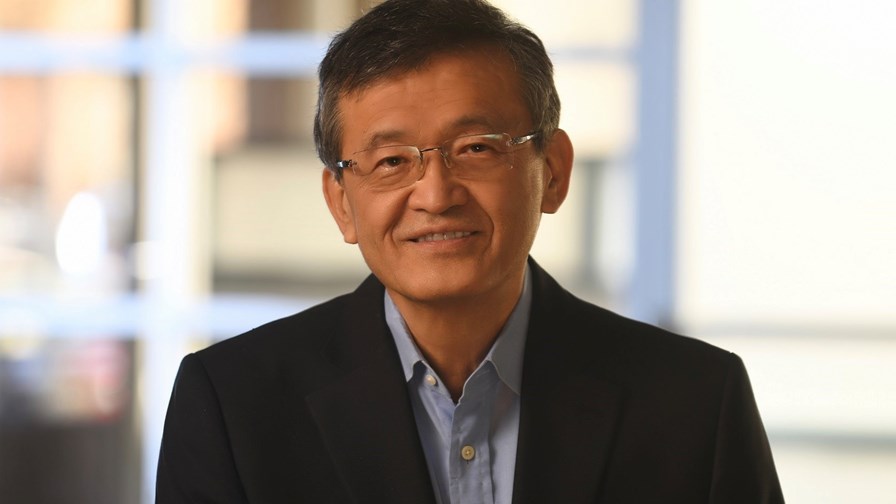
Lip-Bu Tan is Intel's new CEO.
- Intel CEO comes under fire from Trump
- GSMA cites strong growth in Pakistan
- Twilio reports impressive Q2 financials
In today’s industry news roundup: Intel CEO forced to defend his leadership and commitment to the US following criticism from President Trump; the GSMA praises Pakistan’s digital progress but warns policy barriers hinder broader mobile internet adoption; Twilio goes from strength to strength, reporting rising revenue, profitability and growing numbers of customers in the second quarter; and much more!
Intel has responded to public comments made earlier this week by US President Donald Trump, who wrote on his social media platform that “The CEO of Intel is highly CONFLICTED and must resign, immediately.” The post received considerable attention in the media, so much so that Intel CEO Lip-Bu Tan felt it necessary to write a response. In a note sent to all Intel employees yesterday, he wrote: “The United States has been my home for more than 40 years. I love this country and am profoundly grateful for the opportunities it has given me. I also love this company. Leading Intel at this critical moment is not just a job – it’s a privilege.” Tan confronted recent media coverage concerning his previous roles at Walden International and Cadence Design Systems, unequivocally assuring staff, “I have always operated within the highest legal and ethical standards. My reputation has been built on trust – on doing what I say I’ll do, and doing it the right way. This is the same way I am leading Intel.” The company also released a brief statement on the matter, stating that, “Intel, the board of directors and Lip-Bu Tan are deeply committed to advancing US national and economic security interests and are making significant investments aligned with the president’s America First agenda.” It emphasised its 56 years of US manufacturing and its investment in a new Arizona fabrication plant. Tan gave credit to Intel’s teams as the business moves towards high-volume semiconductor manufacturing using the country’s most advanced process technology: “It will be a major milestone that’s a testament to your work and the important role Intel plays in the US technology ecosystem.” He added that Intel's mission is clear and that “the opportunity is enormous”.
The GSMA has highlighted both strong progress and persistent challenges in Pakistan’s digital transformation. The organisation hosted the second Digital Nation Summit Islamabad this week, along with the publication of a new GSMA report. The research emphasised that although 81% of Pakistanis are covered by mobile broadband and 68% own smartphones, only 29% actually use mobile internet. This represents a usage gap of 52%, which the GSMA says is the highest in the Asia Pacific region. Julian Gorman, head of Asia Pacific for GSMA, said that indicates missed opportunities for digital growth: “Pakistan has the talent, ambition and vision to be a digital powerhouse, but policy barriers are holding it back.” He cited “high spectrum prices, heavy sector-specific taxes and regulatory uncertainty” as the key factors that are limiting investment in the country. Conversely, the summit showcased signs of progress, such as a sharp increase in women’s mobile internet use from 33% to 45%, which is the largest reported gain in any surveyed country, as well as major infrastructure initiatives from Pakistan’s Ministry of IT & Telecom. “Strategic initiatives, such as the launch of AI-enabled datacentres and cloud infrastructure, operationalisation of 40 Software Technology Parks, deployment of new submarine cables, and 17 telecom projects extending 1,825 km of optic fibre to over 500 underserved areas reflect our commitment to connectivity, innovation and inclusion,” said federal minister for IT & telecom, Shaza Fatima Khawaja. The GSMA’s recommendations include accelerating spectrum reform, rationalising sector taxation, expanding anti-fraud programmes and streamlining regulations
Twilio, the communications API company, has reported strong second-quarter financial results for 2025, with revenue climbing to $1.23bn, representing a 13% rise year on year. Communications revenue grew even faster at 14%, hitting $1.15bn, while segment revenue remained flat at $75.5m. CEO Khozema Shipchandler attributed the performance to strategic focus and solid execution, highlighting Twilio’s accelerating growth and record operational profitability: “The company’s focus and execution is paying off as Q2 marked another quarter of accelerated year-over-year revenue growth as well as record non-GAAP income from operations and free cash flow,” said Shipchandler. Other key metrics that telcos should keep an eye on are: More than 349,000 active customer accounts as of 30 June 2025, up from over 316,000 a year earlier; and a dollar-based net expansion rate of 108%.
ETSI’s Software Development Group OpenCAPIF (SDG OCF) has announced the release of OpenCAPIF 3.0.0, marking the next milestone in the development of its open API framework. The latest release brings a host of new features and enhancements designed to bolster functionality, security and user experience for network and service providers adopting the OpenCAPIF platform. Among the most notable updates is a new event filtering and reporting capability, enabling users to customise notification frequency. This marks a considerable improvement in usability and relevance of event-based communications. In addition, the platform now supports feature negotiation during provider registration, ensuring improved flexibility and compatibility across a variety of system configurations. OpenCAPIF 3.0.0 aligns with industry standards through an upgrade to the latest 3GPP CAPIF API Specification, version 18.7.0, reflecting ETSI’s commitment to keeping pace with evolving telecom frameworks. Dynamic configuration management tools have also been introduced, allowing administrators to fine-tune system settings with greater ease. Security updates include improvements to startup scripts, an upgrade of Gunicorn (Green Unicorn, a widely used Python WSGI HTTP server) and the implementation of new protection methods, such as public key infrastructure (PKI) and pre-shared keys (PSK). Furthermore, the release features expanded test suites and updated test plans to ensure reliable performance. Read more.
UAE-based telco du has agreed a partnership with Microsoft, Nokia, Khalifa University’s 6G Research Center and the ITU to launch the region’s first Arabic telecom large language model (LLM) focused on operational excellence. The company said that this collaborative effort will deliver an advanced AI language model tailored specifically for internal telecom operations. Its deployment is set to transform internal processes at du by enabling real-time complaint management, device issue resolution and the provision of intelligent, context-aware operational insights in Arabic, the first such model for the sector. “du Arabic Telecom LLM reflects our commitment to improving internal efficiency and customer experiences using advanced, culturally attuned solutions,” said Saleem AlBlooshi, chief technology officer at du. Looking ahead, du and its partners plan to expand the LLM’s capabilities beyond internal operations, including customer-facing features and multilingual support.
And finally today, what happens when a telecoms analyst goes on holiday? He writes a report about his network experiences... Appledore Research’s Francis Haysom took a vacation to Namibia and “couldn’t resist sneaking the occasional look at the country’s telecoms networks”. He observed that whilst the local operators were grappling with the same competitive pressures familiar to Europe and North America, Namibia also enjoys a chance to leapfrog current telco thinking, and to adopt new models and fresh ideas. You can read about his experiences here, but be warned, his holiday photos need some work (please Francis, no slideshows!)...
– The staff, TelecomTV
Email Newsletters
Sign up to receive TelecomTV's top news and videos, plus exclusive subscriber-only content direct to your inbox.