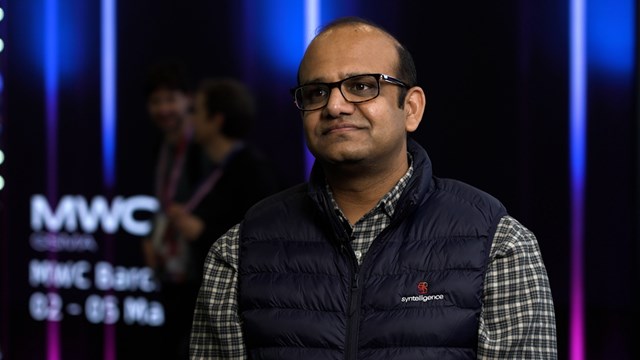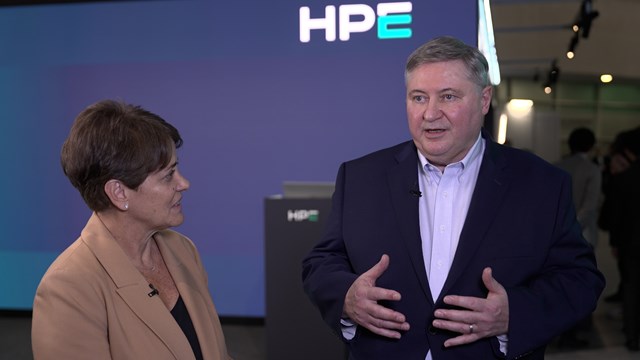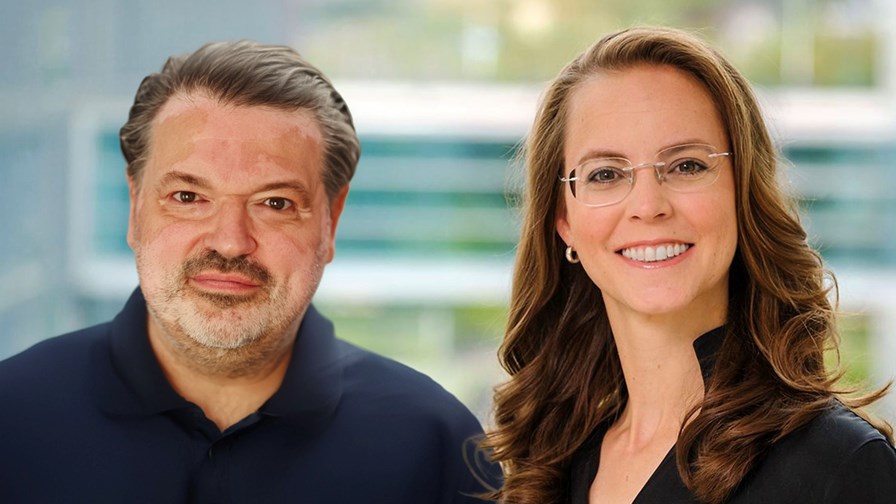
T-Systems movers and shakers: Andreas Schlegel, chief strategy & transformation officer, and Christine Knackfuss-Nikolic, chief sovereignty officer.
- DT’s T-Systems appoints chief sovereignty officer
- Bridging the digital divide by 2030 would cost up to $2.8tn – ITU
- South Korea’s KT and LG Uplus face cyberattack probe
In today’s industry news roundup: In a sign of the times, DT’s enterprise division has appointed its first sovereignty-specific executive; the projected costs of connecting the unconnected are rocketing; in the wake of SK Telecom’s breach, KT and LG Uplus are now being subjected to a deep cyberattack probe; and more!
Deutsche Telekom’s enterprise services division, T-Systems, has appointed Christine Knackfuss-Nikolic as its first chief sovereignty officer. Previously CTO at T-Systems, she is now responsible for “defining and implementing a company-wide sovereignty strategy tailored to customer-specific, regulatory, and geopolitical requirements” and will “focus in particular on developing differentiated value propositions across the entire portfolio to address the various sovereignty challenges faced by all customers.” In her new role, Knackfuss-Nikolic will continue to be responsible for T-Systems’ security business and will remain part of the management team. Ferri Abolhassan, CEO of T-Systems, stated: “The call for digital sovereignty is growing louder. Due to geopolitical uncertainties, more and more companies in Germany and Europe are demanding sovereign cloud solutions. They want to free themselves from dependence on hyperscalers and regain control over their own data.” In late June, and in response to growing demand for sovereign cloud services, Deutsche Telekom grouped its cloud services into one operation, T Cloud.
In addition to appointing Knackfuss-Nikolic as its chief sovereignty officer, T-Systems has appointed Andreas Schlegel as chief strategy and transformation officer to “continue the successful work of Christine Knackfuss-Nikolic in the areas of portfolio strategy, market intelligence and relations, and partner management.” Schlegel was previously deputy head of the Group Strategy & Transformation department at Deutsche Telekom. Schlegel’s role includes the “development and implementation of a comprehensive corporate strategy” with a focus on “innovation leadership, competitive differentiation, and lean portfolio management”.
United Nations agency the International Telecommunication Union (ITU) estimates that providing “universal, meaningful internet connectivity by 2030 could require an investment of $2.6tn to $2.8tn” at current prices: That’s nearly five times greater than a similar estimate published in 2020. The latest estimate has been shared in the Connecting Humanity Action Blueprint document released by the ITU and Saudi Arabia’s Communications, Space & Technology Commission (CST). Up to $1.7tn of that total is for the network infrastructure – “fibre networks in and around urban areas, 4G fixed wireless in rural regions, and satellites in the most remote locations” – needed to connect the 2.6 billion people around the world that don’t have online access. “The report outlines the challenges, projected costs and collaborative strategies needed to make sure everyone, everywhere, can use the internet, including the estimated one-third of humanity currently offline,” notes the ITU in this announcement. “Digital connectivity means creating opportunities for education, jobs, and access to essential services that can transform lives and communities,” stated ITU secretary-general Doreen Bogdan-Martin. “While significant resources are needed to meaningfully connect everyone, these are investments that will contribute to a prosperous digital future for all.” There’s no mention of where this money might come from, though.
South Korea’s Ministry of Science and ICT has opened a formal investigation into suspected cyberattacks on KT Corp and LG Uplus following allegations that the network operators may have been subject to breaches similar to that suffered by SK Telecom, which is still reeling from the massive cyberattack it first reported in April. The Korea Herald reports that the ministry is undertaking “on-site inspections and digital forensic analyses” at the two telcos “to determine whether unauthorised access occurred within the companies’ network systems.” The decision to launch the investigation follows reports from an ethical hacker that there is evidence that the Korean telcos’ systems had been breached. Both KT Corp and LG Uplus, which are already benefitting from the fallout of SKT’s breach, pledged major investments in their cyber defences following their rival’s cyber incident – see KT, LG Uplus make hay as SKT suffers.
AI and cybersecurity are the top concerns in the digital work environment, according to a Future of Work survey of IT, change and human resources professionals across six sectors conducted by Motivaction and Dutch telco KPN. The survey results show that “64% of professionals believe that AI without a clear ethical framework poses more risks than benefits”. KPN board member Chantal Vergouw stated: “The use of AI rightly raises questions about ethics, privacy, energy consumption and employment. Therefore, the implementation of AI requires great care. At the same time, AI is a huge driver of innovation and process optimisation. It helps us serve our customers even better by detecting and resolving malfunctions more quickly or taking over repetitive work, creating more time for human interaction and more room for empathy and creativity. The use of AI is not just an IT or HR project; it’s crucial that leaders actively embrace AI as role models.”
– The staff, TelecomTV
Email Newsletters
Sign up to receive TelecomTV's top news and videos, plus exclusive subscriber-only content direct to your inbox.