Red Hat cements its sovereign credentials with Telenet deal and new products

By James Pearce
May 15, 2026
- Telenet Business has turned to Red Hat to develop a sovereign private cloud platform
- The IBM-owned company announced a slew of new sovereign products and partnerships at its annual partner event
- Red Hat has also been delving into the sovereign AI needs of enterprises
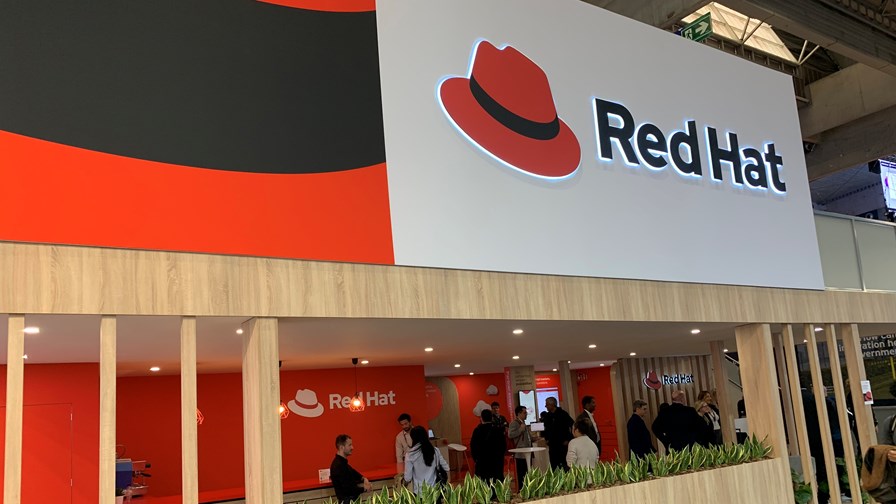
Sovereignty topped the agenda at the recent Red Hat Summit event, where the IBM-owned open-source solutions specialist made a raft of announcements, including a deal with Belgium’s Telenet Business to develop sovereign private cloud infrastructure.
Telenet, which is part of the Liberty Global empire, will use Red Hat Openshift as the foundation of a “modernised” private cloud infrastructure that the business-to-business (B2B) managed service provider will pitch to its more than 10,000 business customers across Belgium, Red Hat noted in this announcement.
As enterprises look for localised compute services, Telenet will run OpenShift across two regional datacentres to establish a sovereign private cloud environment where virtual machines and containerised applications can co-exist on the same hardware and management layer.
Telenet will manage this through Red Hat’s Advanced Cluster Management for Kubernetes platform, which provides a single management view across both datacentre clusters.
Red Hat said Telenet’s migration is already underway, with some 200 of almost 1,000 virtual machines (VMs) having already been moved. The platform also offers built-in resilience, as required by government and enterprise clients, by replicating data four times across the two sites.
Dave Van Ingelghem, technical product manager for datacentres at Telenet Business, said: “Telenet Business requires a platform that helps strengthen the protection of our data without sacrificing the ability to modernise. Red Hat OpenShift has been a positive step toward a future-ready environment by allowing us to consolidate our workloads onto a single platform and automate recovery across sites. With Red Hat, we have the flexibility to choose our own future
as we evolve to serve customers.”
The mention of sovereignty in the announcement is significant because it comes as Red Hat is attempting to reposition the topic from a compliance issue for European companies to a global strategic priority for enterprises that want more control over their IT estate.
At its summit, Red Hat announced new sovereign and private cloud capabilities that expand sovereignty to include vendor independence, AI control and operational autonomy. These new capabilities include streamlined compliance for EU frameworks, production-ready landing zones, a new service provisioning interface for sovereign AI and cloud, on-premises telemetry for data sovereignty and premium sovereign support for EU customers.
It also unveiled a partnership with sovereign cloud and AI infrastructure provider Core42 “to architect and deliver sovereign cloud and AI services for the public sector, defence and other regulated industries across the UAE,” and a “significant expansion” of its long-standing collaboration with French tech services and software company Sopra Steria to “help accelerate sovereign AI initiatives”.
Sovereignty or trust?
The developments come as the telecom industry is looking to sovereign cloud and AI as a potential opportunity to boost revenues, something that a number of telcos are already doing: One example is Canada’s Telus, which sold the entire capacity of its initial sovereign AI factory in less than six months. TelecomTV’s new DSP Leaders report, Digital Sovereignty: What it Means for Telcos, includes other examples from around the world.
Red Hat’s parent company, IBM, is also getting in on the act, with the announcement last week of the availability of IBM Sovereign Core, a software platform designed to offer enterprises full operational control over sovereign cloud deployments without hyperscaler-managed regions.
According to Gartner, worldwide spending on sovereign cloud infrastructure will hit $80bn in 2026, up 36% from 2025.
At a recent media briefing held at IBM’s London offices and attended by TelecomTV, representatives from Red Hat and several of its partners outlined the importance of sovereignty to enterprises in key European markets (France, Germany, Italy, the Netherlands and the UK), especially when it comes to AI.
Red Hat, which defines sovereignty as the ability to maintain control over choices, policies and AI systems, also shared the results of a recent survey it had conducted about sovereignty.
According to the results of the survey, which was carried out by Censuswide on behalf of Red Hat, 67% of UK IT leaders have developed an AI exit strategy in case their primary AI provider restricts access to services, while 45% of organisations surveyed by Red Hat said having full end-to-end control over data remains a “work in progress”.
Red Hat has long been a proponent of open source and, according to the company, adopting an open-source approach to cloud and AI can be of benefit to organisations looking to take control of their technology because it makes switching providers easier, giving enterprises and governments more control.
The survey found that 89% of respondents were in favour of policy and regulation that would mandate open-source principles for AI sovereignty, with 80% seeing it as providing greater control, and 87% noting it provides greater transparency and easier auditability.
One of the speakers at the briefing was Dan Sinclair from Accenture who argued that sovereignty should not just be thought of as residency – i.e. where data is stored geographically – but should also be thought of in terms of capability.
He said: “It is the capability to choose the best model, the capability to audit all the decisions that your agents are making at any given time but also the ability to have a kill switch to stop malware or bad actors, or agents not working as they should.”
He noted that Europe has a good track record with sovereignty when it comes to data, particularly in regulated sectors, such as financial services or healthcare. But it is the question of model sovereignty – control over which large language model (LLM) is being used as opposed to being locked into just one model – where open source really flourishes, as it allows users to switch more easily.
“We can learn a lot of lessons from public cloud adoption. We’ve seen what happens when organisations are locked into specific providers. We are so early in the cycle [of AI] that enterprises can’t afford to make large-scale bets on just one provider because the market is moving so quickly.”
For Francesco Giannoccaro, head of hosting at the UK Health Security Agency, AI sovereignty is built around issues of trust.
“Firstly, there is a question of whether you can trust an AI itself,” he explained. “That means understanding the quality of the models – how have these been evaluated, how they perform on a specific domain, and can I inspect and tune those models properly? This is where open models are especially valuable because it helps make models more cost effective and provides transparency.
“The second question is whether I can trust the wider platform built around the model – where is this being hosted and does it protect data integrity, security and confidentiality from both input and output?”
- James Pearce, Editor, TelecomTV
Email Newsletters
Sign up to receive TelecomTV's top news and videos, plus exclusive subscriber-only content direct to your inbox.