How Orange Business is revamping its IT stack with Blue Planet

By Ray Le Maistre
Sep 8, 2025
To embed our video on your website copy and paste the code below:
<iframe src="https://www.youtube.com/embed/Uto2b1Qz1Z8?modestbranding=1&rel=0" width="970" height="546" frameborder="0" scrolling="auto" allowfullscreen></iframe>
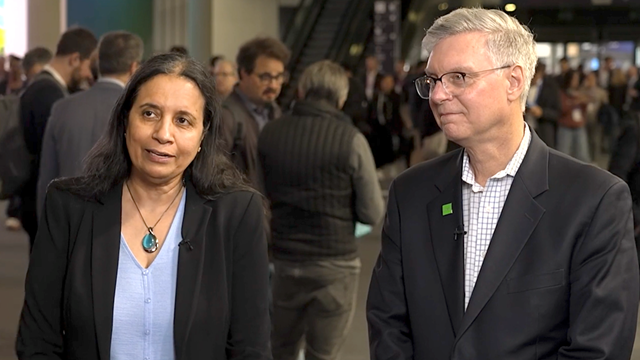
Orange business, the enterprise Services division of the Orange Group and Ciena's Blue Planet made headlines recently with news of a strategic and transformational engagement. And to tell us more, I'm joined today by Hriday Ravi, chief Digital and Information Officer at Orange Business, and Joe Cumello, senior VP and general manager at Blue Planet, which is a division of Ciena. So welcome gentlemen. Let's start by getting you to introduce yourselves fully and by giving us a brief overview of your companies Hriday. Let's start with you.
Hriday Ravindranath, Orange Business (00:44):
Thanks Ray. So I'm the Chief Digital and Information Officer at Orange Business, and I lead the technology stacks as well as I've got the digital mandate, which is essentially shifting our business online. So what we do at Orange Business is essentially we serve small medium enterprises all the way to the largest multinational companies in the world. And we essentially sell connectivity cloud and cybersecurity services.
Ray Le Maistre, TelecomTV (01:09):
Okay, thanks Hriday and Joe, tell us about your role and more about Blue Planet.
Joe Cumello, Blue Planet (01:15):
Well, I'm the general manager of the Blue Planet Division, and we're part of obviously Ciena Corporation. This organization is a hundred percent focused on building AI powered autonomous networks for our customers, really focused in the OSS space. Excited to be here today to have the conversation with you,
Ray Le Maistre, TelecomTV (01:36):
Hriday, You recently gave an update about Orange Business' digital transformation, and its entirely new B2B it stack. What motivated Orange business to pursue a greenfield AI native transformation strategy?
Hriday Ravindranath, Orange Business (01:53):
Yeah, sure. So our customer's world is completely changing because of ai, because of the cloud, because of ization of networks. But it's not just what they want to consume from us that's changing. It's also the way they want to consume services is changing. Essentially. They want to completely move online. They want to use our portals, they want to integrate it with us using APIs. So the entire service experience needs to be completely digitizing. This is what our customers expect from us. And if you look at our entire product portfolio as a result of these changing needs, each and every part of our product portfolio is getting reimagined as next generation digital products built with next generation customer journeys. But unfortunately, when you look at our IT stack, it's built for a previous generation. So one of the big shifts we decided to do is build an IT stack, a new greenfield IT stack completely from the ground up to launch these next generation products and services.
Ray Le Maistre, TelecomTV (02:50):
And Joe, what are the biggest challenges in executing a transformation of this scale? And how are service providers like Orange Business addressing them?
Joe Cumello, Blue Planet (03:00):
Thanks very well. We see customers tackling transformation in a couple of ways. I think you have sort of the top down approach, such as what Orange is talking about, where they make a strategic decision as an organization that drives alignment across all the functions. And the goal, each goal is different based on the operator, but one of the ones we hear a lot about these days is we want to get to an autonomous network or an AI driven autonomous network, and we're making a strategic decision as an organization on how to reach that. The second way is by use case or by a business problem, we want to tackle inventory consolidation or put in a new assurance platform and then the customer decides how they want to expand from there. So I think based on that, there are two, there's a couple of different challenges that erupt from these types of implementation strategies.
(03:51):
But the biggest one occurs when there's a lack of internal alignment, right? A lack of internal alignment, let's say, between different organizations between the partners and the vendors that are being brought to the table. And that triggers a whole set of things such as corresponding cost and complexity, escalations, et cetera. So it's our belief, and we've seen it time and time in the market that transformation programs that go the smoothest are those where there's a very clear vision and a very well managed timeline where you have executive sponsorship across all functions. And I think if you can see here from ADE's comments that Orange has that kind of vision that they're aligning to across the whole organization. And I think that'll lead to a great outcome for their customers and their business.
Ray Le Maistre, TelecomTV (04:43):
Thanks, Joe. Now Hriday, how does Blue Planet's orchestration and service assurance technology fit into Orange Businesses' transformation roadmap?
Hriday Ravindranath, Orange Business (04:54):
Yeah, sure. So when we decided to go greenfield, the first thing we wanted to do was build an IT stack with cutting edge technology. So we wanted to go with a best of breed approach that was fully modular, and we absolutely wanted the best of the best. So we ran an extensive RFP process that ran several months. We also ran a hackathon as part of that, which ran for about a month where we invited multiple partners to come and compete in a real world environment, a whole bunch of use cases. So quite an extensive selection process. And then we finally chose Blue Planet specifically for service fulfillment and service assurance for its AI powered capabilities. It needed to fundamentally be also cloud native because we wanted to deploy it on our sovereign infrastructure, which is a critical requirement, especially to serve our French and EU customers in a regulatory context such that we can deliver services in a trusted way. It needed to be aligned to TM Forum and met standards. And I know that Blue Planet are really active in their participation in these forums such that they also drive the industry bodies to conform to a set of standards. And this was quite important to us as well as a company.
(06:05):
It needed to have a data-driven architecture. And again, blue Planet was a clear leader in this space, and it also had, the company also had the capabilities that it had. It also had a huge catalog of out of box adapters, which enabled us to essentially launch products faster. So we can basically add a new vendor in, add a new component in a really quick way without having to rebuild all of that ourselves. And the final point is we wanted to completely transform our operating environment as we decided to go greenfield. It's not just about the it we were building next generation customer journeys as well, which essentially embedded ai. And again, we were really excited to see the recent announcements from Blue Planet on this,
Ray Le Maistre, TelecomTV (06:50):
And so ticking a lot of boxes there. But Joe, from your perspective, how do service providers measure success in this transformation journey?
Joe Cumello, Blue Planet (07:01):
Well, every operator looks at their success measurements different, but I break the general categories into two buckets. You have the KPIs that are focused on the customer experience, things like improved time to service or improved fulfillment of orders, reduction of outages. And these are the types of measurements that correlate to ensuring that great customer experience to reduce churn, keep revenue flowing, et cetera. So that's sort of the first set. The second set is KPIs that are focused on operational efficiency. These can be things like the number of platforms that are being retired, the cost of paying for those platforms, and what are the reductions of those costs and how are we measuring that? How many closed loop processes are being activated? Because closed loop processes tell you exactly where automation is fitting in and how many manual processes are disappearing, the manual interventions cost money, the automation of new service deployment, and how quickly those services get to customers. So these all signal a reduction in complexity and a reduction in cost, and also signal that our operator customers can get services to market faster. So those are sort of the two buckets, customer experience and operational efficiency in general.
Ray Le Maistre, TelecomTV (08:18):
And finally, Hriday, what future innovations or capabilities do you envisage as part of the Orange Business and Blue Planets collaboration? And can you comment on the design partnership and the co-innovation objective of the two companies?
Hriday Ravindranath, Orange Business (08:35):
Yeah, sure. So traditionally our industry, the telco industry has used to buying software and essentially customizing it to our needs. I mean, we do this ourselves or with an si. We wanted to completely shift this model in the way we're building our new stack. And essentially what we've got into in terms of our design partnership with Blue Planet is it's a co innovation agreement where we can essentially drive their product roadmap based on our needs and as our needs as we are shifting to this digital operating model and we're shifting the game in terms of experience with our customers and we are adding new products in. It's also an amazing opportunity for us to work with a partner like Blue Planet to actually drive their product roadmap. And I think it benefits Blue Planet as well because they have the opportunity working with one of the largest telcos in the world, working with multiple customers in the back of our engagement to help of course drive their product.
(09:35):
So this feels like a good win-win agreement for both companies. Some examples of this is we're working on what we call intent driven orchestration and net DevOps, essentially converting operational requirements into an intent model, but using AI to use natural language to be able to drive automation through the stack. Another example is a digital twin capability that we're looking to explore as well, where we can actually use a digital twin and test designs in that digital twin environment before we actually deploy it into our customer networks. Also, I mean, the fact that we're using Blue Planet for both fulfillment as well as assurance, we can actually really mature the closed loop automation and self-healing capabilities because it's the same. I mean, we are using Blue Planet to monitor the network infrastructure and our customer's environment, but also we can essentially drive the automation to actually make corrections within the environment using the fulfillment stack. So it's a good combination of capability that it helps us drive this closed loop automation as well.
Ray Le Maistre, TelecomTV (10:44):
Well, that sounds like a great collaboration, Hriday, Joe. We look forward to finding out how the Orange business and Blue Planet relationship develops and to speaking to you both in the future. Thanks very much for joining us today.
Please note that video transcripts are provided for reference only – content may vary from the published video or contain inaccuracies.
Hriday Ravindranath, Orange Business and Joe Cumello, Blue Planet, a division of Ciena
Orange Business has turned to Blue Planet, a division of Ciena, to help it develop an entirely new, AI-enabled IT stack that can meet its strategic needs. Hriday Ravindranath, chief digital and information officer at Orange Business, and Joe Cumello, senior VP and general manager at Blue Planet, discuss the motivations behind the deployment, the challenges associated with such a major transformation, and the role that Blue Planet’s orchestration and service assurance technology will play in the greenfield platform.
Featuring:
- Hriday Ravindranath, CDIO, Orange Business
- Joe Cumello, SVP and GM, Blue Planet, a division of Ciena
Recorded August 2025
Email Newsletters
Sign up to receive TelecomTV's top news and videos, plus exclusive subscriber-only content direct to your inbox.