- Apple has fallen behind its big tech rivals in terms of AI development
- It has now turned to Google for help with its foundation model
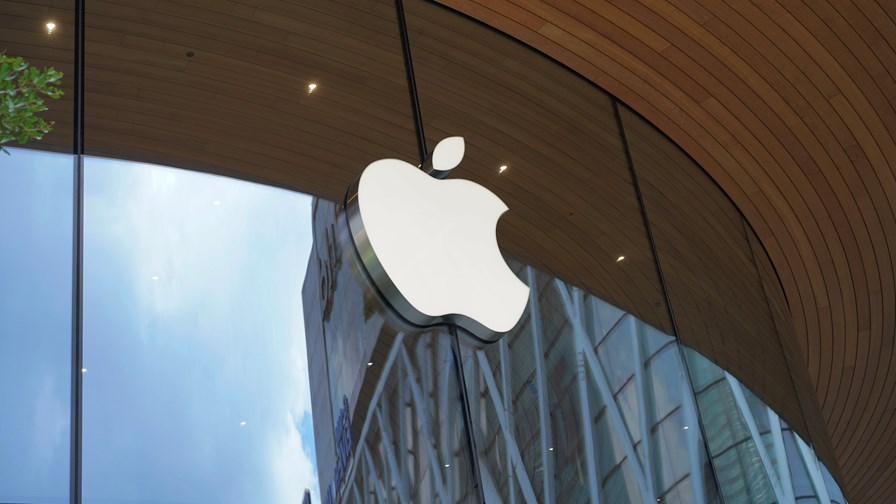
In what might be considered a slightly embarrassing development, Apple has turned to Google for help with the development of its AI foundation models, a move that analysts believe will certainly help it in the short term but that one industry watcher believes could be detrimental in the long run if the relationship is lasting.
Apple has been struggling to keep pace with major big tech rivals, and newcomers, in the AI race and has fallen behind to such an extent it is now having to lean on Google to haul itself back to at least near parity. This isn’t exactly new territory for the big tech pair: Apple integrated Google Maps on the iPhone in the early years until it developed its own maps application.
The companies issued a short joint statement about the new relationship. “Apple and Google have entered into a multi-year collaboration under which the next generation of Apple Foundation Models will be based on Google’s Gemini models and cloud technology. These models will help power future Apple Intelligence features, including a more personalised Siri coming this year.”
They added: “After careful evaluation, Apple determined that Google’s Al technology provides the most capable foundation for Apple Foundation Models and is excited about the innovative new experiences it will unlock for Apple users. Apple Intelligence will continue to run on Apple devices and Private Cloud Compute, while maintaining Apple’s industry-leading privacy standards.”
A sensible, pragmatic move? Anisha Bhatia, senior technology analyst at GlobalData, reckons so. “The move signals Apple’s intent to fast-track the long-promised overhaul of Siri’s core artificial intelligence (AI) capabilities – first outlined two years ago, but yet to reach users at scale,” noted the analyst in an email sent to the media.
“For Apple, partnering, rather than building an end-to-end AI proprietary model stack, could compress time-to-market and reduce execution risk by leveraging mature, already-deployed technology. For Google, the arrangement represents a material commercial upside – estimated at around $1bn per year in revenue from Apple – with further growth potential as enterprise and consumer AI adoption scales,” she added.
It is also positive for Google from a competitive standpoint, reckons Bhatia. “The partnership also carries important competitive implications. OpenAI has positioned itself as a direct challenger to Google across search-adjacent and assistant use cases while simultaneously expanding beyond a model provider into a consumer-facing product ecosystem – including working with Apple design veteran Jony Ive on a dedicated AI device. In this context, deeper integration with Apple strengthens Google’s distribution and monetisation footprint at a time when competitive pressure is rising. And despite relying on Google’s Gemini models and cloud infrastructure, Apple can still preserve its privacy-and-security positioning by keeping user data flows, identity controls and policy enforcement within Apple’s own trust boundary.”
That may well be the case, but seasoned tech sector analyst Richard Windsor sees trouble ahead for Apple as a result of this agreement.
In his latest Radio Free Mobile blog, Windsor noted: “if AI becomes a point of differentiation, then Apple has just ceded any edge that it had to Google… It is also an indication of the size of the hole that Apple finds itself in, as AI is the last thing that it should be relying on a competitor to provide.”
He continued: “In effect, Apple is in the pits for an engine change, but the car itself will remain the same… The result will be Gemini with an Apple wrapper, and while this will help fix Apple’s short-term problems, it sets up a dependency on a competitor that could be highly problematic” because Apple’s user experience will lag that of Google’s Android users and so make it harder for Apple to charge a premium for its products, argues Windsor.
“This is why it is imperative that Apple creates (or buys) its own AI and gets off Google as soon as it possibly can. Failure to do this could result in gross margin and brand erosion and market share loss to high-end Android products, where Samsung and Qualcomm would be the main beneficiaries,” he added.
This isn’t a scenario that’s likely to materialise any time soon and is not an immediate concern as AI agent-based user experiences are likely to arrive initially on smart glasses and in the automotive sector. But the sector will soon catch up with Apple’s core markets and Windsor believes the iPhone giant needs to redouble its efforts to “achieve AI independence as soon as possible, as the consequences of failure could be dire.”
- Ray Le Maistre, Editorial Director, TelecomTV
Email Newsletters
Sign up to receive TelecomTV's top news and videos, plus exclusive subscriber-only content direct to your inbox.