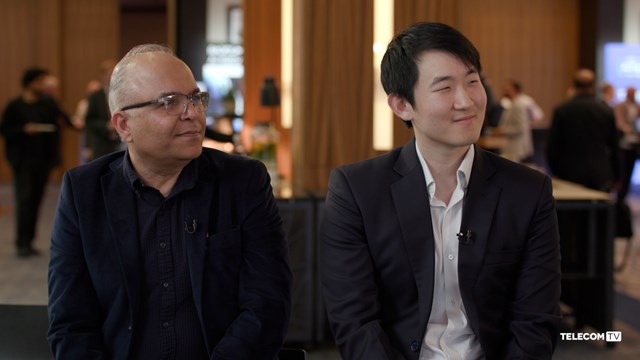
Doron Sterlicht, Tehila Atar, Nikhil Digde
Amdocs
Esti Etrog, Anshul Jindal, Daniele Tafani
NVIDIA
Structuring autonomy with NVIDIA NemoClaw and embedding control through NVIDIA OpenShell
Proactive agents are changing the way telecom operators function, enabling them to identify trends across large customer populations and take early, targeted action by offering the right promotion, sending timely notifications, or resolving issues before they affect the customer experience. This shift promises higher ARPU, lower churn, and better customer experiences, but only if autonomy is tightly governed and trusted at scale.
Such change requires control at cohort-scale. When a single decision can trigger actions across millions of subscribers, there must be clear scope, policy, and authority boundaries to ensure each action is governed and aligned with business and operations policy.
Core Architecture Principles
Verifiable identity and delegation: Agent impersonation is not permitted. Each agent operates as a distinct, auditable actor with explicitly scoped permissions, with no shared credentials or hidden logic. This allows operators to know exactly which agent acted on which customer, product, or network resource at any time.
Policy-driven execution must act as a control point: Business intent (eligibility / targeting rules / offer limits) is enforced at execution time. When needed, these policies can trigger approval workflows before an action is applied, ensuring that proactive agents remain aligned with commercial strategy, risk thresholds, and regulatory obligations.
Strict execution isolation: Each action is independently scoped, with no cross-customer, cross-context, or cross-tenant leakage. This prevents scenarios where an action intended for one customer accidentally impacts another account.
Controlled decision boundaries: Governance extends to how decisions are computed, including which models are used, which systems are reachable, what data they can access and under which conditions are decisions made. For example, operators can enforce that only local or approved models are used for sensitive or regulated tasks..
Layered AI Safety in Practice
Multi-layered AI safety across identity, network, and workload can be achieved using three complementary components:
NVIDIA NemoClaw structures agents as governed delegates. In delegate mode, each agent has a unique verifiable identity, explicit permissions, and bounded scope of action. This moves agents from invisible automation to an accountable, traceable digital workforce.
An AI/Agent Gateway controls all traffic flowing between agents, LLM providers, tools, and other agents. Most organizations already have a gateway in place providing capabilities like LLM/inference routing, guardrails and content filtering, RBAC, rate limiting, and observability. This is a critical and capable layer.
NVIDIA OpenShell complements existing gateways by governing execution inside the agent's runtime environment. It enforces sandbox security across four layers: network, filesystem, process, and inference. Policy is enforced inside each sandbox through a combination of the proxy, OPA (Open Policy Agent), Landlock, and seccomp, ensuring that business rules, access controls, and system-level restrictions are applied as close to the agent as possible. Every outbound connection from the sandbox is evaluated by the CONNECT proxy against the OPA policy engine – nothing leaves unless explicitly allowed.
Kubernetes-Native and Open by Design
By design, this architecture fits naturally into existing operator environments. It runs on Kubernetes-native infrastructure, integrates with existing identity providers, API gateways, and CI/CD pipelines, and aligns with policy-as-code and GitOps principles. It remains open and portable, allowing operators to deploy consistently across on-prem, private cloud, and public cloud without introducing new proprietary control planes.
Applied at the agent level, these principles define each agent as a delegated entity with well-defined permissions, scope of action, and identity – accountable (who acted), with explicit permissions (what it can do), and bounded autonomy (how far it can go).
The result: the agent becomes a trusted executor.
Proactive Telecom Agents in Action
- Roaming package nearing depletion – proactively engage the customer
Consider a customer traveling abroad whose roaming package is expected to be exhausted within the next 24 hours. A proactive agent can detect the situation before the customer experiences a service disruption, verify eligibility for an extension or upgrade package, and initiate a personalized interaction through approved communication channels. If the customer accepts the offer, the agent can securely update downstream systems to activate the selected package. Throughout the process, every action remains bounded by policy, permissions, and approval rules, ensuring that customer engagement is both proactive and trusted.
- Enterprise grade governance with human in the loop – escalate for approval before action
Not every decision can or should be fully autonomous. An enterprise customer may reach predefined conditions or thresholds that require humans in the loop, such as commercial review, contractual validation, or management approval before any action is taken. In this case, the agent can collect the relevant information, prepare the recommendation, and route the case to the appropriate approver. The workflow continues only after approval is granted, ensuring that governance remains embedded within the execution process.
Building for What's Next
The agentic ecosystem continues to evolve, with emerging protocols, richer agent collaboration models, and new orchestration approaches expected to further expand autonomous capabilities.
While these standards mature, the foundational principles remain the same: verifiable identity, delegated authority, policy-governed execution, and accountability. NVIDIA is laying the foundation for those principals with the introduction of NemoClaw and OpenShell.
Combined with telecom domain expertise, business insights, and operational workflows, this creates a foundation that is ready not only for current use cases, but also for the next generation of agentic systems.
Architectural Takeaways
Proactive agents in telecom represent a shift to real-time autonomous execution across large customer populations. To make this sustainable, architecture must ensure that every agent has its own verifiable identity, every action is authorized, every execution is isolated, and every decision is bounded by policy.
This is what makes proactive AI not just powerful but safe to operate at scale — and ready for the regulatory, customer, and reliability demands of telecom.