- MeetKai partners with Veon for a sovereign AI rollout
- US senators propose telecom security act
- T-Mobile US expands use of AI-enabled network automation
In today’s industry news roundup: Sovereign AI firm MeetKai teams up with Veon for a ‘lab-as-a-service’ partnership in five countries; US senators file a bi-partisan bill, which will launch a self-certification platform for telco cybersecurity; T-Mobile is expanding its deployment of intent-based AI automation application Autopilot; and much more!
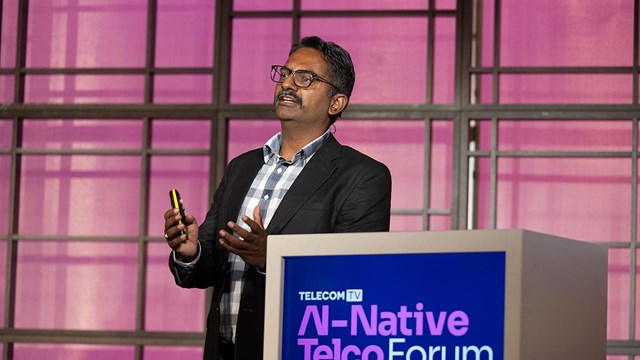
MeetKai, a “sovereign AI” company that builds and operates national AI platforms for governments and telcos, has announced a major rollout of its sovereign AI stack, which is built on Nvidia technology, in six countries, and is teaming up with Veon in five of those markets. In Brazil, MeetKai is working with IT services company Serpro, while in Ukraine, Pakistan, Kazakhstan, Uzbekistan and Bangladesh it is working with Veon. Across Veon’s five markets, home to more than 150 million mobile customers and over 225 million digital customers, MeetKai will act as Veon’s “AI lab-as-a-service”, beginning with Kyivstar in Ukraine, followed by Pakistan, Kazakhstan, Uzbekistan and Bangladesh, with each site operated by MeetKai together with the local telco partner. James Kaplan, co-founder and CEO of MeetKai, stated: “Sovereign AI only works when the entire AI stack, infrastructure to models, sits inside the country. That is a hard thing to build once and a very hard thing to build six times. Building on Nvidia turns it into a repeatable design: The same accelerated computing under every site, our platform and national models on top. Ukraine will have AI it fully controls, Brazil takes the same approach into Latin America on the back of our sovereign AI win there, and we will replicate it in every market in between.”
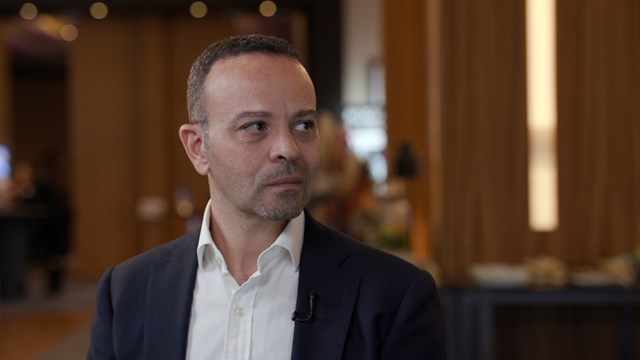
US senators have filed a bi-partisan bill that aims to ramp up cybersecurity in telecom by launching a voluntary self-certification system for vendors and operators. Republican senator Ted Cruz has partnered with Democrat Mark Warner to sponsor the bill which, if passed, would develop a framework between the government and private sector to help limit cyber intrusions. The proposed Telecommunications Cybersecurity and Resilience Act, which was filed on Thursday, would create a cybersecurity working group among providers, suppliers, cybersecurity experts and relevant state, local and federal agencies to “develop practical, risk-based cybersecurity best practices focusing specifically on the telecommunications sector”. It would operate within the National Telecommunications and Information Administration (NTIA). It comes, in part, in response to the Salt Typhoon cyberattack, which is allegedly linked to Chinese state actors and saw hackers gain access to the computer systems of nine US telcos in 2024. These were later revealed to have included Verizon, AT&T, T-Mobile US, Spectrum, Lumen, Consolidated Communications and Windstream. Warner, who is ranking Democrat on the Senate Intelligence Committee, described Salt Typhoon as the “worst telecom hack in our nation’s history”, saying it “showed us just how vulnerable our critical infrastructure is, but it does not have to be that way”. If passed, the NTIA working group has 18 months to draft and establish the first voluntary, industry-wide telecom security framework.
T-Mobile US is expanding its deployment of Autopilot, an “intent-based AI automation” application, as part of its self-organising network (SON) platform to enable its 5G network to automatically make adjustments as conditions change, for example during storms. “Recent testing showed AutoPilot can make real-time network adjustments in about half the time, helping the network respond faster when conditions change,” noted T-Mobile US in this announcement. The operator is also rolling out Dynamic CX, which “uses AI to anticipate demand ahead of major events and automatically optimise network performance”. Both Autopilot and Dynamic CX are now being deployed nationwide. John Saw, CTO at T-Mobile US, noted: “The next era of network resilience is about building a network that can think, adapt and act faster in the moments that matter. With AutoPilot, we’re taking the intelligence already built into our self-organising network and giving it even more ability to respond as conditions change, whether that means helping close a coverage gap caused by extreme weather, optimising performance or keeping customers connected during unexpected disruptions. That’s what makes a great 5G network stronger: Not just more capacity but more intelligence behind every connection.” The broader deployments are part of T-Mobile US’s preparations for the anticipated disruption caused during the upcoming storm season in the US, with the operator also noting it is making ongoing investments in backup power and diverse network connectivity options in order to help keep customers connected for as long as possible.
Telefónica has unveiled a new AI-enabled observability service aimed at helping its business customers gain real-time insights into the performance of their networks. The new offering, which is aimed at larger enterprises and public sector organisations, uses AI capabilities to unify network monitoring, analysis and event correlation into one platform. The Spanish telco said the new solution takes capabilities that were previously available as part of its Titan Connect advanced connectivity solutions portfolio to support organisations in recording the impact that network performance has on their business operations, and to anticipate potential incidents through data-driven insights. Eduardo Ariste, CEO of B2B and public sector at Telefónica España, said: “With this approach, we provide better service to the companies that work with us, enabling them to move from reactive to proactive management aligned with their business objectives, while reinforcing our position as the best gateway for enterprises to access digital technologies.” The service includes a dashboard designed as an operational management tool for IT teams, which combines data from LAN, WAN and Wi-Fi observability. It is being offered in two versions: The essential package which enables solution customisation based on operational requirements, or the premium package, which will be available from December and comes with all the abilities included in the essential package, plus open telemetry support, a data access application programming interface (API), an IT service management API that automatically generates incident tickets, and customisable reports.
Yesterday we reported that Liberty Global had struck a deal with Sierra to use its AI customer service tool, including at the operator’s UK joint venture operation Virgin Media O2 (VMO2). Only hours after that announcement, UK regulator Ofcom published new research that shows while people and small businesses are using AI to navigate phone, broadband and pay-TV markets, they have mixed views about it. The UK regulator’s Technology Tracker found that more than half (53%) of UK adult internet users had interacted with a generative AI (GenAI) tool or AI chatbot in the past 12 months. Some 8% use an AI tool in relation to their telecom services, with 6% using one to resolve a telecom issue, 3% using AI to make a price product or service comparison, and 2% using it to make a complaint. But while some respondents told the regulator they prefer using AI to human interaction, others expressed concern about not being able to speak to a person. Ofcom partnered with Ipsos and Jigsaw Research for the qualitative report which was, on the whole, positive about AI, but raised some concerns over more complex uses. However, some bad experiences with pre-generative AI chatbots had left some concerned about using AI customer service agents. And, notably, human equivalents were often assumed to be superior to AI. Ofcom also set out its own actions in terms of AI, which include directly engaging with telecom operators and their customers over how it is affecting them; and plans to convene a roundtable to discuss AI in the customer journey in the first quarter of next year. You can find the full report and Ofcom’s breakdown here.
Australian infrastructure provider Vocus Group has announced plans to build a 4,000km long-haul terrestrial fibre route linking the Queensland city of Brisbane with the Northern Territory city of Darwin. The ducted cable is the second project as part of Vocus’s Australian Digital Infrastructure Platform (ADIP) as it looks to support growing connectivity demand from hyperscalers, neoclouds and enterprise customers. Vocus said it has already begun route planning and customer engagement as part of the project, which will also pass through Townsville in Queensland. The project will accommodate up to 3,456 fibre strands and is expected to be ready for service in 2030. The announcement follows the launch of ADIP in June, when Vocus announced plans to build Australia’s first ducted long-haul fibre route between Sydney and Melbourne. Vocus CEO Andres Irlando said: “Australia is in a period of unprecedented investment in AI infrastructure, datacentres and international connectivity, requiring exponential investment in new terrestrial and subsea fibre networks. Vocus launched ADIP to build the digital infrastructure Australia needs to compete globally in AI. Northern Australia is becoming a critical region for AI, cloud and digital services, with Queensland and the Northern Territory emerging as important datacentre precincts and gateways connecting Australia with Asia and the United States.”
Boldyn Networks has won a contract to design, build and operate a high-performance private network at Southern California’s Ontario International Airport, which sees around 7 million users pass through it every year. ONT, which is located just outside of the city of Ontario (not to be confused with the Canadian province or recently “renamed” lake), which itself sits some 38 miles east of downtown Los Angeles, wanted to deploy a 4G and 5G network to support physical security and perimeter intrusion detection around its 1,700-acre site. Boldyn’s mobile private network combines 4G/5G access, on-premise edge compute and centralised private cloud management, which will also be expanded to support camera coverage across the airport. ONT will also gain access to Boldyn’s 24/7 network operations centre and security operations centre, with London-based Boldyn claiming the network is being future-proofed so it can adapt to any needs as the airport evolves. Chuck Miwa, chief information officer for the Ontario International Airport Authority, said: “Modernising our communication infrastructure ensures that as our passenger volumes continue to climb [and] our ability to monitor, respond and manage airfield security remains ahead of the curve, providing a seamless and secure environment for our passengers and tenants."
– The staff, TelecomTV
Email Newsletters
Sign up to receive TelecomTV's top news and videos, plus exclusive subscriber-only content direct to your inbox.