Nvidia boasts greater AI-RAN and AI factory traction with telcos

By Ray Le Maistre
Oct 21, 2026
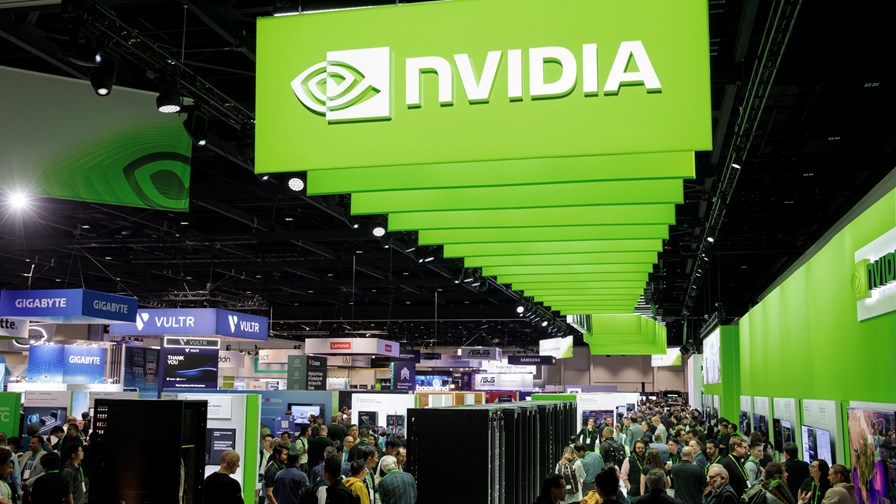
- Nvidia is hosting its GTC Berlin event this week
- It has provided an extensive update on its engagements with telcos and vendors, as well as news of new AI-RAN platforms
- Telecom Italia and Fastweb + Vodafone are among the telcos with new or expanded AI factory deployments
- Deutsche Telekom, Elisa, Orange and BT are among the telcos making AI-RAN advances with Nvidia and its key telco infrastructure partner Nokia
As expected, Nvidia has used its GTC Berlin event to provide updates on how it is working with customers and partners across multiple vertical sectors, including telecom, where it is making significant progress with its ambition to embed its technology in the foundations of next-generation communications and digital services infrastructure.
Its update references AI-RAN trial advances with multiple telcos, including BT Group, Deutsche Telekom, Elisa, Orange and T-Mobile US, and new and expanded AI factory deployments with the likes of Telecom Italia (TIM) and Fastweb + Vodafone, as well as highlighting its ongoing partnerships with Nokia (in which Nvidia is an investor), Cisco Systems, Tata Consultancy Services (TCS) and NTT Data.
Nvidia’s founder and CEO, Jensen Huang, has long targeted telecom as a key sector that, with its global infrastructure-based reach, will provide the vendor with a solid base for future growth as AI becomes pervasive.
“Telecom networks were built to carry the world’s conversations. Now, they will also carry the world’s intelligence,” stated Huang. “Leading global operators are turning their land, power and connectivity into a distributed AI infrastructure – bringing intelligence closer to the industries, people and robots that use it. With Nokia, we’re extending accelerated computing into the radio network itself, creating the foundation for AI-native 5G.”
So what’s the latest with Nvidia’s telco friends? Much of the activity centres on the efforts of Nvidia and Nokia to get AI-RAN infrastructure into mobile networks as quickly as possible.
AI-RAN picks up pace
Earlier this year, Nokia unveiled what it called the “industry’s first AI-native RAN platform” – a combination of its anyRAN software and Nvidia’s GPU-based Aerial RAN Computer (ARC) platform – and has been adding to its mobile operator engagements throughout 2026 – see Nokia bangs louder on the AI-RAN drum and SoftBank readies AI-RAN field trial with Nokia.
Now Deutsche Telekom (DT) has announced the results of initial tests and trials with Nokia and Nvidia, noting that “initial lab measurements of AI-based uplink channel estimation demonstrated typical throughput improvements of 10% to 15%, with gains increasing as radio channel complexity increased. The results demonstrate the potential to introduce AI directly into the 5G radio receiver signal processing chain to improve uplink throughput for the best customer experience. Following successful lab validation, the companies plan to validate the technology under real-world conditions in a field trial” in 2027, stated DT in this announcement.
Arash Ashouriha, the telco’s senior VP of group technology, stated: “At Deutsche Telekom, we focus on AI that delivers tangible benefits for our customers. The promising lab results with Nokia and Nvidia on AI-based channel estimation show the potential to improve network performance and efficiency. Next, we plan to validate these gains in a field trial… we will build on this work in our 6G Innovation Hub, exploring further AI-driven capabilities to make mobile networks more intelligent, adaptive and efficient.”
In northern Europe, Elisa is putting the ARC platform through its paces at one network location to run “a voice intelligence application that serves as an enterprise assistant”, and is “using open models to build edge applications”. Elisa “simultaneously ran voice, mobile data and video analytics on the Nvidia ARC platform, marking a European first in Elisa’s over-the-air field environment using 5G spectrum. The trial clears the way for distributed deployment and commercial AI-RAN services in 2027,” according to Nvidia.
In its announcement about the trials and plans, Elisa’s COO and executive VP of technology and operations, Sami Komulainen, stated: “AI is becoming a critical layer of digital infrastructure. Our goal is to bring AI closer to users, enterprises and data by advancing a distributed AI inference network in Finland. AI-RAN is an important step in that journey, enabling us to combine connectivity and AI on a shared platform and laying the foundation for AI-native 6G networks. Europe’s first Cloud AI-RAN call in [a] live network demonstrates that for us, this vision is already becoming a reality.”
Elsewhere, UK national operator BT is planning live AI-RAN trials in Birmingham with Nokia and Nvidia in 2027, while European telco giant Orange is testing Nokia’s 5G software on the ARC platform, “focusing on AI-RAN spectral efficiency improvements and support for edge services in live networks”.
And in North America, T-Mobile US “recently marked the world’s first AI-RAN call on its commercial network in Bellevue, Washington, running on commercial ARC servers, Nokia’s Nvidia Cuda-accelerated RAN software and massive multiple-input multiple-output [MIMO] radios, and connected to an existing 5G standalone core and a commercial smartphone,” noted Nvidia.
Globally, nearly 20 telcos have announced AI-RAN collaborations using Nokia anyRAN software and the ARC platform.
To add to the architectural options available to mobile operators, Nvidia has announced two new ARC configurations – the MGX 2U and the MGX 4U – which are “designed for dense, high-capacity intelligence and radio workloads, typically deployed at centralised RAN sites. Powered by Nvidia RTX PRO 6000 Blackwell Server Edition GPUs, the configurations will offer x86 and Nvidia Vera CPU options,” noted the vendor. Dell Technologies, Quanta Cloud Technology and Supermicro will develop servers based on the new configurations.
B2B and physical AI action
It’s not all about AI-RAN, though that infrastructure does play a key role in testing and evolving physical AI deployments.
DT has (unspecified) plans to “expand” its Industrial AI Cloud deployment, or AI factory, in Munich, which began commercial operations in February this year and which hosts multiple AI models – including Nvidia’s own Nemotron and Soofi (sovereign open-source foundation models) – and counts companies such as physical AI developer Agile Robots (in which Nvidia is an investor) as users.
DT noted that it is working with Nvidia, Agile Robots, Nokia and Supermicro “to advance physical AI applications on distributed AI infrastructure,” and that the partners are “testing in a lab proof of concept how AI workloads for physical AI applications can be orchestrated for distributed inferencing between the Industrial AI Cloud and Deutsche Telekom’s distributed AI compute in the telco network edge and the on-device compute.” DT says it is running an ARC MGX 4U system “to provide high-performance AI compute at the telco network edge, hosting parts of Agile Robot‘s physical AI use-case”.
Orange Business, meanwhile, is hosting a number of AI models, including Nemotron, Mistral and Google’s Gemini, to offer managed enterprise AI services on top of its Live Intelligence trusted AI platform. According to Nvidia, Orange is deploying the ARC platform for voice intelligence applications, “using Nemotron Speech, demonstrating new services to help emergency and field services teams translate across multiple languages in real time with low latency and reliability”. For further details, see this Orange Business announcement.
And a number of telcos are building or expanding their AI factory deployments, according to Nvidia: The vendor is boasting new engagements with Telecom Italia (TIM) in Italy (see this announcement), České Radiokomunikace (CRA) in the Czech Republic, Etisalat in the UAE, Silknet in Georgia (see this announcement); and AI factory expansions are in the works at Fastweb + Vodafone in Italy (see this announcement), Orion Telecom in Serbia (see this announcement), Cassava Technologies in Africa (see this announcement), and Kazakhtelecom in Kazakhstan, as well as DT.
Partner channels
Nvidia has also provided an update on its open model and agentic AI partnerships.
In addition to its collaboration on AI-RAN, Nokia is integrating Nvidia’s Nemotron into its Autonomous Networks Suite and using Nvidia’s Agent Toolkit software “to build and deploy trusted agents that manage operations across fixed, radio, core and transport networks”. You can find out much more about those developments in this Nokia announcement.
Cisco, meanwhile, has “fine-tuned Nvidia Nemotron models and integrated them into Crosswork AI, creating a common agentic layer across its Crosswork Network Automation software to manage IP and optical transport networks,” stated the vendor. Cisco is also using the Nvidia Agent Toolkit to help telcos operate agents safely.
India’s TCS, meanwhile, is “working with telcos to fine-tune Nemotron models and use Nvidia Agent Toolkit to build specialised agents that validate radio-site builds, detect, diagnose and auto-remediate network issues, and deliver multilingual voice experiences.”
In the UK, BT is “adopting Nemotron to build agents that inspect field-installation photos, detect problems and help reduce repeat site visits”.
And Japan’s NTT Data is extending its NextGenOSS platform with fine-tuned Nemotron models and Nvidia Agent Toolkit to “build agents that detect early network degradation, identify likely root causes and recommend next actions”.
- Ray Le Maistre, Editorial Director, TelecomTV
Email Newsletters
Sign up to receive TelecomTV's top news and videos, plus exclusive subscriber-only content direct to your inbox.