How Orange is putting AI at the heart of its new strategy

By James Pearce
Mar 17, 2026
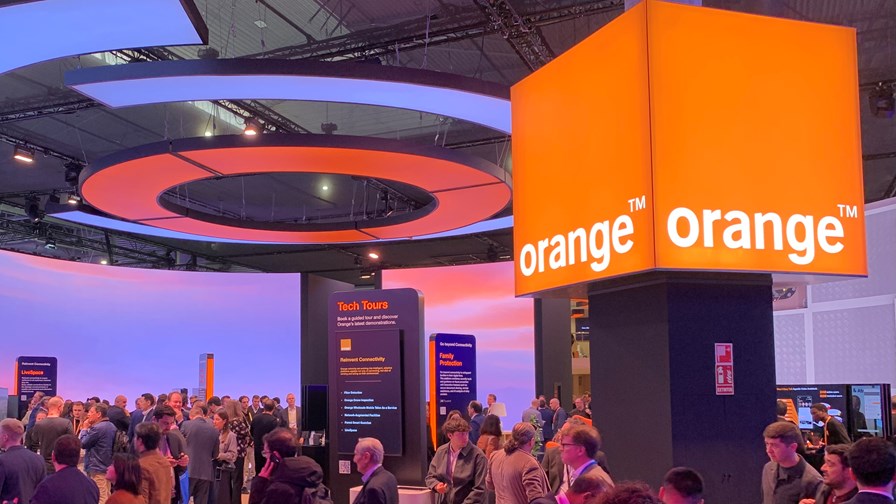
- Orange AI chief Steve Jarrett explains the role AI will play in the operator’s new three-year strategy, Trust the Future
- More than 100,000 of the telco’s staff have used internal AI tools
- Orange has rolled out new AI products, including Live Intelligence
This year, Mobile World Congress effectively became AI World Congress, with no topic given more prevalence at the event than artificial intelligence. Yet question marks still linger about how much telcos are using AI themselves, and how they are benefitting from the technology.
On Orange’s stand at MWC26, there were several examples of AI use cases, but how much impact is this having on Orange as an organisation? According to Steve Jarrett – the man leading Orange’s AI initiatives – it is playing a central role in the French giant’s new strategy, Trust the Future”, which was unveiled last month.
“Trust the Future is the new strategic statement for the company, and the timing of that is great both geopolitically but also in terms of Orange’s position in the market, and how that relates to AI both internally and for customers,” Jarrett, Orange’s chief AI officer, told select industry journalists during a roundtable in Barcelona.
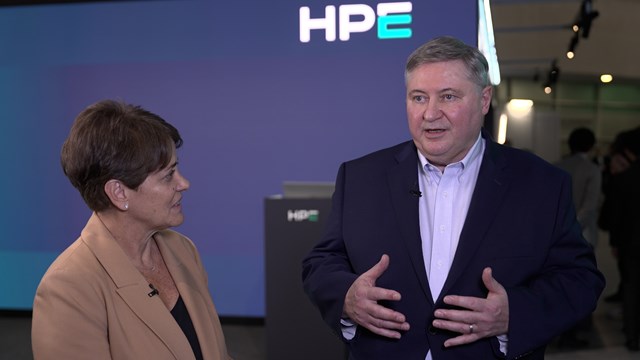
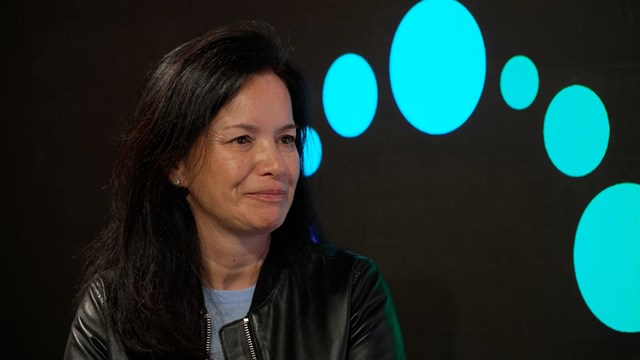
Jarrett, who also talked exclusively to TelecomTV during MWC26, broke this down into three pillars and explained the role AI is playing in each.
The first is customer intimacy, which is Orange’s relationship with its customers, either through a contact centre or its retail outlets, or even just engagement through messages or emails.
By combining data analytics, machine learning (ML) and natural language processing (NLP), Orange aims to transition from transactional interactions to personalised, long-term relationships, he explained. This includes plans to launch new AI assistants in customer services to help reduce wait times and improve first-time resolution rates.
Live intelligence
The second pillar, unveiled during Orange’s Capital Markets Day in February, is “innovative growth” – an area in which an Orange tool built internally, now called Live Intelligence, will play a central role.
Live Intelligence uses several large language models (LLMs), including Mistral, OpenAI and Google’s Gemini, to support users in generating customised content, receiving personalised and contextualised answers to queries, instantly accessing key information from databases, and automating repetitive tasks to enhance efficiency.
The tool is being offered to enterprise customers through Orange Business but was built initially as an internal application. Internal adoption, according to Jarret, is high.
“We’ve crossed the 100,000 internal user threshold,” he said proudly. “Many more users than we ever expected have tried it – over 80% of the employee base has used it at least once.”
He added that the company is tracking monthly and weekly active users, noting that numbers “are healthy” but not currently publicly available.
Live Intelligence has integrated assistants that aren’t fully agentic, but rather a bundle of pre-determined prompts and associated data that are organically created – with more than 18,000 built within Orange so far. A small team curates them to make sure the tools aren’t duplicated unnecessarily, but these are made available in a library across Orange.
“Clearly, if you give people a simple enough way to customise these tools, they will take that opportunity,” he added. “That’s been a runaway success and now Orange Business is selling that externally.”
To make sure this is operating at its best, Orange has engaged in a multi-year programme, called Data Democracy, to improve the quality of its data, and package this up where relevant. This sees individuals take responsibility for maintaining the quality and documentation of data they have generated. Orange is also leveraging internal tools to manage curation and privacy.
“It is enabling us, across the entire company, to be much better at enabling these AI use cases, and other cases of non-AI, to leverage really high-quality, high-value data for the business.” This, he added, is helping to break down siloes within Orange, which is “hugely fundamental in our ability to move much faster and deliver much higher quality products.”
Another AI product that Orange has developed, and which the operator is now pushing out to the broader market, is part of the telco’s ‘Max it’ app, which combines its telecom management platform with Orange Money in markets in Africa and the Middle East. ‘Max it’ has more than 24 million active users, but to make it easier to use, Orange has introduced a new service, called Easy Talk, that leverages AI for live translation.
On its stand at MWC, Orange demonstrated how Max it Easy Talk lets users access services in local languages using their voice, with all the secure biometric authentication you’d expect for a payments service.
Easy Talk was developed as a collaboration between African engineering groups and Jarrett’s internal research team, and it adds support for languages not found on most other AI systems, he claimed.
“There’s around 18 million additional people who could be using ‘Max it’, but can’t because of language friction,” he added. Jarrett lists several languages it can now speak, including Darija (Moroccan Arabic) or Lingala (a Bantu language spoken in the Congo countries) or Wolof (a language from the Niger-Congo region in West Africa).
“In terms of customer intimacy, you can see the appeal, but it is also a part of our innovative growth strategy, in terms of new products.”
Operational efficiency
The third pillar of Orange’s new approach is “excellence”, which is about improving operational efficiency. To this end, Orange has already trained 65,000 employees on AI tools and is “continuing to go further”.
“We have very aggressive targets for training this year,” Jarrett added. “But we are also very careful, when it comes to AI, to ensure we have a human in the loop. That is critical – you need human observation and input because these systems make errors.”
Jarrett says Orange’s adoption of AI internally has been “wildly more successful” than even he expected. “If you give people a tool that is useful – and we have teams working on developing the right tools – then people will want to use them.”
Orange is leveraging 14 AI models, though Jarett said his team is constantly assessing and updating this. When building tools internally, Orange will default to the cheapest, fastest model for whatever domain the tool is in, but there are also manual options to pick a specific LLM.
This approach has already started to pay off financially. In its most recent financial review, Orange revealed it had identified €300m in value across its business from AI, including cost savings and new revenue opportunities. The goal for the next strategy period is to see this number rise to €600m.
“We are on a good trajectory for that number,” Jarrett said. “We have a thorough methodology to measure it with our finance team, and all the use cases are put into a dashboard that is auditable across the company.
“We see that rising – it is just a matter of execution. There are several domains that have already been discussed, such as customer experience and intimacy. There is also an enormous opportunity around cost savings and resiliency improvements. And there are big opportunities in B2B through products such as Live Intelligence and ‘Max it’.”
- James Pearce, Editor, TelecomTV
Email Newsletters
Sign up to receive TelecomTV's top news and videos, plus exclusive subscriber-only content direct to your inbox.