Amdocs unveils agentic operating system to help telcos scale AI

By James Pearce
Feb 4, 2026
- Amdoc’s new aOS architecture can plug into any cloud, LLM or existing OSS/BSS stack
- It uses agents to gather information and acts on rules predetermined by telcos
- Outcome-based SLAs will determine the pricing structure
- Amdocs also reports 4% revenue growth as part of its latest quarterly financial results
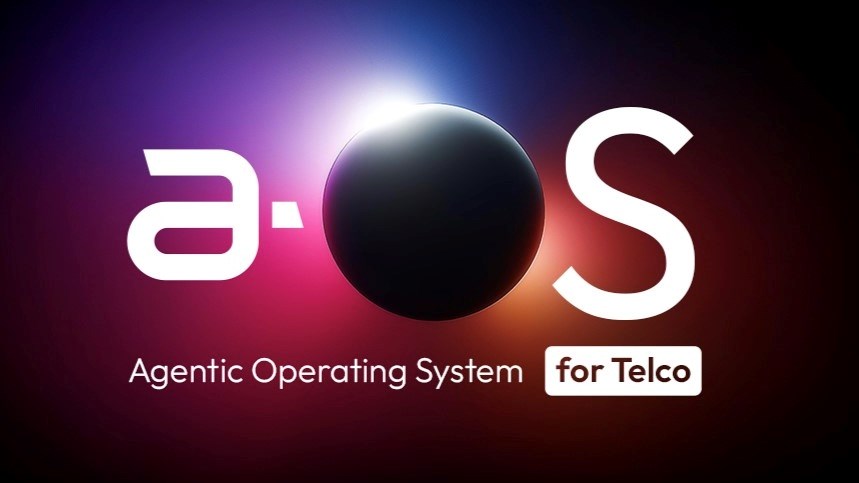
With AI on everybody’s minds and lips as the industry girds its loins for this year’s Mobile World Congress, Amdocs has unveiled a new agentic operating system that it claims will help telcos scale their AI strategies.
aOS is an agentic architecture that enables communication service providers to execute complex, end-to-end workflows across any BSS and OSS environment – not just those provided by Amdocs itself.
It uses what the vendor calls the “cognitive core” to compile data from existing systems while ensuring security, compliance and observability. The agents – which can be supported by a number of LLMs (large language models) – evaluate data and carry out analysis benchmarks before enabling further actions within the OS.
On top of this sits CES26, an agent-driven suite of BSS, OSS and network tools, that supports processes across customer care, monetisation, service orchestration, network operations and assurance.
Finally, aOS also provides telco-specific agents that support the operators in processes such as cloud migration, modernisation, quality engineering, and end-to-end telecom business processes.
Speaking ahead of the launch, Ilan Sade, who heads up the Amdocs AI division, told TelecomTV that despite the AI boom, there has been a gap between the hype and actual production of AI tools.
“We felt that it is our responsibility to help our telecoms customers embed AI into their workflows to create more efficient operations, and so we came up with aOS,” stated the GenAI and Data division president.
aOS lets different AI agents collaborate alongside human operators to design and enact processes “across the entire telco taxonomy”. For example, if a customer calls in with a billing dispute, one agent in the BSS can find all of the relevant information, which can then be passed to a customer-facing agent to triage the call. If this then needs to escalate further, a human can get involved. Similarly, in the case of a network outage, it can pull data from the OSS and feed this back to an agent. But all of this information is made available in the same operating system – so simple prompts can get to the bottom of telco problems, explained Sade.
Amdocs also sees it as a monetisation opportunity. “It can connect to any LLM, any cloud, or any business system – not just those provided by Amdocs,” he added.
In the works
Sade explained that aOS has been in development for two years but that it has ramped up over the past six months, with Amdocs testing it at customers (who could not be named) for the past four months, ahead of its launch ready for MWC. This development has run alongside the company’s existing AI offering, amAIz, which launched in 2023, as well as an internal transformation that saw the company position itself around AI – a restructure in which Sade was heavily involved.
The move to implement more AI internally was also important, with AI models playing a key role in helping Sade’s team build aOS.
“We took a decision as a company not to separate how we envision our customers transforming and our own journey,” Sade outlined. “We looked at our own business processes and started to redefine roles internally to reflect the changes we were seeing.”
The vendor’s restructuring process has led to layoffs at the company, with the Israeli firm announcing hundreds of job cuts last year (coinciding with the announcement of Sade’s new GenAI and Data division). It was the company’s fourth major round of layoffs in recent years, following the loss of 2,700 jobs in two rounds in 2023, and a further 1,500 layoffs that were announced in 2024.
Sade did not discuss job cuts but said that in his vision of telco AI, humans continue to play an important role in final decision-making and as a final backstop.
“It is always a mix of humans and agents. We do not believe that it is moving to fully agentic models – while it might evolve that way eventually, at this point in time you need to combine all of the data that AI agents can pull with the expertise of humans,” he said.
Partnerships also play a vital role. Amdocs worked closely with AWS, Google, Microsoft, and especially Nvidia to develop aOS.
The pricing model also looks set to be outcome based, meaning Amdocs customers will primarily pay for aOS based on how successful the operating system is in helping them to achieve their goals.
“We have previously sold through outcome-based SLAs [service level agreements], and we are now applying this model elsewhere. If it is a managed service, there could be outcome-based pricing because we want it to be simple to understand what they are getting from it and how it is bringing value,” explained Sade.
Quarterly growth and T-Mobile US deal
The announcement comes a month before Mobile World Congress in Barcelona, where Amdocs will be demonstrating aOS. It also coincided with the release of Amdocs’ latest financial results.
For the first quarter of its financial year, Amdocs reported revenue of $1.16bn, up 4.1% year on year, with strong sales growth in Europe, up 17.1%. Net income for the three months ending 31 December grew slightly to $158.5m from $151.8m.
The results also revealed Amdocs has extended its long-running partnership with T-Mobile US. Amdocs solutions will continue to support T-Mobile’s consumer and business domains, adding GenAI to different domains and supporting integration activities.
Amdocs CEO Shuky Sheffer, who recently announced his retirement, concluded: “Across our serviceable addressable market of roughly $60bn, many growth opportunities exist by expanding our value proposition with current customers, diversifying in new geographies and by addressing emerging domains, such as generative AI, cloud migration and fibre rollout. With our deep telco domain expertise and tech-led, outcomes-based business model, we are strongly positioned to monetise a rich deal pipeline. That said, we continue to monitor our customers’ demand and spending behaviour within the global macroeconomic environment.”
- James Pearce, Contributing Editor, TelecomTV
Email Newsletters
Sign up to receive TelecomTV's top news and videos, plus exclusive subscriber-only content direct to your inbox.