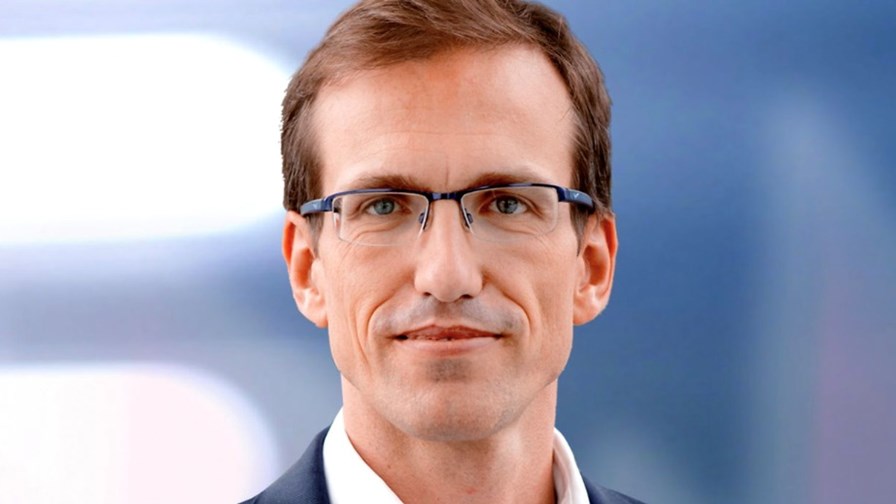
André Almeida, president of growth and emerging businesses, T-Mobile US.
- T-Mobile US shuffles its exec pack
- Mixed fortunes for the mobile network infrastructure sector
- Ericsson needs a new CMO
In today’s industry news roundup: T-Mobile US appoints a head of growth and emerging businesses and names a new president of technology; research firm Dell’Oro offers little joy for the RAN sector but a more upbeat take on the mobile core platform market; Ericsson is on the hunt for a new chief marketing and corporate relations officer; and much more!
T-Mobile US has appointed Deutsche Telekom’s former head of investment and portfolio management, André Almeida, as its president of growth and emerging businesses effective from 1 September. Almeida, who has been a member of the T-Mobile US board since June 2023, “will oversee the company’s broadband, T-Ads, financial services, enterprise and government businesses”, the US operator noted in a filing with the Securities Exchange Commission (SEC). Almeida held a number of senior roles at Deutsche Telekom, the majority shareholder of T-Mobile US, between late 2017 and January 2025, including European head of consumer and B2B, head of Telekom Deutschland consumer business and, from August 2023 to January of this year, head of investment and portfolio management. T-Mobile US noted that his experience and previous success in the telecom and media sectors – having previously worked at Portuguese operator NOS where he was responsible for the company’s pay-TV joint venture in Africa, ZAP – “will further enhance its ability to execute and achieve its long-term business objectives”. Almeida has stepped down from his board seat in order to take on the new role. It’s worth noting that in late January this year, Deutsche Telekom appointed Srini Gopalan, who had been head of the telco’s operations in Germany, as chief operating officer (COO) of T-Mobile US.
T-Mobile US also announced that its highly respected and well-liked president of technology, Ulf Ewaldsson, is retiring “after leading the build-out of the company’s 5G network following the Sprint merger”. He will be replaced by John Saw, the Un-carrier’s current CTO. T-Mobile US noted that Saw, “in his expanded role… will oversee all aspects of the company’s network team”.
And T-Mobile US is also about to have a senior vacancy, as Callie Field, president of the operator’s Business Group, has “decided to step away from her position after two decades of leadership with the company”, with effect from 30 September. She will remain as a strategic advisor until the end of March next year.
After a couple of years of shrinking aggregate network operator investments, the worst appears to be over for the mobile network infrastructure sector’s vendors, according to research firm Dell’Oro Group. It has reported that the value of the radio access network (RAN) equipment sector (excluding China) increased year on year during the second quarter of 2025, the third consecutive quarter of growth (though no projected value was shared). This isn’t cause for much cheer for the sector’s vendors, though. Stefan Pongratz, VP of RAN market research at the Dell’Oro Group, stated: “Market conditions have continued to stabilise, resulting in growth for three consecutive quarters outside of China. However, broader market sentiment remains subdued, and a rapid rebound is not anticipated. The industry acknowledges that short-term fluctuations are unlikely to alter the market’s generally flat long-term trajectory,” added Pongratz. As ever, the market’s top five vendors are Huawei, Ericsson, Nokia, ZTE and Samsung Networks. Dell’Oro noted earlier this summer that the past two years have seen the RAN sector’s annual value shrink by about $9bn, so roughly down from around $40/$41bn to around $31/$32bn a year currently, and that the cumulative value of the RAN market in the five years from 2025 to 2029 is expected to be about $160bn (which gives an average annual value of $32bn).
The news is better from the mobile core network (MCN) market, where the value of the sector increased by 19% year on year in the second quarter, according to Dell’Oro (no specific numbers were shared). The 5G MCN segment saw an impressive increase of 31%, thanks to “increasing 5G standalone (5G SA) subscribers and more 5G SA launches by mobile network operators (MNOs),” noted Dave Bolan, research director at Dell’Oro Group. “We have identified 71 MNOs that have launched [a] 5G SA service for consumers, including five launches to date in 2025. Other MNOs have 5G SA networks on the drawing board that will be coming to market over the next several years,” he added in comments that chime with the 5G standalone trend reported by TelecomTV in July. “As 5G SA networks continue to mature, we see more 5G SA elements coming to market, such as new radio (NR), reduced capability (RedCap), and network slicing,” added Bolan. Dell’Oro also reported an 18% year-on-year increase in voice core investments during the second quarter. Bolan noted that “MNOs are beginning to upgrade their voice cores to cloud-native IMS cores, fuelling the growth of the voice core market. Meanwhile, if the upgrade is for voice over NR (VoNR), it also adds additional fuel to the 5G mobile core growth.”
In a separate blog, Dell’Oro’s Pongratz notes that the Open RAN slice of the overall RAN sector is stabilising after its own decline in recent years, but it’s still just a small part of the overall market and multivendor investments are limited. “Open RAN is beginning to show signs of stabilisation,” writes the analyst. “Preliminary data indicate that Open RAN revenues grew year over year (Y/Y) in 2Q25 and were nearly flat Y/Y in the first half, supported by easier comparisons, stronger capex tied to existing Open RAN deployments, and increased activity among early majority adopters. Our long-term view has remained largely consistent since we began tracking the market in 2019. Long-term Open RAN growth prospects remain favourable. Although near-term headwinds and business case challenges persist, the broader trajectory continues to point toward greater openness, virtualisation, intelligence and automation across the RAN. We remain optimistic about the outlook for Open RAN and cloud RAN in the latter part of the forecast period, though the attractiveness of the multivendor RAN model continues to be limited.”
Ericsson is on the hunt for a new chief marketing and communications officer and head of corporate relations as Stella Medlicott, who has been with the vendor since 2014 and a member of the company’s top executive team since 2019, is leaving the company at the end of March 2026 “to pursue other opportunities”. Medlicott will be remembered by some as the first chief marketing officer (CMO) of a major mobile infrastructure exhibitor to withdraw from the 2020 Mobile World Congress show in Barcelona as the spread of Covid-19 started to impact corporate strategies: Ericsson’s decision prompted others to take the same decision and, less than two weeks later and only days before the show, the event was cancelled.
KNL, Telenor’s Finnish subsidiary that develops advanced high-frequency (HF) communication solutions, has received orders worth €15m as part of a 10-year framework agreement with the Finnish and Swedish Armed Forces. “The contracts come at a time when secure and independent communication capabilities are increasingly critical for national defence and regional stability, particularly amid heightened geopolitical uncertainty in Europe,” noted Telenor in this announcement. The orders are for the delivery of portable HF military radios that ensure secure communication in areas without traditional infrastructure, such as satellites and GPS. Dan Ouchterlony, head of Telenor Amp, the branch of the operator that acts as a parent to emerging business units, stated: “These contracts underscore the growing demand for secure, resilient communication solutions in an increasingly complex security environment. KNL’s technology exemplifies Nordic innovation and its role in strengthening regional security and preparedness.”
OpenAirInterface (OAI), an OpenAirInterface Software Alliance (OSA) cellular networking open-source project focused on the development of 5G radio access network (RAN), core and orchestration software elements, has teamed up with The Linux Foundation’s LF Networking (LFN) open-source project to establish a new open-source RAN incubation project called Duranta. “By supporting the creation of Duranta and seeding it with key cellular networking assets, OSA is stepping forward to support the long-standing 5G Superblueprint ambitions of LFN,” stated OSA president Raymond Knopp. “With OAI software assets provided through Duranta, the community, particularly the industrial players, now has access to a full cellular framework, including integration with LFN’s Nephio for CNF [cloud-native function] deployment and automation. We call upon the LFN members to join the efforts to strengthen the relationship with OSA by supporting its RAN stack development and radio CICD lab, a unique set of expertise developed and grown over two decades. Such commitment from LFN members will further ensure the much-needed industry alignment in Duranta and will enable delivery of mature, deployment-grade Open RAN solutions, while keeping the academic and research collaborations, that have been OAI’s hallmark, strongly engaged for evolution of the CU/DU stack towards 6G.” Read more.
Diana Pani, VP and head of wireless standards at mobile and video tech R&D specialist InterDigital, has been re-elected as chair of 3GPP’s Radio Access Network Working Group 2 (RAN2) which, according to the vendor, defines the signaling protocols and procedures that “ensure devices and networks can seamlessly connect and communicate across generations of mobile technology.” InterDigital added: “Under Diana’s first two-year term as chair, RAN2 focused on topics shaping the first releases of 5G-Advanced, including AI/ML integration for mobility, ambient IoT, non-terrestrial networks, sidelink evolution, and quality of experience for XR applications. Her second term will build upon these responsibilities to further the development of next-gen wireless technology and foster necessary consensus for the design of the first release of 6G.” For more on the development of 6G and the work being undertaken by the 3GPP, check out TelecomTV’s dedicated channel, Defining 6G Networks.
Wireless networking vendor Cambium Networks is replacing its CFO and attempting to assure its customers, partners and investors that all is well by providing an update on its shipments and bookings. The news came as the company announced it had received a delinquency notice from the Nasdaq stock market for failing to comply with the timeframe for filing its latest quarterly earnings report: It now has until 13 October to file that report as well as its 2024 annual and first-quarter reports, which are also MIA.
Following its beta launch last year, communications API company Twilio has announced the general availability of rich communication services (RCS) messaging globally. “Twilio’s RCS enables brands to send branded, verified messages with rich interactive features – marking the biggest leap in business messaging since SMS,” noted the company. RCS is now available to all of Twilio’s 349,000 active customer accounts through its Programmable Messaging and Verify APIs: Customers can implement both SMS and RCS through a single integration via the Twilio platform. For more on this launch, see this Twilio blog.
– The staff, TelecomTV
Email Newsletters
Sign up to receive TelecomTV's top news and videos, plus exclusive subscriber-only content direct to your inbox.