- Huawei posts $127bn revenues for 2025
- Airtel’s datacentre arm gets $1bn cash injection
- Ericsson lands majority of VMO2 5G RAN deal
In today’s industry news roundup: Huawei reminds everyone why it’s still by far the world’s biggest telecom equipment vendor; Nxtra, Bharti Airtel’s datacentre unit, attracts multiple external investors in new fundraising; Ericsson bags 55% of VMO2’s new 5G radio access network equipment deals; and much more!
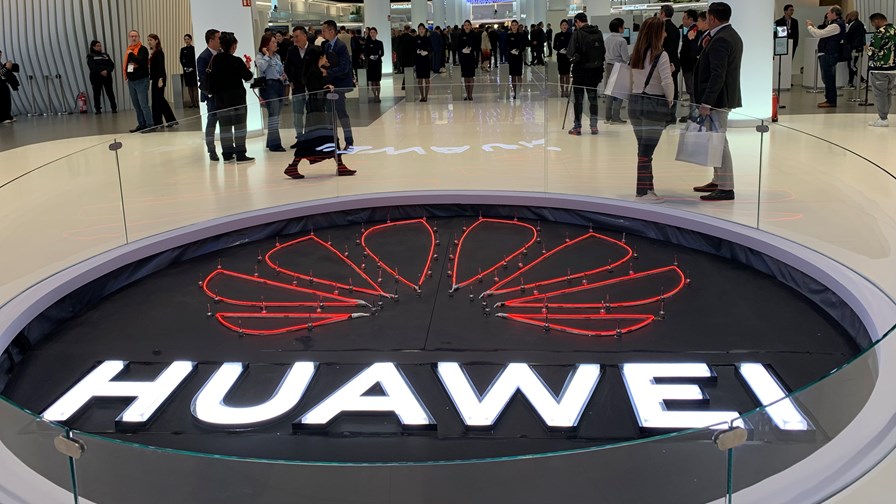
Huawei has published its 2025 annual report (including audited financial figures), showing that it increased its full year revenues by 2.2% year on year to 880.9bn Chinese yuan ($127.6bn), while its operating profit grew by 22.1% to 96.9bn yuan ($14bn), giving it an operating margin of 11% compared with 2024’s 9.2%. Infrastructure tech products and solutions accounted for 42.6% of total revenues, while consumer devices (including smartphones) generated 39.1% of total revenues, with sales from both of those product categories growing slightly year on year (by 2.6% and 1.6% respectively); meanwhile revenues from Huawei’s intelligent automotive solution products grew by 72.1% year on year to 45bn yuan ($6.5bn), accounting for just over 5% of total revenues. Almost 70% of the vendor’s revenues were generated in China, while 18.3% came from customers in the EMEA region, 5.7% from Asia markets (other than China) and 4.2% from the Americas. The vendor stated that it invested 192.3bn ($27.9bn) into R&D in 2025, which accounted for a staggering 21.8% of its annual revenue, a much higher ratio than other vendors. Huawei added that it will “continue to ramp up R&D investment in strategic domains like connectivity, computing, cloud, devices, intelligent driving and AI. Huawei will hone its competitive edge by integrating AI and security into products and networks, and build industry ecosystems around Ascend, Kunpeng and HarmonyOS that thrive on collaboration and shared success.”
UK operator Virgin Media O2 has awarded new radio access network (RAN) equipment deals to Ericsson and Nokia as part of its Mobile Transformation Plan, which will see the operator invest a further £700m into its mobile network in 2025 to deliver a much needed “further step-change in network performance for customers,” the operator has announced. The deals will “see the majority of VMO2’s radio access network (RAN) upgraded to the latest 5G+ [5G standalone] technology, improving performance for millions of customers across the country,” noted the operator, which added that the move will enable it to “maximise the use of its recently acquired spectrum, helping to meet rapidly growing demand for mobile data, which has more than doubled over the past five years.” Ericsson crowed about its deal, stating in this announcement that it will become VMO2’s primary radio access network (RAN) partner in a five-year partnership extension that will see Ericsson power the majority of the UK service provider’s nationwide radio network, while Nokia stated that its deal extends its role as “one of Virgin Media O2’s primary RAN partners, following the previously announced agreement to continue 5G rollout and modernisation”. Nokia’s team also informed the media that the split of the contract awards gives Nokia 45% of the business and Ericsson 55%.
Nxtra, the datacentre division of giant Indian telco Bharti Airtel, has attracted a $1bn investment from a number of external investors (Alpha Wave Global, Carlyle and Anchorage Capital) as well as Airtel itself, funding that will help the operation “accelerate its growth plans”. Nxtra, which Airtel claims is “the first datacentre company in India to deploy AI at scale for predictive maintenance, energy efficiency, and automated operations”, plans to “extensively scale its infrastructure and broaden its portfolio of services, catering to the evolving needs of enterprises, hyperscalers, and government organisations across the country,” stated Airtel in this announcement. Gopal Vittal, Bharti Airtel’s executive vice chairman, stated: “At Nxtra, we have built one of India’s most advanced and sustainable datacentre networks, designed to meet the evolving needs of enterprises, hyperscalers and government. With [around] 300 MW of capacity today, we aim to scale to 1 GW in the next few years, targeting [around a] 25% market share.”
Still in India, one of Airtel’s rivals, Vodafone Idea (Vi), has turned to Ciena to modernise its optical transport network by deploying the vendor’s WaveLogic 6 Extreme (WL6e) coherent optical technology running on the 6500 platform. Vodafone Idea’s CTO, Jagbir Singh, stated in this announcement that the operator is “positioning a network to support AI workloads and capture new growth opportunities through enterprise, mobility and datacentre… This particular technology from Ciena allows us to scale efficiently while meeting the performance expectations of our most demanding customers.” According to Ciena, Vi recently achieved data transmission speeds of 1.6 Tbit/s on its meshed datacentre interconnect network in India using the vendor’s WL6e tech.
The European Commission has approved the £2bn acquisition of Netomnia and its subsidiary Brsk by Nexfibre, the UK fibre broadband wholesale operator that is owned by Liberty Global, Telefónica and Paris-based private equity firm InfraVia Capital, reports Thomson Reuters Practical Law. The acquisition, which was announced in February, is set to make Nexfibre a stronger rival to BT’s quasi-autonomous wholesale fixed access network division, Openreach.
– The staff, TelecomTV
Email Newsletters
Sign up to receive TelecomTV's top news and videos, plus exclusive subscriber-only content direct to your inbox.