- The FCC approves major T-Mobile US deal
- US regulator also gives green light to satellite merger
- Telefónica takes control of Brazilian fibre network
In today’s industry news roundup: T-Mobile US gets FCC clearance for its USCellular asset acquisition; the FCC also gives the green light to SES’s purchase of Intelsat; Telefónica takes control of wholesale broadband network operator FiBrasil; and much more!
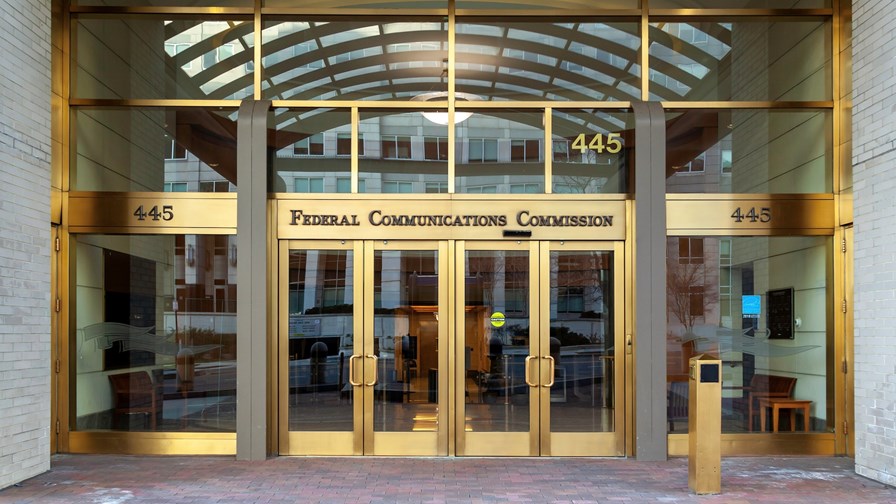
US telecom regulator the Federal Communications Commission (FCC) is in a generous mood currently, it seems. It has given its blessing to T-Mobile US’s planned acquisition of most of USCellular’s assets in a $4.4bn deal. The FCC’s approval comes in the wake of the decision by T-Mobile US to abandon its diversity, equity and inclusion (DEI) policies and follows swiftly on the heels of last week’s approval for the deal from the US Department of Justice (DoJ)’s antitrust division. The FCC noted in this brief announcement that its approval of the deal, which was first announced in May 2024, is “expected to result in substantial network benefits for customers of both T-Mobile and UScellular, including additional capacity and coverage benefits, as well as improved fixed wireless access service with higher speeds and capacity.” Last week the FCC’s Wireline Competition Bureau gave its blessing to the planned acquisition by T-Mobile US (as part of a joint venture) of fibre broadband network operator Metronet.
And that isn’t the end of the FCC’s M&A approval largesse… the US regulator also noted that it has given the green light for Intelsat’s plan to transfer control of its FCC licences to fellow satellite operator SES: In April 2024, SES announced it had struck a deal to acquire Intelsat for $3.1bn. The FCC said its “approval of the SES Intelsat transaction builds on the commission’s efforts to promote the provision of robust and competitive satellite services to the public. It has the potential to lower costs, improve quality and increase investment. It also will create a more vigorous multi-orbit competitor in the satellite communications marketplace.”
Telefónica’s operation, Vivo, has acquired a 50% stake in wholesale broadband network operator FiBrasil, which passes 4.6 million homes with its network, from Canadian investment firm CDPQ (Caisse de dépôt et placement du Québec) for 850m Brazilian reals ($153m), the operator announced in this regulatory filing. The move boosts Vivo’s stake in FiBrasil from 25.01% to 75.01%. The remaining 24.99% is owned by Telefónica Infra, the international infrastructure division of the giant Spanish telco. Vivo’s fibre access network portfolio, including FiBrasil, passes about 29.6 million premises. The move comes as Telefónica mulls over its future in Brazil: While it is slowly selling off its operations in other Latin American markets, the telco wants to retain a strong position in Brazil but, according to market speculation, might also consider selling a stake in Vivo to raise funds for its planned European expansion. Telefónica, under new CEO Marc Murtra, is due to unveil a new strategy before the end of this year – see New Telefónica CEO preps massive overhaul.
Vietnam’s CMC Corp, which includes telecom operator CMC Telecom as part of its portfolio, is to invest $250m in a hyperscale datacentre “at the eastern gateway of Ho Chi Minh City… advancing the national AI Transformation – Go Global strategy and elevating Vietnam on the global technology map,” the tech firm has announced. The CMC Hyperscale DC SHTP (Saigon Hi-Tech Park) is “designed as a digital ‘heart’ – a powerhouse for data storage, processing and analysis, delivering services such as AI-as-a-service, cloud infrastructure, big data and cybersecurity to millions of users,” noted the company, adding that the plan is to build a graphics processing unit (GPU) “farm with over 1,000 Nvidia GH200 units”. It will launch with an initial capacity of 30 megawatts (MW), expandable to 120 MW, “to meet massive computing demands from AI development and the digital economy”. TelecomTV reported last year that Vietnam was attracting increasing levels of datacentre infrastructure investment – see Vietnam now a magnet for datacentre developers.
International network operator Exa Infrastructure has deployed a new fibre route connecting London to Frankfurt, Amsterdam and Brussels using terrestrial and subsea cables. The 1,200 km route includes 1,085 km of terrestrial fibre and a 115 km subsea link that runs from Margate, in south-east England to Ostend, Belgium. The two new landing stations, the operator’s 21st and 22nd globally, further strengthen [Exa’s] extensive network spanning the US East Coast, western Europe, and the Mediterranean,” the operator noted in this announcement. The company declined to say how much it had invested in the new route but noted it was part of a broader €395m that has been invested in its infrastructure since the company’s launch in 2021.
Neutral host network operator Boldyn Networks has launched its 2025 Sustainability Report, which includes the progress it is making towards its sustainability commitments, which are tracked against 51 targets. “This past year, we achieved remarkable global growth, expanding fast and connecting over one billion people. Yet, no matter how large we become, our purpose to unlock the power of an interconnected future reminds us of our responsibility as an industry leader to ensure we design, build, deploy and manage our networks and services in a sustainable way,” stated the company’s group CEO, Igor Leprince in this announcement. The report includes the results of a study Boldyn commissioned to ABI Research last year, which “revealed that neutral host networks are 38% greener and up to 47% more cost effective than traditional 5G deployments,” the company stated. Boldyn Networks says its “remains committed to achieving net zero on Scope 1 and 2 emissions by 2040”.
– The staff, TelecomTV
Email Newsletters
Sign up to receive TelecomTV's top news and videos, plus exclusive subscriber-only content direct to your inbox.