What’s up with… Amazon’s LEO satellites, Verizon, Huawei & ZTE in Europe

By TelecomTV Staff
Nov 14, 2025
- Amazon renames, provides update on its LEO constellation
- Verizon set to cut 15,000 jobs – report
- Pressure grows on Huawei and ZTE in Europe
In today’s industry news roundup: Amazon now has 153 low-earth orbit (LEO) satellites in its constellation, which has been renamed Amazon Leo; Verizon is reportedly prepping a pre-Thanksgiving jobs cull that will impact 15% of its workforce; Huawei and ZTE are set to come under greater pressure across the European Union and in Germany in particular; and more!
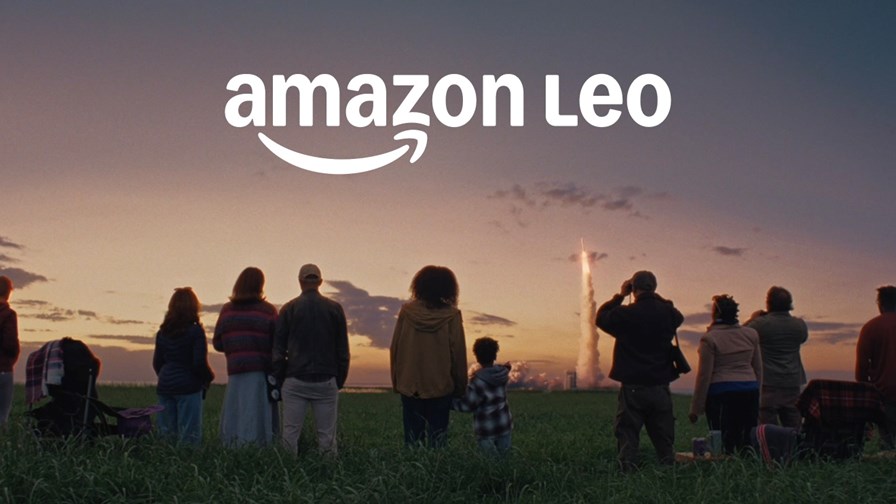
With its low-earth orbit (LEO) satellite constellation build now well under way, Amazon is changing the name of its LEO satellite operation, set up seven years ago as Project Kuiper, to Amazon Leo. The original name was “inspired by the Kuiper Belt, a ring of asteroids in our outer solar system,” announced Amazon, which stated that Amazon Leo, “a simple nod to the low-earth orbit satellite constellation that powers our network,” will now be its permanent brand. “Our long-term mission remains the same, and we’re making good progress against it. We now operate one of the largest satellite production lines on the planet,” noted Amazon. “We’ve invented some of the most advanced customer terminals ever built, including the first commercial phased array antenna to support gigabit speeds. And we now have 153 satellites in orbit, and customers and partners like JetBlue, L3Harris, DIRECTV Latin America, Sky Brasil, and [Australia’s national wholesale broadband network operator] NBN Co. already signing up to deploy the service.” NBN signed up with Amazon Leo in August. “We’re continuing to build out our initial satellite constellation, and will begin rolling out service once we’ve added more coverage and capacity to the network,” added Amazon, without specifying any dates.
Rumours had been circulating that Verizon’s new CEO, Dan Schulman, was preparing to cut 5,000 jobs at the US telco, but it seems the headcount reduction is to be much greater, according to media reports published late on Thursday. This Reuters report suggests Verizon is set to cut 15,000 jobs, about 15% of its workforce, and turn about 180 retail outlets into franchise operations in a bid to lower the its operating costs. When Shulman unexpectedly took over from Hans Vestberg in early October, he noted: “Verizon is at a critical juncture. We have a clear opportunity to redefine our trajectory, by growing our market share across all segments of the market, while delivering meaningful growth in our key financial metrics. We are going to maximise our value propositions, reduce our cost to serve and optimise our capital allocation to delight our customers, and deliver sustainable long-term growth for our shareholders.” That cost reduction process now looks set to begin before Thanksgiving.
Citing ongoing national and regional security concerns and determined moves by European Union member states to protect and ring-fence their digital sovereignty, Germany’s Chancellor, Friedrich Merz, has announced that Chinese components will be prohibited from inclusion in Germany’s 6G network infrastructure. The decision is in alignment with the wider determination by administrations across the EU to make what are now regarded as immediately vital changes to the telecom supply chain across the entire continent. After many delays, the German government last year agreed a timeframe for the removal of Chinese technology from the country’s 5G networks: Mobile core networks must be free of systems supplied by either Huawei or ZTE by the end of 2026, while the 5G radio access network (RAN) infrastructure of Germany’s telcos must be free of “critical” network management functionality by the end of 2029 (giving the telcos a chance to continue using Chinese hardware if managed by non-Chinese management software). The German government’s rationale is that the phased deadlines give telcos and service providers the necessary time to make the big changes involved in removing and replacing Chinese equipment from the wider network. The German government also admits that the equipment exclusions mooted for the 6G network will raise the cost of deployment by up to 20%, as the likes of Deutsche Telekom will have to source infrastructure from European equipment manufacturers and vendors or a short-list of officially approved non-Chinese suppliers. In a recent report, the European Commission (EC) indicated that Finland’s exercise to rip Chinese kit from its core network resulted in replacement costs coming in at 15%-to-25% higher than would have been the case had the Huawei products been left in situ. Bloomberg reports that Merz, speaking yesterday at a conference in Berlin, made the policy crystal clear. He said: “We have decided within the government that everywhere it’s possible we’ll replace components, for example in the 5G network, with components we have produced ourselves. And we won’t allow any components from China in the 6G network.” He added that Germany is working with the French authorities to reduce national dependencies not only on China but also on the US and overly-dominant Big Tech corporations. The swing to full and unequivocal control over nationally and regionally critical technology is gaining momentum as self-reliance, independence and digital sovereignty move to the top of Europe’s agenda. Interestingly, back in October, Bloomberg reported that Berlin is thinking about using public money to pay DT and other German telcos to remove their remaining Chinese equipment as quickly as possible, and certainly before the agreed deadlines. The German government did not refute the Bloomberg story and, if it does go ahead and uses taxpayer receipts, it could find itself in conflict with the bureaucrats of Brussels.
Merz’s comments came only days after Bloomberg reported that Henna Virkkunen, the European commissioner for tech sovereignty, security and democracy, is considering turning the 5G Toolbox recommendations first issued in early 2020 into enforceable law. Such a move would force network operators in European Union member states to stop using technology supplied by Huawei and ZTE, which are considered to be “high-risk suppliers”, something that some have been reluctant to do.
It’s dead, but it won’t lie down. After having had a torrid time for years on end, the Brazilian telco, Oi, has finally gone bust. It has been forced into bankruptcy by a court in Rio de Janeiro for comprehensively failing to comply with the conditions of a (second) restructuring plan that was imposed last year. However, the Brazilian regulator, Anatel, says the collapse will not necessarily mean Oi’s telecom services will be shuttered. Indeed, in this announcement, Anatel stresses it is committed to the continuity of Oi’s services, even if that means transferring them to another company. And that’s not all – Brazil’s biggest and most important banks (and, by no means coincidentally, major Oi creditors) Itaú Unibanco and Bradesco, have appealed against the bankruptcy, arguing that the operator could still restructure its massive debt (at least $7bn and counting) and sell bits of itself as part of Brazil’s Recuperação Judicial (judicial recovery) bankruptcy protection process. The company has been through two of those in the past decade and has now finally been declared, by a court-appointed administrator, to be “insolvent” because of “the accumulation of debt not subject to bankruptcy rules”. In its Daily Brief online newsletter, LatinFinance reports that the judge, Simone Gastesi Chevrand of the 7th Business Court of Rio de Janeiro, also ordered the suspension of all lawsuits and enforcement actions against the telco, as well as a ban on any sale of the bankrupt company’s assets, ruling that the proceeds from any asset sales carried out during the second restructuring process should be frozen. So, for now, at least, Oi will continue to provide services on an interim basis under the supervision of the bankruptcy trustee company, Preserva-Ação. There’s a lot to stake in terms of potential disruption. Were Oi to go to the wall, its servicing of 4,664 contracts with federal, state and municipal bodies across the entirety of Brazil would cease, as would 10,000 active contracts with private-sector clients. Oi also provides connectivity to 13,000 lottery retailers. Historically, Oi provided fixed and mobile telephony, broadband, pay TV, IT solutions, data transmission and cloud services to corporate clients. However, to compound Oi’s current travails, and make them even more complex, it has already sold off many of its assets. The Brazilian media is suggesting that Oi’s bank creditors are only giving their support to efforts to keep Oi on life-support in a cynical effort to limit their losses. Other creditors include Santander and the state-controlled banks of Banco do Brasil and Caixa Econômica Federal. Oi! It’s all rather a mess.
– The staff, TelecomTV
Email Newsletters
Sign up to receive TelecomTV's top news and videos, plus exclusive subscriber-only content direct to your inbox.