Starring role for satellite connectivity but questions remain about monetisation

By James Pearce
Apr 30, 2026
- GSMAi, Omdia and Ookla all publish reports into satellite connectivity
- The rollout of D2D services is on the rise
- But reports paint a mixed picture for monetisation
Telco satellite adoption is on the rise, with 121 operators now offering satellite services (though just 37 are live), according to the latest GSMA Intelligence (GSMAi) NTN & Satellite Tracker.
Satellite and non-terrestrial network (NTN) coverage now reaches 68% of global mobile connections, the report found and, perhaps more surprisingly, some 60% of consumers globally say they are willing to pay for the extra coverage – a figure that remains unchanged from 2024.
GSMAi says this is helping telcos see a 20% to 25% uplift in annual revenue per user (ARPU) for early launches, highlighting the potential monetisation opportunity of adding satellite services.
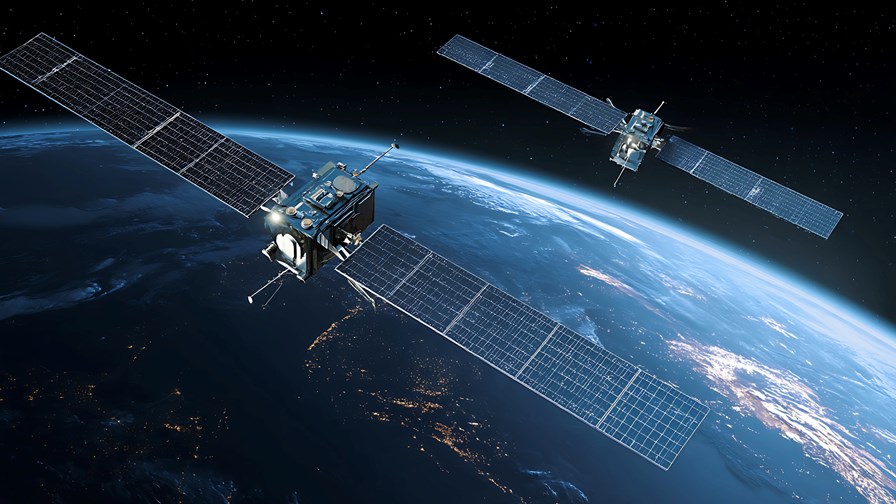
And this all comes as the market is growing more competitive. SpaceX’s Starlink remains the market leader with more than 10,000 satellites in operation, but Amazon’s recently announced deal to buy Globalstar will help accelerate the tech giant’s launch of its own direct-to-device (D2D) service.
Asia tops the regional chart, with 46 telcos offering a satellite presence, followed by Sub-Saharan Africa with 22 telcos, and Latin America with 15. Notably, across the globe, 84 telcos are still in the planned or testing phase of their satellite rollouts.
China Mobile boasts the highest number of addressable satellite subscribers, according to the GSMAi report, at 1.07 billion, followed by Indian-based telcos Bharti Airtel Group with 565 million (through partnerships with Eutelsat OneWeb, Hughes and Starlink) and Reliance Jio at 478 million (partnered with SES). However, it is worth noting that the China Mobile partnership is not yet live. Telefónica has the most live satellite partnerships at four, with an addressable market of 196 million connections.
GSMA Intelligence survey data also makes for interesting reading on the link between the willingness to pay for satellite connectivity and consumers’ willingness to vote with their feet (churn) to get it. The researchers claim there is a high correlation between those willing to switch providers to a rival with connectivity in India and Indonesia, with the former much more willing to pay extra to access it.
In Europe, around 10% of consumers would pay more than 10% above their current monthly spend if the tariff included satellite service. Of these, around 40% would switch to another provider if their current operator did not have satellite capabilities.
Optimal time
Curiously, the GSMAi wasn’t the only organisation to release a report on satellite communications this week, with analyst firm Omdia also sharing figures, which found 22% of European mobile network operators have launched, trialled or announced D2D satellite partnerships.
“European telcos have started to integrate D2D satellites into their mobile portfolios,” said Julia Schindler, principal analyst of service provider strategy at Omdia. “Operators that use this early phase to test technology, form partnerships and understand customer demand will be better positioned for a 6G future in which terrestrial and non-terrestrial networks are deeply integrated,” she added.
Schindler pointed out that most current partnerships are limited to messaging and basic data, which acts as a constraint to monetisation opportunities. This has prompted most European telcos to position satellite services as a coverage and resilience enhancer, such as Virgin Media O2 (VMO2)’s product, which was the first satellite service to launch in the UK.
She also added that although the market is still at an early stage, now is the “optimal time” for operators to experiment with the technology [and] secure strategic partnerships, and refine go-to-market models before broader adoption turns D2D into a more commoditised service.
“D2D capabilities are limited today, but their strategic importance for the future should not be underestimated,” Schindler concluded.
But despite this positive outlook, both in terms of numbers and potential future opportunities, questions still remain about takeup right now.
One operator that has already launched SpaceX’s satellite-to-phone service is T-Mobile US. The US mobile operator launched its offering last year but, according to CEO Srini Gopalan, usage hasn’t been as high as the operator expected.
Speaking on T-Mobile’s earnings call earlier this week, which can be viewed here, Gopalan acknowledged that takeup had been slow, although he did try to put a positive spin on it.
“Our partnership with SpaceX is very strong. We’ve worked closely with them to really invent an entire category, and that's been putting an end to dead zones. We’re pleased with that,” he said.
“Most of the usage we’re seeing is in national parks and, if anything, [is] courtesy of the great network [CTO] Dr Saw has built. We’re seeing a lot less usage than we were originally thinking,” he admitted. “But it’s a great complementary product.”
This is supported by figures from Ookla shared last week, which show that while the number of D2D users is rising around the globe, mature markets, such as the US and Canada, are actually seeing a decline – notably where telcos are charging extra for the service.
Ookla shared that the number of D2D connections in the world grew by around 24.5% in the period from July 2025 to March 2026. The US remains the largest market in terms of percentage of D2D connections.
In the UK, early Ookla signal scan data showed broad but shallow uptake, following the launch of O2 Satellite in February. By March 2026, the UK ranked third among countries with live commercial D2D services by detected D2D users, behind the US and Australia, Ookla found, with D2D utilisation within the country’s mobile base reaching 0.30% in March 2026. But despite the increase in users being detected by Ookla, each detected user is generating relatively few scans – that is to say they don’t use the service much.
With lots of D2D satellite services poised to launch, including in the UK where VodafoneThree was recently granted a licence adjustment by regulator Ofcom, the number of users is expected to increase. But question marks around usage and monetisation will remain.
- James Pearce, Editor, TelecomTV
Email Newsletters
Sign up to receive TelecomTV's top news and videos, plus exclusive subscriber-only content direct to your inbox.