- US startup plans to launch its first compute satellite in 2027
- It will trial GPUs in low-earth orbit
- Orbital also plans to build a constellation of datacentre satellites
Space startup Orbital has unveiled plans for its first test mission to deploy datacentres in low-earth orbit after receiving backing from the venture funding programme a16z Speedrun, which offers support and funds of up to $1m to startups.
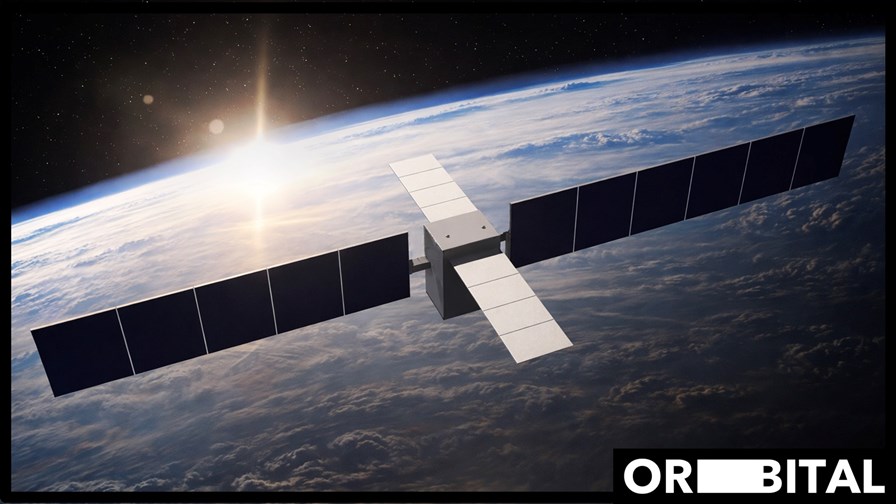
Orbital said it plans to design and build a constellation of satellites that will each house a cluster of Nvidia-powered servers. The LEO satellites will be powered by solar energy and cooled by heat being radiated directly into space.
California-based Orbital is set to launch its first satellite, Orbital-1, on SpaceX’s Falcon 9 in April 2027. This satellite will act as a test case to validate sustained GPU operations in orbit, as well as testing radiation hardening and running AI inference workloads in space conditions.
Orbital has also unveiled plans to launch a constellation of satellites for orbital AI compute infrastructure and is currently filing with the FCC for approval. It also plans to build a factory in California.
The company was founded by Euwyn Poon, who also founded electrical bike and scooter firm Spin, which was sold to Ford in 2018 for up to $100m, according to reports at the time.
“AI progress is being constrained by the grid,” said Poon, who is now CEO at Orbital. “Datacentre economics are dominated by electricity and cooling, and both are getting harder. In orbit, solar power is continuous and cooling is fundamentally different. Orbital is building compute infrastructure that removes the energy ceiling and scales with AI’s potential.”
The concept of putting datacentres in space is a hot topic in the industry right now, with major backing from the likes of Elon Musk, who recently merged his space company SpaceX with his artificial intelligence firm xAI to focus on orbital compute. Musk has claimed the cost of deploying AI in space could fall below terrestrial AI costs in the next three years, though this has been labelled as “optimistic” by critics.
The reason for the interest is two-fold: The cost of land and a lack of power. Global datacentre power consumption is expected to roughly double to nearly 1,000 terawatt-hours by the end of the decade, according to an estimate by the International Energy Agency.
Last week, Belgian firm EDGX launched a trial of its AI-based edge compute solution on a SpaceX rocket.
Space-based solutions, such as the one proposed by Orbital, aim to use solar power to support hungry GPUs. But major questions remain around cooling and costs.
– James Pearce, Editor, TelecomTV
Email Newsletters
Sign up to receive TelecomTV's top news and videos, plus exclusive subscriber-only content direct to your inbox.