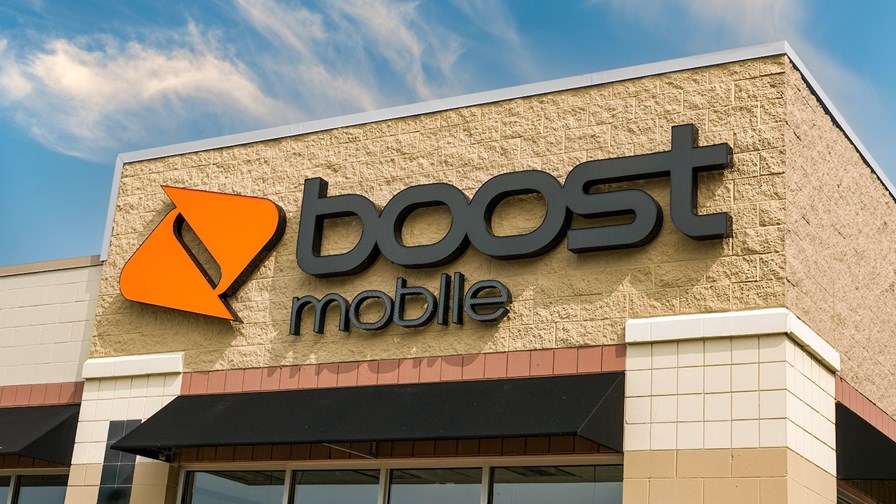
- Boost Mobile owner Echostar strikes $23bn licence sale deal with AT&T
- AT&T will in effect become the RAN provider for Boost Mobile
- The Echostar/AT&T deal is dripping in Open RAN irony
In today’s industry news roundup: Echostar is selling a swathe of spectrum licences to AT&T for a whopping $23bn; in turn, AT&T will become the de facto radio access network (RAN) provider to Echostar’s Boost Mobile, which will shut down most of its Open RAN radio sites but keep its own core platform running; Echostar hopes the move will get the FCC off its back; the deal essentially signals the end of Echostar’s Open RAN efforts and, instead, fuels AT&T’s own Open RAN plans and more!
The dream that Dish Network (now known as Boost Mobile) might be able to compete with AT&T, T-Mobile US and Verizon as an independent, network infrastructure-based challenger in the US wireless services market has ended in something of a nightmare. Dish, known as Boost Mobile since last year’s merger of Dish Network and Echostar, built a nationwide Open RAN-based network and tried to compete with the ‘big three’ US telcos while also making use of mobile virtual network operator (MVNO) agreements with AT&T and T-Mobile US to cover the areas its network didn’t reach. It launched its Open RAN-based 5G network and services in June 2022, but Boost Mobile never gained the traction and scale required to survive as a standalone player – it has only about 7 million mobile customers on its network – and now Echostar has agreed to sell its 3.45 GHz and 600 MHz spectrum licences (a total of 50 MHz of nationwide spectrum) to AT&T for about $23bn (subject to regulatory approval). As part of the deal, Echostar/Boost Mobile and AT&T “have amended their network services agreement to create a hybrid mobile network operator (MNO) relationship… subscribers will continue to receive service from Boost Mobile’s cloud-native 5G core connected to AT&T’s leading nationwide network. While primary connectivity will be provided by AT&T’s towers, Boost Mobile subscribers will continue to have access to the T-Mobile network.” Under the hybrid MNO deal, Boost Mobile will essentially be piggybacking on AT&T’s radio access network and therefore have no need for the RAN in which it has invested significantly over the past four years. Echostar noted: “As a result of this transaction, elements of Boost Mobile's radio access network (RAN) will be decommissioned over time.” While the move signals the end of the Echostar/Boost Mobile infrastructure-based dream, it gets the company out of an increasingly deep financial hole. “This transaction puts our business on a solid financial path, further facilitating EchoStar’s long-term success, and enhancing our ability to innovate and compete as a hybrid network operator,” stated Echostar’s CEO and president, Hamid Akhavan. “The proceeds of this transaction will be used for, among other things, retiring certain debt obligations and funding EchoStar’s continued operations and growth initiatives.” The news lit a fire under Echostar’s share price, which leaped by more than 76% to $52.67 in early trading on the Nasdaq exchange on Tuesday morning.
But this is unlikely to be the end of the Echostar spectrum licence saga. Echostar had been under increasing pressure from US regulator, the Federal Communications Commission (FCC), about whether the operator is meeting its licence obligations related to population coverage and spectrum utilisation, with FCC chairman Brendan Carr writing to Echostar chairman Charlie Ergen about the situation in May this year. The biggest bone of contention relates to Echostar’s 2 GHz licences, which are not part of the AT&T deal: Elon Musk’s SpaceX accused Ecostar of failing to meet its spectrum utilisation obligations in that particular spectrum band (which is also known as AWS-4 and of great use to satellite network operators) and was lobbying for access to the spectrum for its own Starlink services. In its announcement about the deal with AT&T, Ergen noted that “EchoStar and Boost Mobile have met all of the FCC’s network buildout milestones. However, this spectrum sale to AT&T and hybrid MNO agreement are critical steps toward resolving the FCC’s spectrum utilisation concerns.” But it seems further announcements may be forthcoming, as Echostar CEO Akhavan noted: “We continue to evaluate strategic opportunities for our remaining spectrum portfolio in partnership with the US government and wireless industry participants.”
While the outlay for the spectrum is enormous, AT&T’s share price edged up slightly to $28.88 on news of the agreement, which will give AT&T access to Echostar’s spectrum under a lease agreement before the sale of the licences is completed (expected in mid-2026). AT&T noted in this press release that the Echostar licences “cover virtually every market across the US – over 400 markets in total – significantly strengthening AT&T’s low-band and mid-band spectrum holdings. AT&T intends to begin deploying these mid-band licences, which are compatible with its 5G network, as soon as possible.” AT&T chairman and CEO John Stankey stated: “This acquisition bolsters and expands our spectrum portfolio while enhancing customers’ 5G wireless and home internet [5G fixed wireless access] experience in even more markets. No one brings wireless and fibre internet to more places or does it better than AT&T – and we do it with the industry’s first and only guarantee for both wireless and fibre. We’re adding fuel to our winning strategy of investing in valuable wireless and broadband assets to become America’s best connectivity provider.” AT&T recently announced a deal to acquire Lumen’s fibre-to-the-premises (FTTP) assets and business for $5.75bn and now expects its fibre access network to reach about 60 million premises by the end of 2030, more than double the current number.
There’s a certain Open RAN irony to the AT&T/Echostar deal as well. A big part of the Dish Network pitch was that the economics of its Open RAN network would enable it to build and run a cellular infrastructure that would give it an operational and economic advantage over its legacy network rivals. Now, of course, it is going to rely on the AT&T network that, if all goes to plan at ‘Ma Bell’, will have 70% of its wireless traffic running over its own Open RAN-based mobile network – see AT&T goes big on Open RAN with Ericsson.
Ericsson has completed the sale of its majority stake in number portability and digital identity solutions specialist iconectiv to investment firm Koch Equity Development (KED), a divestment first announced in August 2024. After taxes and associated costs, Ericsson will bank about 9.9bn Swedish krona (SEK) ($1bn) from the sale and will record a one-time earnings before tax and interest (EBIT) gain of about SEK 7.6bn ($794m) in the third quarter of this year. According to Ericsson, iconectiv has about 5,000 customers and generated a net profit of about SEK 1bn ($104m) in 2024. The minority shareholder in iconectiv, Francisco Partners, also sold its stake to KED.
– The staff, TelecomTV
Email Newsletters
Sign up to receive TelecomTV's top news and videos, plus exclusive subscriber-only content direct to your inbox.