- AT&T boasts 5G gains from acquired mid-band spectrum
- EU group publishes its upper 6 GHz spectrum usage recommendations
- Apple’s next CEO faces major challenges, reckons analyst
In today’s industry news roundup: AT&T says it’s already been making good use of the spectrum it acquired from Echostar; the EU’s radio spectrum policy group confirms the expected upper 6 GHz recommendations; AI and the metaverse might give Tim Cook’s successor some headaches, reckons Richard Windsor; and much more!
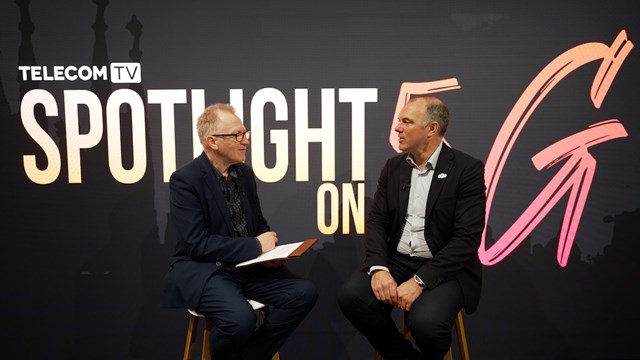
AT&T says it has already deployed some of the spectrum acquired in late August from Echostar for $23bn across its network, a move it claims is boosting 5G download speeds by up to 80%. The US operator acquired 3.45 GHz (mid-band) and 600 MHz spectrum licences from Echostar as part of a broader agreement that also includes a “hybrid mobile network operator” agreement – read this article for all the key details – and has now stated in this press release that it has already deployed that mid-band spectrum to almost 23,000 cell sites in more than 5,300 cities across 48 states (Alaska and Hawaii are the states not covered by the acquired spectrum). Customers “may see download speeds up to 80% faster for mobility and 55% for AT&T Internet Air,” which is the operator’s 5G fixed wireless access (FWA) broadband service. “We’ve put EchoStar spectrum to work on our network and customers are already feeling the difference,” stated AT&T’s chief operating officer, Jeff McElfresh. “This gives us the runway to expand availability of AT&T Internet Air for consumers and businesses and add even more download speed to our 5G service. We’re setting the bar for what it means to be the best advanced networking company in America,” he added. The operator’s VP of RAN technology, Rob Soni, pre-empted the official announcement earlier this month when he noted during his interview with TelecomTV on the show floor at FYUZ25 that acquiring the spectrum was enabling AT&T to grow its “capabilities to support 5G SA [standalone] services and to modernise and refresh and build out largely mid-band TDD [time division duplex] frequencies and implement [a] very high capacity layer for our users… we’ve moved quite rapidly to do that and dramatically increased user experiences in the network throughout. It’s a watershed kind of thing for us as a company and we continue to look forward to the progress that we expect to see over the next two or three years as we continue to build out the most aggressive build out of any North American operators.” Soni also highlighted the “dramatic progress” the operator is making with the rollout of its Open RAN infrastructure and associated network applications.
The European Union’s Radio Spectrum Policy Group (RSPG) has published its recommendations on the future use of the upper 6 GHz band in the EU’s member states and, as anticipated, it falls in favour of the mobile operators as outlined in TelecomTV’s article on Friday about the future use of the upper 6 GHz band (6.425 GHz-7.125 GHz) in Europe. Essentially, it recommends that the mobile operators should be assigned the use of the lion’s share of the spectrum, while the Wi-Fi fraternity may ultimately get nothing. You can read the full RSPG document here.
And just as TelecomTV published its article, Telefónica hammered home the case for use of that particular slice of airwaves by mobile network operators (MNOs) with an update on a pilot project conducted with Nokia and the Polytechnic University of Valencia (UPV). The pilot was conducted in the 5G holographic laboratory located at the university’s Vera Campus, “a pioneering environment in Europe for experimenting with advanced wireless technologies and their applications,” noted Telefónica in this announcement. “The laboratory acts as a test bed for 6G use cases, including immersive communications such as extended reality and holography,” it added. According to the Spanish telco, the pilot, which made use of massive MIMO active antenna technology from Nokia, “demonstrated that this [upper 6 GHz] band can provide coverage similar to the 3.5 GHz band, taking advantage of current base station locations, allowing for a significant increase in traffic density with efficient network deployment, and offering the performance required for future next-generation services.” And the partners certainly have their eyes on the next generation of wireless services. “This pilot marks a milestone in next-generation network research… demonstrating that the 6 GHz band will not only enable us to respond to growing data demand in the most efficient way but is also critical to securing spectrum for the future launch of 6G,” stated Gerardo Rovira, director of mobile access and network core at Telefónica Spain. Álvaro Sánchez, director of business at Nokia, added: “The availability of the full 6 GHz band opens the door to a new era in mobile connectivity. This proof of concept confirms that 6G can be deployed efficiently in 6 GHz, boosting digital connectivity in Spain and enabling the services of the networks of the future.”
Apple is intensifying its efforts to identify its next CEO, with the incumbent, Tim Cook, expected to step down next year, the Financial Times reported (subscription required). John Ternus, Apple’s senior VP of hardware engineering, is being tipped as Cook’s successor. Ternus, if he takes over, will have his work cut out as Apple could well be upended by developments in AI and the metaverse in the coming few years, reckons seasoned analyst Richard Windsor, who shared his views in his latest Radio Free Mobile blog.
Nokia says it has expanded its relationship and gained supplier share at Telecom Italia (TIM) with the signing of a new three-year radio access network (RAN) and associated software contract “to expand and modernise the coverage and capacity” of the telco’s 5G network. “The strategic partnership will cover TIM’s customers across new regions, in addition to Nokia’s existing footprint,” the vendor stressed in this announcement. The deal covers a range of RAN hardware solutions and Nokia’s MantaRay SON solution, a “self-organising network solution for optimisation and automation [that] supports TIM’s ambitions to use AI and analytics to drive higher network efficiency and quality, and deliver a better user experience.” Nokia’s president and CEO noted: “Our expanded partnership with Telecom Italia shows how a trusted 5G network can unlock Italy’s next phase of digital transformation. With our AirScale solution, we’re helping TIM extend coverage and build a foundation for new AI-driven services. Together, we’re connecting intelligence and strengthening Italy’s competitiveness.”
In the US, 27 November will see the celebration of the Thanksgiving holiday, with the Black Friday national sales extravaganza following 24 hours later, followed by Cyber Monday, which extends the spree to the following week via digital channels. The annual spasm of conspicuous collective consumption is the busiest shopping (extended) weekend of the year in the country and marks the start of the Christmas shopping season. There’ll be tech gizmos everywhere being given the hard sell in every possible variety of media but one much-trumpeted device will continue to be missing in (lack of) action. Remember the new MVNO, Trump Mobile, a company launched in June this year by Donald Trump Jr and Eric Trump, scions of the current US president? That announcement was followed by the promotion of the much-vaunted T1 Trump Phone, a $499 gold-painted mobile handset that was supposed to have been launched onto the consumer market on 2 September, the day after the Labor Day holiday that signals the end of summer. The device didn’t arrive then, and it still hasn’t. Apart from its comparatively low cost, the phone’s main selling point was that every component was to be “Made in America”, even though the biggest and richest of US big tech companies have found it necessary to rely on companies from overseas, including China, to supply many of the elements of their much more expensive devices. Since then, the representations and mock-ups of what the T1 might look like have mutated – as have the “Made in America” claims. What little publicly available marketing and advertising collateral there is now stresses there are “American hands behind every device”, and that it has been “designed with American values in mind”. No guidance as to what those values might be is provided. However, websites in the US now confidently assert than when (or even perhaps if) a T1 phone eventually does go on sale, it won’t look anything like the early, teaser renders that were based first on the iPhone and later on a Samsung Galaxy handset, but it will instead be a cheap Android device made (yup, you might have guessed it) in China! The T1 has been available to “pre-order” since early summer and some people will have done just that, forking out a $100 reservation fee for something they have not yet seen. Trump Mobile has not yet released details how many deposits have been paid.
A research team at the University of Technology, Sydney (UTS) in Australia has conducted a feasibility study into the practical application of a technology previously considered to be impossible – the sending of quantum signals from Earth to an orbiting satellite. The findings of the study have been published in Physical Review Research, a peer-reviewed, international academic journal. It is already possible to transmit entangled photons from satellites to ground stations on terra firma but it has proven extremely difficult to reverse the process and transfer the light particles in the other direction, not least because of the many difficulties inherent to maintaining a stable signal. Now, though, the researchers at UTS have developed and deployed a complex uplink model that uses entanglement exchange whilst taking fully into account very tricky variables, such as prevailing or probable atmospheric conditions, satellite positioning and interference and noise. The UTS team leader, Professor Simon Devitt, stated: “The idea is to fire two single particles of light from separate ground stations to a satellite orbiting 500 kilometres above Earth, travelling at about 20,000 kilometres an hour and to ensure they meet perfectly and can thus undergo quantum interference. Our modelling shows that an uplink is feasible [even] when we included real-world effects, such as background light from the Earth and sunlight reflections from the moon, atmospheric effects and the imperfect alignment of optical systems.” It is (comparatively) easy to maintain the stability of photons when they are being transmitted from space to the ground because the phenomenon of atmospheric scattering occurs at the end of transmission, not the beginning, and, obviously, it is very much easier to hit big, fixed targets on the Earth’s surface than on a small satellite moving at speed in orbit. And, of course, gravity helps rather than hinders the downlink process. But there’s a further massive problem: As things stand, the uplink model only works at night when solar interference and background light is minimised. What’s more, even moonlight can disrupt incoming signals to a satellite. Another drawback is electrical power. Ground stations can draw whatever power they may need, all the way up to gigawatt levels, from terrestrial electricity grids, while most communications satellites have access to a maximum of about 10 kilowatts of power for all needs, and such limited power availability means satellites will not be able to generate the number of entangled pairs needed for robust quantum communication. So, there is still a great deal of work to be done before fully functional quantum comms networks that include satellite links become a reality, but the UTS research demonstrates that two-way systems are theoretically feasible. The team says that, in future, the first real-world quantum comms tests outside a very closely controlled laboratory environment will focus on the use of lightweight receivers on drones or balloon platforms experiencing real, natural atmospheric turbulence.
– The staff, TelecomTV
Email Newsletters
Sign up to receive TelecomTV's top news and videos, plus exclusive subscriber-only content direct to your inbox.