To embed our video on your website copy and paste the code below:
<iframe src="https://www.youtube.com/embed/gvZt3PI8BoA?modestbranding=1&rel=0" width="970" height="546" frameborder="0" scrolling="auto" allowfullscreen></iframe>
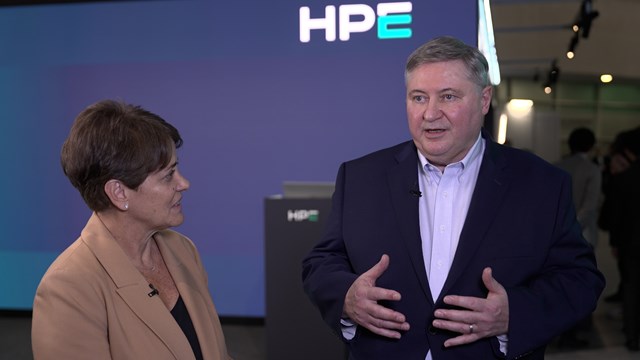
Fernando Castro-Cristin, HPE (00:20):
I will mention three things. First, cost savings that can come from technology but can come of course from operational benefits. The second thing I would mention is the enhancement of the network. The flexibility that you can implement. Open RAN will allow you to have different ways of implementing your network and have a more agile network, more adaptable to your business needs. And then the third thing is improved diversity, which come back to the cost. The more diverse you have into your suppliers, the more you can have the more cost efficient network, and that's what Open RAN brings.
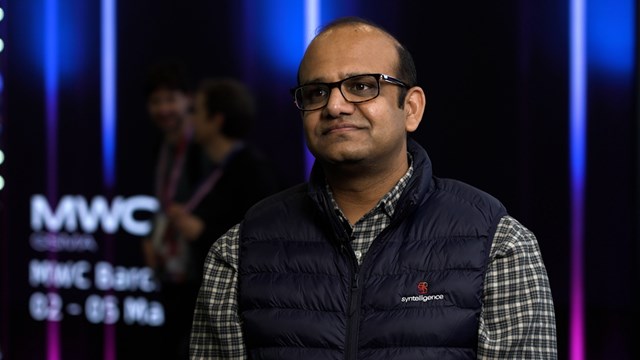
Sushil Rawat, TELUS (01:00):
Benefits expectation are multifold. We will expect, all the operators are expecting technology benefit and commercial benefits. From a technology point of view, we see disaggregation as a big part of the benefit where we are able to manage hardware and software separately, which means we are able to utilize them to pick up their capacity and capability. From a costing point of view, we do see open ran bringing better cost of ownership in short term as well as in the long term. We have seen overall hardware/software cost structure being lower than the traditional ran and also having capability of using more advanced architectures such as introduction of RIC and SMO in future, which allow us to do more native automation and allow us to be more efficient in terms of network operations. So the benefits come from both areas, technology introduction as well as the total cost of ownership.
Robert Curran, Appledore Research (02:07):
I think there are really four benefits. The first benefit is greater choice in the supplier of radio units. More form factors, nicer designs, better aesthetics, even better power consumption and so on. That should also mean greater competition and ultimately driving prices down. So lower CapEx in the long run. The second is being able to take advantage of new technologies at an earlier point in the cycle and at different places within ransack hardware and software. But the benefit there is really agility. The third benefit is greater efficiencies in operations and reductions in TCO for ran. Open RAN sites are already established as being up to 30% cheaper to build, and we're starting to see operators reporting lower running costs as well. And finally, the last benefit is improvements to customer experiences by being able to fine tune the network through software based on much richer data set from the network and control the network. So customer experience is number four. In that list of benefits.
Stephen Wiktorski, Samsung (03:11):
Optionality and flexibility are some of the key benefits. The ability to be able to pick and choose whichever CPU you want, whichever COTs server you want, whichever cloud native software you want, whatever radio you want. Being able to mix and match them together to get that unique solution that best meets the needs of the operator's network. I mean, that's one of the key benefits. I think another key benefit is intelligent automation. We've deployed at TELUS or SMO or service management and orchestration platform, and that's helping TELUS deploy at scale their virtualized radio access network. It's helping them also manage and operate that network throughout the lifecycle of the ran, helping to be more efficient and to reduce costs in the management of the ran over time.
I will mention three things. First, cost savings that can come from technology but can come of course from operational benefits. The second thing I would mention is the enhancement of the network. The flexibility that you can implement. Open RAN will allow you to have different ways of implementing your network and have a more agile network, more adaptable to your business needs. And then the third thing is improved diversity, which come back to the cost. The more diverse you have into your suppliers, the more you can have the more cost efficient network, and that's what Open RAN brings.
Sushil Rawat, TELUS (01:00):
Benefits expectation are multifold. We will expect, all the operators are expecting technology benefit and commercial benefits. From a technology point of view, we see disaggregation as a big part of the benefit where we are able to manage hardware and software separately, which means we are able to utilize them to pick up their capacity and capability. From a costing point of view, we do see open ran bringing better cost of ownership in short term as well as in the long term. We have seen overall hardware/software cost structure being lower than the traditional ran and also having capability of using more advanced architectures such as introduction of RIC and SMO in future, which allow us to do more native automation and allow us to be more efficient in terms of network operations. So the benefits come from both areas, technology introduction as well as the total cost of ownership.
Robert Curran, Appledore Research (02:07):
I think there are really four benefits. The first benefit is greater choice in the supplier of radio units. More form factors, nicer designs, better aesthetics, even better power consumption and so on. That should also mean greater competition and ultimately driving prices down. So lower CapEx in the long run. The second is being able to take advantage of new technologies at an earlier point in the cycle and at different places within ransack hardware and software. But the benefit there is really agility. The third benefit is greater efficiencies in operations and reductions in TCO for ran. Open RAN sites are already established as being up to 30% cheaper to build, and we're starting to see operators reporting lower running costs as well. And finally, the last benefit is improvements to customer experiences by being able to fine tune the network through software based on much richer data set from the network and control the network. So customer experience is number four. In that list of benefits.
Stephen Wiktorski, Samsung (03:11):
Optionality and flexibility are some of the key benefits. The ability to be able to pick and choose whichever CPU you want, whichever COTs server you want, whichever cloud native software you want, whatever radio you want. Being able to mix and match them together to get that unique solution that best meets the needs of the operator's network. I mean, that's one of the key benefits. I think another key benefit is intelligent automation. We've deployed at TELUS or SMO or service management and orchestration platform, and that's helping TELUS deploy at scale their virtualized radio access network. It's helping them also manage and operate that network throughout the lifecycle of the ran, helping to be more efficient and to reduce costs in the management of the ran over time.
Please note that video transcripts are provided for reference only – content may vary from the published video or contain inaccuracies.
4 in 4: Open RAN - Episode 2
After looking at the incentives for moving to Open RAN in our first episode, this instalment of ‘4 in 4’, the second episode in our Open RAN series, explores the benefits of such a move for telcos, with insights from experts at Telus, HPE, Samsung and Appledore Research.
Featuring:
- Fernando Castro Cristin, VP & GM, Telco Infrastructure, Hewlett Packard Enterprise
- Robert Curran, Consulting Analyst, Appledore Research
- Stephen Wiktorski, VP and Head of Networks, Samsung Canada
- Sushil Rawat, Director, RAN Strategy, TELUS
Recorded October 2024
Email Newsletters
Sign up to receive TelecomTV's top news and videos, plus exclusive subscriber-only content direct to your inbox.