Aduna explores agentic AI layer to unlock telco API potential

By Clarence Reynolds
Mar 4, 2026
To embed our video on your website copy and paste the code below:
<iframe src="https://www.youtube.com/embed/PevyRT-zidc?modestbranding=1&rel=0" width="970" height="546" frameborder="0" scrolling="auto" allowfullscreen></iframe>
Clarence Reynolds, TelecomTV (00:05):
I'm Clarence Reynolds at MWC26 and at the Unthinkable Lab in London. Thirty-plus telco vendors, partners, developers, and regulators asked: can agentic AI drive telco API demand? Well, as deterministic networks meet probabilistic agents, Peter Arbitter, Chief Commercial Officer at Aduna, joins us to unpack that challenge. Peter, thank you for being with us.
Peter Arbitter, Aduna (00:29):
Thanks for having me.
Clarence Reynolds, TelecomTV (00:30):
So how is Aduna designing a middle layer that gives AI agents flexibility while preserving the service assurance telco networks require?
Peter Arbitter, Aduna (00:41):
So we are aggregating APIs. That means that we have carriers in this platform business. So this is our southbound side. Carriers, these are exposing the APIs. We are taking these APIs, aggregating them, and we are exposing them northbound. So we are doing that to make it significantly easier for everyone to interact with the telco industry. In the past, and let's face it, we as the telcos had not been easy to deal with. Now with Aduna, it becomes significantly easier because we are shielding away that complexity of that entire industry.
Clarence Reynolds, TelecomTV (01:19):
So Peter, what do channel partners need from telcos to turn APIs and agentic AI into real, repeatable business, not just experiments?
Peter Arbitter, Aduna (01:31):
So telcos sit on a whole bunch of data. I mean, telcos have network information, they have customer information, they have location information. All that could be needed in verticals to solve real world problems, to fight fraud, to help the retail processes to be more efficient. Now, an agent AI solution needs a connection into the network. This is where APIs come to play. APIs are just interfaces and they make the agent significantly more efficient, more effective, and broader in the entire setup what they can do.
Clarence Reynolds, TelecomTV (02:16):
So from your perspective at Aduna, what is that one killer capability that only the network can truly deliver to an AI agent? And how should we productise that today so that it cannot be easily bypassed?
Peter Arbitter, Aduna (02:31):
And I'm really sorry for the isn't that one. I mean, if we really look back, I think it was almost 20 years ago when 3G was announced and everyone asked about that one killer app, if it looked back, it was not the one. It was the millions of apps. And it's a similar journey we have just started here with the network APIs and with the business we are in. We have plenty of capabilities. For sure, there will be, especially at the beginning, a few which are more important, like number verification, SIM swap, device swap. These are all capabilities which do fraud prevention and fraud is a big topic. Unfortunately, everyone is so excited about AI, the fraudsters too, because it gives them so much more capabilities. Now with network APIs, we can fight fraud. And by using all of these telco signals, we help bank, we help consumers to really ensure that it's not the fraudster who wants to get after your money, that it's really you doing that transaction.
(03:39):
So summarising that, we're going to get started with fraud prevention, but then we see many more use cases already arising as of today, be it retail, be it logistics, they will come in the near future.
Clarence Reynolds, TelecomTV (03:53):
Peter, thank you for your insights today.
Peter Arbitter, Aduna (03:56):
Thanks a lot.
I'm Clarence Reynolds at MWC26 and at the Unthinkable Lab in London. Thirty-plus telco vendors, partners, developers, and regulators asked: can agentic AI drive telco API demand? Well, as deterministic networks meet probabilistic agents, Peter Arbitter, Chief Commercial Officer at Aduna, joins us to unpack that challenge. Peter, thank you for being with us.
Peter Arbitter, Aduna (00:29):
Thanks for having me.
Clarence Reynolds, TelecomTV (00:30):
So how is Aduna designing a middle layer that gives AI agents flexibility while preserving the service assurance telco networks require?
Peter Arbitter, Aduna (00:41):
So we are aggregating APIs. That means that we have carriers in this platform business. So this is our southbound side. Carriers, these are exposing the APIs. We are taking these APIs, aggregating them, and we are exposing them northbound. So we are doing that to make it significantly easier for everyone to interact with the telco industry. In the past, and let's face it, we as the telcos had not been easy to deal with. Now with Aduna, it becomes significantly easier because we are shielding away that complexity of that entire industry.
Clarence Reynolds, TelecomTV (01:19):
So Peter, what do channel partners need from telcos to turn APIs and agentic AI into real, repeatable business, not just experiments?
Peter Arbitter, Aduna (01:31):
So telcos sit on a whole bunch of data. I mean, telcos have network information, they have customer information, they have location information. All that could be needed in verticals to solve real world problems, to fight fraud, to help the retail processes to be more efficient. Now, an agent AI solution needs a connection into the network. This is where APIs come to play. APIs are just interfaces and they make the agent significantly more efficient, more effective, and broader in the entire setup what they can do.
Clarence Reynolds, TelecomTV (02:16):
So from your perspective at Aduna, what is that one killer capability that only the network can truly deliver to an AI agent? And how should we productise that today so that it cannot be easily bypassed?
Peter Arbitter, Aduna (02:31):
And I'm really sorry for the isn't that one. I mean, if we really look back, I think it was almost 20 years ago when 3G was announced and everyone asked about that one killer app, if it looked back, it was not the one. It was the millions of apps. And it's a similar journey we have just started here with the network APIs and with the business we are in. We have plenty of capabilities. For sure, there will be, especially at the beginning, a few which are more important, like number verification, SIM swap, device swap. These are all capabilities which do fraud prevention and fraud is a big topic. Unfortunately, everyone is so excited about AI, the fraudsters too, because it gives them so much more capabilities. Now with network APIs, we can fight fraud. And by using all of these telco signals, we help bank, we help consumers to really ensure that it's not the fraudster who wants to get after your money, that it's really you doing that transaction.
(03:39):
So summarising that, we're going to get started with fraud prevention, but then we see many more use cases already arising as of today, be it retail, be it logistics, they will come in the near future.
Clarence Reynolds, TelecomTV (03:53):
Peter, thank you for your insights today.
Peter Arbitter, Aduna (03:56):
Thanks a lot.
Please note that video transcripts are provided for reference only – content may vary from the published video or contain inaccuracies.
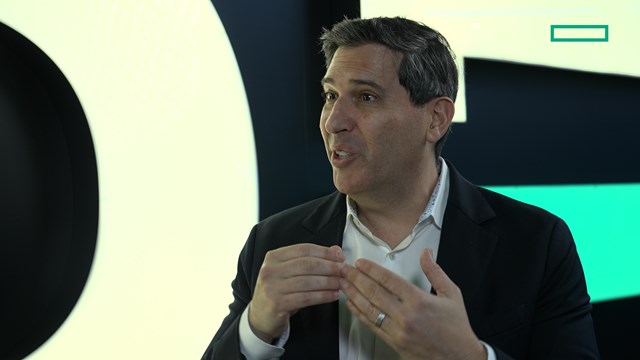
Peter Arbitter, Chief Commercial Officer, Aduna
At MWC26, Peter Arbitter from network API aggregator Aduna discusses the integration of agentic AI with telco APIs to create a more accessible middle layer for AI agents within telecom networks. He highlights the potential of agentic AI to address real-world challenges, such as fraud prevention, by leveraging telco data.
Recorded March 2026
Email Newsletters
Sign up to receive TelecomTV's top news and videos, plus exclusive subscriber-only content direct to your inbox.