OXIO takes an innovative approach with telecom-as-a-service

By Ray Le Maistre
Jul 18, 2025
To embed our video on your website copy and paste the code below:
<iframe src="https://www.youtube.com/embed/a6eG8cP-qwI?modestbranding=1&rel=0" width="970" height="546" frameborder="0" scrolling="auto" allowfullscreen></iframe>
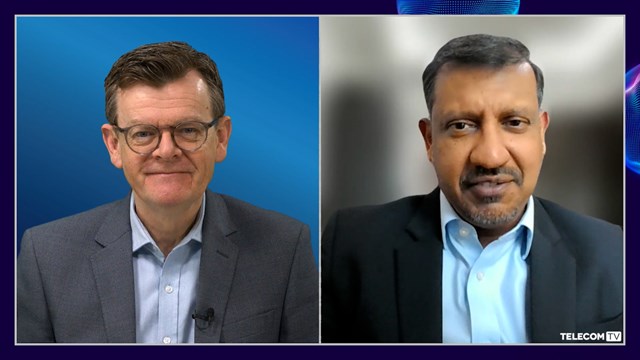
So we're in Copenhagen for DTW Ignite 2025. I'm here with Adil from OXIO to discuss how tech and AI are transforming telecoms and creating new revenue opportunities. Ail, can you just tell us quickly about yourself?
Adil Belihomji, OXIO (00:21):
Yeah, happy to be here by the way. So thanks for this opportunity. I joined OXIO, it'll be close to about two years now in August. And prior to that I was at Verizon for about 23 years. So I've seen all things on the network billing side come with a ton of experience associated with how billing and management of network associated with launching new products and services. At OXIO, here we build a telecom as a service platform and think of us as just like how AWS is for compute and storage. We are the exact same for telco and we provide programmable set of APIs that we expose out to brands and brands use that to become their MVNOs and launch our platform.
Ray Le Maistre, TelecomTV (01:06):
Let's dig a little deeper into that because what in your view then makes OXIO unique in the telecom landscape? Are you doing something different from anybody else?
Adil Belihomji, OXIO (01:16):
Yeah, so what we do is actually we bring a full core, we bring a telecom core, but what we actually do is provide turnkey solutions for brands to become MNOs. So essentially they can come to our portal and sign up and use the portal to get services made available and have voice, text and data packaged up for their brands and customers and have the ability to kind of launch their own service capabilities. And we use AWS as our cloud provider and we put the entire telco stack on AWS that then exposes programmable a APIs out to these brands. So think about owning the customer experience and owning the ability to kind of shape the brand on using the telco services that we actually provide. So they don't need to understand anything about Telco, they don't need to understand anything about the complexities that you're managing the network.
(02:09):
All where they do is use our APIs and they provide the experience out to the brands that are basically using the customer. So think of retail channels, think of fintechs that want to become an MVNO, but just wouldn't do it because they get these bulky APIs from telcos and all those are legacy sets. So we convert them into this really flexible, scalable platform that is consumable by the technology on the other side. And they look at us as more as a technology company, more than a telco company. So they consume those APIs readily and make them programmatic for all the things that they want to get done.
Ray Le Maistre, TelecomTV (02:46):
Okay. So I mean you talked about flexibility, about speed, agility. How does this translate into new monetization opportunities for the customers and partners?
Adil Belihomji, OXIO (02:58):
Right, so think of retail customers that want to have the capability where they can actually do cross border platforms. So cross border plans today, if you travel to another country, you're charge roaming rates. Since we are a global core, since we exist in Mexico today and in the US, I can create a plan that's across the borders and basically it's one family plan. So monetization on those components are readily available from the OXIO platform itself. Think about fintechs that want to actually start using security and start using authentication services that we can provide on that sim. Now, if you think about a legacy MNO or a legacy telco provider, they would reframe from these kind of products and services that they would like to offer outside because they want to put you in their own frame of mine in terms of florid plans.
(03:56):
Whereas for us, we have the full out of the possible where you can actually create plans and services that can be monetizing network, think of event based billing, think of fintechs, think of retail customers. And also what they're looking for is they look for one set of APIs. Think of a global brand that won actually deploy point of sale terminals across the globe. And if they go today to speak to m and o in UK or an m and o in the US you got two different sets of APIs and you've got two different sets of implementations and both have their own monitoring skills and their own observability and their own details of how you actually manage them. For us, you just get one set of APIs and you're across the globe in one shot right off from the get go. And they love that. That's like for them it's 2025. It's like o shattering for them to kind of understand how do you actually have one set of APIs across the globe and we can monetize all of that. And then you add AI in terms of implementations of plans and implementations of the availability of services that could be made available to the brands and brands like seeing that they want that flexibility, they want that capability of owning their own customer experience and ability to surface it up for their own subscribers. So tons of monetization, tons of capabilities that previously wouldn't be otherwise there.
Ray Le Maistre, TelecomTV (05:21):
Okay. Let's talk a little bit about how you've enabled this and how building the OXIO telecom as a service on AWS cloud has helped you to address those business and technical objectives.
Adil Belihomji, OXIO (05:35):
So my goal is to actually have the ability to have a single click solution where I do a single click deployment in various countries that I go to. We are cloud native, we are AI centric, and we have the ability to make sure that wherever we go, we have the single deployment and it's not different from any other country that we go into. And we manage everything from regulations to compliance to in-country governance to taxation to the ability to create plans and services for those brands. So for me, it's almost like have a single way of deploying. And AWS actually helps us with that because they give us a single cloud infrastructure, they have the ability to kind of roll out the services, whether we're using Outpost or we are using a region or a local zone. We have the capability actually rolling that. And we use partners also. It's not just us, but all our partners actually have the same mindset and the same driving factor of how to actually deploy services into the cloud. And that helps us a lot. So that helps us in the deployment structure. It also helps us with AI and it helps us with the data because all the data that comes from the telco now I've got it in one data lake, I've got it in one store that allows me to build insights and provide them up to the brands essentially.
Ray Le Maistre, TelecomTV (06:50):
Well, I mean everybody's interested of course in AI use cases. So let's talk a little bit more about that. How are you using AI to enhance what you are able to offer your customers?
Adil Belihomji, OXIO (07:00):
And look, we are a startup, so this is a necessity for us. It's not like a proof of concept or it's not like let's use AI and try it out and see how it works. It's a necessity for us because in my world, I can't have thousands of people at Verizon, we had a whole bunch of people managing and attributing towards the work that was required for the network or for the BSS platform. I only have 10 people that are running that operations. You can't possibly do that with 10 people. You've got to have AI agents and you've got to actually turn the corner around and trying to use agentic in places where you wouldn't otherwise use. And we are using it in multiple places right from the get go for creating plans and services. We are using AI capability. So a brand can use a AI generated plan that could effectively give them recommendations and smart recommendations, giving them the ability to know exactly what they're going to use and how they're going to use it so you have the right recommendations that you can offer up to the customers.
(08:06):
Think about roaming rates, right? Roaming is the biggest challenging thing that you see in Telco. And we want to actually use the right roaming provider at the right points in time with the right connectivity solutions for that country, for the points in time that we are actually interacting. And we use AI to actually hone in for that. And it gives us the right provider because we are connected with multiple providers and we are connected with multiple routes actually. So it'll tell us to take the best route at the right price at that point in time. So we are using in places that you wouldn't otherwise think about. And this gives us the efficiency, it gives us scale, and it allows us to actually go into market segments that we wouldn't otherwise be there. So right from creation of plans, right from creation of contracts with our wholesale providers, and then think about the telecom data that I'm actually getting from the telecom that gives insights back into the telecom saying, okay, this is how you should actually be starting up your systems. This is how you should be deploying them, and this is where you can use the agentic to actually help you to solve the problems before they even happen. So the customers don't actually get into the problem situations. And I think the telecom industry has been focused on the, I don't want to say the wrong thing, but they're being focused on how do I get AI with customer service and how do I get AI in point of sale? Think about solving them even before it gets there.
(09:33):
So have the ability to build solutions and platforms that allow you to actually create these solutions that master the capability of solving them before they actually happen. And that's what we are heading for. And we think that this is just going to, in the next four to six months, it's just going to amp up and dial up to more and more use cases that you'll see.
Ray Le Maistre, TelecomTV (09:55):
Okay. Well it sounds like you're in an exciting place. So what's next for OXIO and how do you see the telecom as a service evolving, say over the next year or so?
Adil Belihomji, OXIO (10:06):
Yeah, look, I think there is a capability where large MNOs are actually focused on creating their premium brand and creating the services, but we also see a rise up of retailers and fintechs and others that want to become MVNOs that otherwise wouldn't. And I think for OXIO, we are situated in the best place to kind of provide that help for them. At the same time, we partner really well with the MNOs too, because what they're looking for is how do they bring their next set of subscribers to the table? And we actually fuel some of that because we can turnkey provide solutions for MNOs to come onto to the platform. So we are really excited about it because we think that we can bring more business onto that core and we feel that that's really going to get amped up in the next few months and years. But I think the exciting part about OXIO is actually to have the ability to showcase the industry out of the possible that otherwise wouldn't happen, and more so from a technology standpoint and to bring on more subscribers, bring on more brands that you wouldn't otherwise see. And the cool thing about it is they own their own destiny and they know that they can actually provide better services to their customers and their end subscribers.
Ray Le Maistre, TelecomTV (11:24):
Great to hear about an AI native digital service provider coming into the market. So look forward to seeing what's going to happen with OXIO. Adil, thanks very much for talking to us today.
Adil Belihomji, OXIO (11:34):
Thank you so much. I really appreciate it.
Please note that video transcripts are provided for reference only – content may vary from the published video or contain inaccuracies.
Adil Belihomji, CXO, OXIO
At DTW Ignite 2025 in Copenhagen, OXIO’s Adil Belihomji shares how the company is leveraging technology and AI to transform the telecom industry. By offering a telecom-as-a-service platform, OXIO enables brands to easily become MVNOs through programmable APIs, akin to AWS's model for compute and storage. He discusses OXIO's unique position in the telecom landscape, its use of AWS cloud, and how AI is integral to its operations and service offerings.
Recorded June 2025
Email Newsletters
Sign up to receive TelecomTV's top news and videos, plus exclusive subscriber-only content direct to your inbox.