Transportation & Logistics: Reducing the complexities of large-scale, multi-domain solutions

By Ray Le Maistre
Jun 10, 2025
To embed our video on your website copy and paste the code below:
<iframe src="https://www.youtube.com/embed/gyOhwUqioq0?modestbranding=1&rel=0" width="970" height="546" frameborder="0" scrolling="auto" allowfullscreen></iframe>
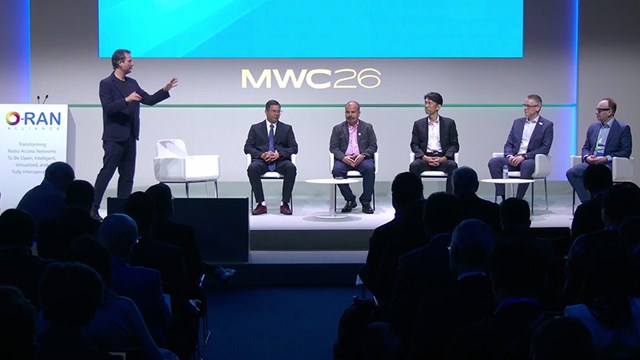
Our next session, which is another one of our very popular market perspectives, and this one is on transportation and logistics. And we're going to be focusing on reducing the complexities of large scale multi-domain solutions. Now, deployments in the transportation and logistics sector are usually across large and often remote areas. Can telcos accelerate the shift from proof of concept to scalable, private, or hybrid 5G and network as a service offers and can they produce tailored and flexible solutions that can adapt to these challenging environments? Well, we've got a series of experts, a set of experts here to tell us about this. Let's meet our panelists. I'm going to ask 'em to briefly introduce themselves starting at the far side with Connor.
Connor Lyons, Lyons Consulting (01:20):
Pleased meet you all. Hope you can hear me. My name is Connor Lyons. I'm a founder of a consultancy bridging the Gap between technology companies and very traditional industries and businesses. Prior to that, I was the head of innovation for a really large port group in the uk and I played with and scaled lots of technologies from drones to IOT concepts like digital twins and tried to sort of make them a reality for a business that isn't really used to those terms or things. Thank you.
Ray Le Maistre, TelecomTV (01:54):
Fantastic. Thank you Connor. And Ultan.
Ultan Mulligan, ETSI (01:56):
Good afternoon, Ultan Mulligan, chief services officer at ETSI, the standards body. I perhaps maybe you're thinking I'm the odd one out here perhaps, but honestly standardization is going to be key to driving efficiencies and economies of scale and trying to address a mass market, which there is actually a mass market behind this industry.
Ray Le Maistre, TelecomTV (02:16):
Absolutely.
(02:17):
And Asif,
Asif Khan, Verizon Business (02:18):
Hey, good afternoon all. I'm a distinguished architect. My focus is to work on large customer integrated deals and that goes from applying security transport, IOT and OT, and everything else under the sun.
Ray Le Maistre, TelecomTV (02:32):
Okay, thank you. And Graham,
Graham Wilde, Three Group Solutions (02:34):
Hello, nice to be with you. I'm Graham Wilde. I work for three group solutions, which is part of Hutchinson and I look after the private networks team within Hutchison internationally.
Ray Le Maistre, TelecomTV (02:47):
Okay, thank you everybody. Now Graham is our co-host for this discussion and we'll start our session with a special DSP leaders address. So Graham, the floor is over to you.
Graham Wilde, Three Group Solutions (03:00):
Fantastic, thank you very much everybody. And it's lovely to be back here again and listening to some really stimulating debate from earlier on. So let me just give you a quick introduction to me. So I work for Hutchinson, and you probably all know Hutchinson as been the owners of lots of mobile operators, most of which are called three. But Hutchinson is also one of the biggest port operators in the world with over 50 container ports in 27 countries. And we also have a huge retail operations in this country. It's the case of Superdrug and we also make beer as well. So we have Green King breweries in the uk, so quite diversified company. And that's given us a unique opportunity because as somebody in telecoms, I was given the opportunity about 12 years ago to help to build one of the first private 4G networks for the Port of Felixstowe.
(04:01):
Though here in the uk, for those of you who dunno, the port of Felixstowe is our biggest container port. So it handles nearly half of our containerized trade in the uk. And in a couple of weeks time we're going to be going live with a 5G network at the port of Felixstowe. And we've also worked with many other Hutchinson ports around the world and with some of Hutchinson's competitors in other countries as well. And I think I can give you one key takeaway from this 12 years of experience, which is that our customers don't give a fuck about telecoms, right? They really don't. Okay? What they care about is the set of outcomes for their business, okay? They are on a journey like many, many other industrial organizations, sometimes some people call it industry 4.0, digitization, automation, whatever. They're on that journey and they care about safety because unfortunately container ports are still far too dangerous places to work in.
(05:10):
They care about security and they care about efficiency. They also care about an aging workforce. So I dunno if you've ever been to a container port, but one of the first things you see from a long way away are the key cranes. These are cranes that are 40, 50 meters high and those cranes at Felixstowe, most of those cranes are still operated by a person who is 40 meters up in the air. And that's a job. You're up there for hours, you can't go to the toilet in the summertime, it's too hot in the winter time, it's too cold. You can't get somebody in their twenties to do that job. You also can't get somebody in their twenties to just drive a truck around the port, which is another job that has to be done when you move containers from a ship to a stacking area, you can't get people to do that job either.
(06:05):
So the port by necessity has had to invest in autonomous vehicles in remote control of those key cranes. So now it's possible to sit in a nice comfortable office and actually control two of those key cranes at the same time from a desk. And I was talking to a lady the other day, she's 62, she has been doing that job as a remote control crane operator for about 18 months. And before that she was a teaching assistant in a primary school. And that lady would never have gone up 14 meters up in a key crane, okay? There's no way she would've done that. But she's very happy working in a comfortable office controlling two of these cranes at the same time. So it opens up a whole new section of the workforce. It makes those jobs much more appealing and interesting. And also obviously increases massively, massively increases efficiency.
(07:01):
So we in the telecoms industry have been given a ticket to a party unexpectedly, I would say, given a ticket to a party because if we'd been talking about container ports or airports or logistics companies or whatever 15 years ago, and we had sat down and said, who could help these companies solve their real operational business problems? I don't think anybody would've said a telecom operator could do that. But now we are at the center of operations of many, many of our customers. We are working alongside and sometimes competing with major systems integrators in the operation of those companies. And it's really absolutely necessary to have a fundamental understanding of how those businesses work in a way that we didn't have to do and still don't have to do if you're selling mobile phones to a hairdresser, right? You don't have to know, well, is this cut better than that?
(07:58):
Cut? How'd you do a perm? You don't need to know that. Okay? If you're servicing hairdressers, you don't need to know how to lay bricks if you're selling phones to a brick layer. But you do need to know how ports and airports operate if you're going to sell automation systems to those companies. So it's a massive opportunity for us in the telecoms industry, but it's also a huge, huge challenge because that's not the way we're used to working. So I hope for the rest of the session that we're going to be hearing some inspirational, perhaps critical things about our industry that's going to help us serve those kinds of customers better in the future. Thank you very much.
Ray Le Maistre, TelecomTV (08:41):
Great, great applause, Graham. Okay. So providing a great foundation there. And that's a similar theme we've heard from some of the other sessions as well, focused on the industry verticals that's really about understanding the pain points and the requirements rather than offering them a network slice. So let's get a perspective now of what does the transportation and logistics sector actually need in terms of communications, networks and services, and is it getting what it needs currently from the telcos and the communications service providers? So Connor, if I can start with you, because you are on a day-to-day basis at the heart of this and you've been on the other side and seeing what is delivered and what's required. So are the communication service providers able to deliver what is required?
Connor Lyons, Lyons Consulting (09:43):
It is probably a yes and no. I think there's good examples out there. Graham mentioned it like great development. It has to be from the bottom up really for an end user. So in a good way, your businesses have come in, you've given us the time to work out our use cases, and there are many imports as well. Graham mentioned that there's the safety, the security is environmental, there are massive risk for ports, and you have the ability to help us understand those needs and solve those problems. And private networks can allow us to do that. Cost has always been a real issue for us as ports. We'd rather buy a big crane instead of a private network. So how do we form these business cases that can go to a board of a port company, for example, and get funded and they have to look and feel much like their business cases like a crane like they're used to. So it's very much a language, it's being able to understand problems, build things from the bottom up. You can't come really in from the top and sell a 5G network and then put a question mark at the end. It really needs to be working with partners and also multiple stakeholders as well from the very beginning. You can't tick them all off as you go along. You really need to grab them all right at the front and allow everyone to fuel that network.
Ray Le Maistre, TelecomTV (11:19):
Okay. And do you get a sense, obviously three's a little bit of an unusual example being a company that owns ports and has run networks as well. But in general, the telecom operator sector, do you get a sense that they understand the requirements of verticals in a way that they could or should? Sorry, Connor, I was just coming back. Sorry, I was coming back. I thought you're asking. No, no, I was coming back. Just for a follow up, whether you have a sense that they truly understand what is required and what is needed,
Connor Lyons, Lyons Consulting (11:56):
Telcos?
Ray Le Maistre, TelecomTV (11:57):
Yeah,
Connor Lyons, Lyons Consulting (11:57):
No, I don't think so. In many ways, I think it depends how close they are to their partners and the end user applications. End user applications have been part of ports and heavy industries from the get-go, from humble Excel sheets, the way to these modern tools and they have the industries and they're specific, whether it's containers or bulks or other things of that nature, they're very bespoke to that kind of application really. And unless a telco is really close to these solutions that are used every day, then they're a little bit detached in terms of needs. So if you're close to those, that ecosystem, then you're going to tick all the boxes for an end user going to see that pathway. If you are detached and trying to sell a generic network and then work it out, then yeah, it's not going to happen.
Ray Le Maistre, TelecomTV (12:54):
And Asif, I know that Verizon business has had some success in this sector and that doesn't just happen by pure chance. So what has been the approach to understanding the requirements of this sector and then being able to deliver? What does a service provider need to bring to the table other than technology?
Asif Khan, Verizon Business (13:20):
I think it's a consultative approach, right? Because it's not straight, we're selling circuits, et cetera. It's about understanding the business, understanding the business problem. And here within Verizon, we focus on consultative and professional services around that to get an understanding of the business. Now it depends on which markets in which regions we're in, we're quite strong within the US we do look at verticals and we do focus on that. But within EMEA and within international we are focused horizontally, but then we also have consultative arms within our business that can go out and understand the business problem. And then we can then look at not just focusing on a transport layer network, but essentially an end-to-end solution in which we are layering in the transport, we're building an overlay, we're applying zero trust, security, and we're also applying other over the top services such as IOT capabilities, et cetera, and so forth. So it's really the consultative mindset is a very important thing to understand the business. And I think, look, there's lots of different verticals and the way we organize our business, it can be challenging to say the least yet on how many resources you've got and how you can do certain things. But we're well in there, but we could do a lot better. I would say the telcos could in general.
Ray Le Maistre, TelecomTV (14:47):
Okay. And before I come back to you, Graham, Ultan I did want to bring you in because you said you felt like the odd one out, but IOT has already been mentioned, obviously the industry 4.0, this is a big part of this kind of vertical sector and all of this needs, it does need specifications, doesn't it, that everybody can build on and find out about?
Ultan Mulligan, ETSI (15:12):
Well, even looking at the basic standardization of 5G and upcoming six G, I mean there's a lot that can be done to support the transport and logistics sector. This whole industry has been transformed in the last few years from moving boxes to moving information. Information is the lifeblood of this transport industry, tracking and tracing of parcels or consignments or containers or even drivers or trucks or whatever. You could also see perhaps upcoming needs, which could be satisfied by some future standardization coming out in the six G timeframe. Non-terrestrial networks presents I think another opportunity for the transport sector to try and leverage. We will be looking at more ultra reliable, low latency communications aspects like this, timing for high quality positioning, these sort of aspects which will come into the six G standardization activities. So we need to get more, I think we need more participation from this industry sector in our standardization activities. We have the automotive suppliers, manufacturers, we're there, we have the industry automation specialists. We don't actually have people from the transport and logistics sector. So perhaps some of their needs are already catered for in terms of requirements, but I think it would be refreshing for them to actually engage.
Ray Le Maistre, TelecomTV (16:34):
Okay. And Graham, just to come back and elaborate on what you said at the beginning there, are there a specific set of requirements that are particular to the logistics sector that perhaps the telecom sector maybe isn't aware of or could know more about or it might be worth them developing specific applications for?
Graham Wilde, Three Group Solutions (17:04):
I think that the way it seems to work is that if I think about ports or airports, then you can go to a conference, a conference this big on port or automation applications or airports, automation applications. So there's a load of people out there who are developing really, really cool stuff around video, around safety, security, all sorts of incredible stuff. And we don't necessarily need to do that ourselves as an industry, but we need to be in the center of the conversation between those application providers and the customers because none of that shit will work unless it works. And that's what no one seems to kind of get that you could go out and buy, if you report, you can go and buy a hundred autonomous trucks. They won't work if they won't work unless you connect them to a private 5G network that guarantees latency and throughput and slowly, slowly, slowly we're starting to educate the industry around that.
(18:16):
I think the other thing I would say is that just coming back to what Asif said, that we don't have all the answers and neither do our customers and neither do the people who provide all the apps. So it's really a collaborative effort. It's like in the ecosystem thing, I don't like that word really, but it's a good word I suppose for what we're doing also, you have to have an insane level, an insane eye for detail in this. So I'll just give you one example of something that we came across recently, Felixstowe. So Felixstowe has all these trucks and they have cranes and all sorts of things. And we said, okay, we'll build a 5G network and we're going to connect up these vehicles with big ass modems like this big, they're going to sit, bolt them on the side of a crane, bolt them on the side of a truck and the port said, oh, that's not going to work.
(19:13):
It'll work for the cranes, but it won't work for the trucks. We can't stick this big stuff on the side of a truck, it's just not going to work. And we have tablet computers that we use and we need a 5G module that goes in there and a cable up to the roof and some antennas. So the whole performance of that system is less than the big ass modem. It doesn't transmit as well, it doesn't receive as well. So that means that you have to, the whole network has to be designed around the fact that we're dealing with much more kind of puny devices than we thought. So you need more transmission power, you need more base stations and so on. And even things like how long is the cable between the antenna and this module thing in the computer? Is it two meters long?
(20:01):
Is it three meters long? It makes a difference, right? Because you get signal loss on that cable. So these are things that we don't normally think about in the telecom industry. Like no one phones Vodafone. And so should I put my smartphone in my left pocket, my right pocket, which should have in my back pocket? It doesn't matter where you put it, right? It's still going to work in this case, it really matters. And we've had to learn all of that. And so has Verizon. Verizon are very good. They've had to learn all of this. It takes a long, long time a to learn it and then to disseminate that amongst all of your pre-sales engineers and so on. So it's really significantly different from the kind of normal bread and butter businesses that we conduct, I think.
Ray Le Maistre, TelecomTV (20:53):
Yeah. Now, I mean the end users such as ports, at the end of the day, they're big operations. They have big budgets, obviously the service, the communication service providers, they want that business because a nice, meaty, very large enterprise deal to have. But I remember going back a few years, especially when the talk about private 5G was starting to kick on and the telco sort, well, this is our domain, we're going to be front of line here. And they turned out they weren't. So Conor, if I can come back to you, obviously you've worked in this sector and you've then set up a company to help these kind of companies. Is that because they want to turn to almost like an integrator or an industry specialist first and then ask your kind of company to bring the right communication service provider in and to bring the right partners in? Or is that not how it works?
Connor Lyons, Lyons Consulting (21:53):
It's a bit of both. I think funding the business case and convincing, I mean a big port entity, other industries are fairly similar. It's worth investing in this stuff is really hard to do. And I think framing that business case comes from lots of angles with lots of talent and ways of doing things. So ultimately you want to get paid for this stuff and we had that big 5G boom and then everyone went, really Why? And lots of money was spent probably not wisely in some cases. And now what are we left with? I think we're left with some scars that we can learn from, that we can take forward. So just to touch on maybe one of those business cases that I was involved in, it was very much, initially we looked at 5G for example, to innovate for the future, automate. And yes, we will get there, but there were use cases here and now that needed to be solved via and through you guys that maybe weren't resonating.
(22:56):
And so a great way of looking at it is there's 600 engineers on a port that just need their mobile to work whatever pocket it's in. And in doing that and hitting the ground running, you get lots of goodwill within the business from top to bottom and you get that buy-in, then you can start to look to the future and new ways of working, taking unstructured data, making it structured, plugging it in to the existing applications. I think sharing networks is a really amazing concept. Take ports the port owner on that sliding scale of owner and operator or just the owner. It varies. And if you're just the owner, perhaps you don't know what the multiple operators are doing on the port. And actually if you can get everyone involved and sharing the CapEx and the opex of that network, the total amount of money that goes to you out there is the same, but you've got more users, you've got more buy-in, it's an easier sell. And so that's a great way to incorporate into the business. Getting across that spectrum's finite is a really great one as well. That kind of early adoption model, putting that stake in the ground is a real powerful message for ports. So yeah, there's lots of ways to kind of craft that business case that isn't just spend millions of pound on this kind of future automation that may or may not come. There's loads of things that we can do beforehand to wrap it all up.
Ray Le Maistre, TelecomTV (24:27):
Okay. Now Graham, the example you gave there from Felixstowe though a few minutes ago was an interesting one because I guess the tendency might be to go, okay, let's look at all the ports and can we deliver or craft a particular offer or solution for them, but I guess they're not all the same, are they? So how do you get, or is it even possible to create some kind of repeatable solution for these kind of vertical sectors in a way that's maybe slightly tweaked by the customer or by yourselves without having to throw a lot of people at it and completely destroying the margins?
Graham Wilde, Three Group Solutions (25:14):
So that's a really good point, Ray, and I think it's an area that we are working on right now. One of the key challenges to us is that we've kind of figured out after a long time that we can understand what customers want and build something that does what they want. Okay, so that's fine. But telecoms is an industry of scale and you'd only really make large amounts of money if ever, but you only make large amounts of money if you've got a big business and you've got something that's sort of semi repeatable. And I think we have got some the component building blocks of repeatability. I mean obviously every customer thinks they're different and they are different to some extent, and you have to respect that. But that's like you going to the doctor, you going, well, there's no one like me and I've got a headache. And it's like, yeah, okay, fine, Ray, I understand there's no one like you, but I have seen people with headaches before. So it's a little bit like that. And I know as if we were talking about this earlier, we, there's quite a lot of things that can be done to build a platform off which you can then serve individual customers in a way that would meet their requirements.
Ray Le Maistre, TelecomTV (26:37):
Asif I can come to you on this as well.
Asif Khan, Verizon Business (26:39):
I think having worked in global integrated deals for a while and in professional services, I think what we see is when we do build out large scale integrated solutions with over the top security, et cetera, there is some of those things that we learn and we understand the demand and then we can actually then try and repeat. But that comes from using a platform-based approach, cloud native and API, because we can build things, but it will take a while to deliver. As you know, we need to quicker the time to delivery. So in that process we take standard products and we have quite a large portfolio of standard products like IOT, transport, whatever you name it. And we tailor those products. We don't do a custom from day one, we take standard products off the shelf and we apply a level of tailoring for that customer.
(27:40):
So we get pure standard for the small medium type businesses, which are pretty much standard stuff that you need, automated workflows, et cetera and so forth. Then you've got a level of tailoring. And when a customer goes into a space that is totally unique, then we look at a full customized solution. So we've learned that process. And again, the way technology is evolving, the way we are izing things, the way we are using APIs and an ecosystem of partners, I know you don't like that term Graham, but we do need those partners and we need to work together. We need to be able to make API calls between the systems. We need to have some form of a service bridge that when certain things do go down and a partner is managing that aspect, we can then know how to solve that problem as quickly as possible.
(28:27):
So it's really an integrated ecosystem of partners and the platform based approach that will enable that in the future. And we're seeing that evolving constantly. We have a number of standard products on the shelf with iot, iot roaming, iot orchestration. We have a number of overlay products, we have a number of security products. And once you use a horizontal platform based approach, you can then integrate that tightly and get it working together. So you don't have to worry about having a swivel chair thinking, oh, what the hell has gone wrong? Oh, half an hour has been spent here, half an hour has been spent there. You can automate most of that and using ML and ai, you can solve the problems quite quickly
Ray Le Maistre, TelecomTV (29:10):
And Ultan, from the ETSI perspective, is there any kind of focus within your organization on how the specifications being developed and the working groups at ETSI can deliver value to particular vertical sectors or companies working in particular vertical sectors?
Ultan Mulligan, ETSI (29:27):
Well, I think we've been looking at the whole, for example, IOT space and machine type communication. For many years I've been, in fact somewhat disappointed by looking back maybe 10 years ago, the projected market for IOT has been off the scale compared with what has actually happened. Unfortunately,
(29:48):
We were expecting network operators to try and move up the value chain, move up the stack away from the basic level of connectivity, which of course we need to satisfy with their standards and specifications. So we engaged in standardization of basically a service layer or a service platform trying to disconnect whatever might change at the connectivity level from the core business logic or enterprise IT platforms, which shouldn't be impacted by a change of a new connectivity device or a new battery technology, which enables a new air interface, which enables a new device type that shouldn't change your whole business logic. So we've been standardizing this, there hasn't been much take up, the operators don't seem so interested in it. I still believe personally that such type of solutions are necessary for wide scale adoption of iot because there's also a mass market behind this. We talked about individual ports, but there's what a handful of significant container ports in this country, A handful in France, a handful in Germany. But there's also, if you look at the trucking industry, there's about 20 companies run 15% of the trucks, that's 50, 60,000 trucks on British roads, half the trucks on this country's roads run by companies that operate more than 10 trucks. So there's still a significant market that can be addressed. That's only on the trucking level.
Graham Wilde, Three Group Solutions (31:12):
I think that's a good point, but I think the reality is if you've got a company that's running 50 trucks, or let's say you are a train operating company and you're running up the particular rail line and you've got some kind of problem that you want to solve, which is going to involve at some level, it's going to involve some kind of connection between your trucks or your train carriages and some servers and some application somewhere. A lot of the time you don't go to companies like Verizon or three for an answer to that, right? Because you've got another company that you have a great relationship with, maybe they're doing your office it, maybe they're super specialized. There's a company called Nomad Digital, which is super specialized in rail. Okay, then what in the room, right? I bet no one here has even heard of 'em. Okay. And yet they are the go-to people. They have competitors obviously, but they are amongst the go-to people for solutions in that particular sector. So the issue for us is, well, we can't out nomad digital, nomad digital, it's too good. They're just too good and their relationships are too good, so we can't beat them. So we going to the extent we can't partner with them, I suppose. And so some of the standards that you are talking about may well exist in. They would be in the domain of those companies perhaps
(32:50):
Some of the time anyway for some sectors and not with me and asic. Yeah.
Ray Le Maistre, TelecomTV (32:54):
Okay. And that brings us to an interesting point. We've only got a few minutes left actually to explore this, but that how far should the communication service providers go in attempting to deliver more than what they're really good at or what they're very well known for? So if I can start with you and get your perspective on how far do you think the telecom operators, the communication service providers can go in terms of offering a broader range of services to companies and transportation logistics? Can they go beyond connectivity? Should they try and bring a bigger package edge computing, analytics capabilities, et cetera, et cetera? Is there a bigger role for CSPs to play or should they leave it to the experts?
Connor Lyons, Lyons Consulting (33:50):
Leave it to the experts? I think you have the ability to be the glue that either understands supply chains, and I think that's important. You might be the expert in the rail, the road and the sea multimodal. And then you've got obviously the commodities that move through those modes. You have a real potential to understand that real cross section work with the right partners and connect them together. And that's really unique. So that's the kind of more consultative approach that you can bring to the party here working with those individual companies. So I think get involved, understand, get boots on the ground really and find these problems because they're really out there and they don't exist in these rooms, but they are out there and they need solving before you can automate a crane. And boxes are lovely sizes and shapes and they fit in a lovely square yard, but lots of things don't fit in boxes and they pile up and crash and all these things. And that's really tricky stuff. And also going back to the iot point, I mean, hardware is going to continue to get better and connectivity with them is going to already is great and it's going to get better. The hard part of that is really the platform and why do we need to get these thousand devices connected and what insight are they delivering to someone that doesn't care about the device, they care about making the shipment on time and not getting the demurrage fees in their thousands every time, for example.
Ray Le Maistre, TelecomTV (35:26):
Okay. And Asif, what's your perspective here? Sure. Verizon business would like to be able to move up the stack and offer a greater package of capabilities and professional services as well to these kind of customers.
Asif Khan, Verizon Business (35:39):
Well, yeah, I think putting the telco side, the telco will come consumer side. On the enterprise side, we do a lot. We do security, we do IO ot, we do transport, we do overlay networks, and we even in way within the us, we even deploy me, et cetera and so forth. But that's a partner ecosystem. So we do have a partner ecosystem in which we have those partners and we bring them in and essentially we deliver together and then we manage essentially across the board. But that's down to the platform because remember, once you start bringing in a number of partners and you manage it as a holistic deal, you then need to manage, okay, so when something goes wrong, how is that then solved? The traditional method was essentially a swivel chair, service desk, et cetera and so forth. Most of that is going to be automated using APIs, service buses, et cetera and so forth. And again, ML and AI to solve the problems a lot quicker. There are certain guardrails we're not going to get involved in everything, in particular the application, but we may go up to the infrastructure and apply security and zero trust around that. But when it comes to deploying the app on top of whatever container platform you have, that's probably as far as we'll go.
Ray Le Maistre, TelecomTV (36:57):
Okay. And Graham, final word. Is there a limit to how far the communication service sector go? No. There no limit, Ray, no limit. I knew you were going to say that. There's no limit.
Graham Wilde, Three Group Solutions (37:08):
I think the reality is that it's always going to be a bit messy. And there'll be some companies, if you are a major, major multinational operator in the transport sector, you're going to be thinking, well, no one ever got fired for buying from Verizon. So that scale of customer meets scale of supplier, and it's a marriage made in heaven. If you're a container port operator, you're going to look at us maybe and go, well, these guys really know what they're doing, so maybe I'm going to go with these guys. And we would bring certain applications to the table, like predictive maintenance and so on for a port. But we wouldn't do that for a car factory. So I think that it's just the way it is. Like your heritage, your scale, your experience, and your ecosystem. Of course it means that you have this bit of patchy picture and you'll be good at some things and have natural strengths in some areas and other areas. It's going to be harder and you might just have to stick to your knitting a bit.
Asif Khan, Verizon Business (38:17):
Okay. Remember Ray, at the end of the day, B2C, I mean most of the way we work in the enterprise space, we behave like a size,
Ray Le Maistre, TelecomTV (38:24):
Right? Yeah, yeah. No, absolutely. And they want a piece of the pie as well.
Asif Khan, Verizon Business (38:28):
Exactly. And we've partnered with them as well. So essentially that's how we look to deliver those large scale solutions, not the repeatable, very high volume type stuff, which the consumer business is really focused on.
Ray Le Maistre, TelecomTV (38:42):
Okay. Absolutely. Well, we are at the end of line here. We have run out of time for our online audience. Please stay tuned because the discussion will continue with extra shot with Tony Poulos. So please send in your questions for Tony and his guests. And don't forget to take part in today's poll as well, which you can find on the website for our in-room audience. The pinball tournament I think has probably come to an end actually, but the coffee cart is most certainly here and there are refreshments outside. We're going to take a break for about 30 minutes or so. So let's have a round of applause for our panelists. Please.
Please note that video transcripts are provided for reference only – content may vary from the published video or contain inaccuracies.
Panel Discussion
This panel explores how telcos can better serve the transportation and logistics sector with scalable, flexible connectivity solutions. Experts from Verizon, Three Group Solutions, ETSI and Lyons Consulting share real-world insights on private 5G, automation and how to move beyond points of concept to operational scale. We learn about the critical role of collaboration, industry-specific understanding, and a consultative approach to delivering value in complex, multi-domain environments like ports, railways and supply chains.
Broadcast live 4 June 2025
Featuring:

CO-HOST
Graham Wilde
Head of 5G Business Development, Three Group Solutions

Asif Khan
Distinguished Solutions Architect, Verizon Business

Connor Lyons
Innovation Technology Leader, Lyons Consulting

Ultan Mulligan
Chief Services Officer, ETSI