Providing secure and resilient connectivity for the fintech sector

By Ray Le Maistre
Jun 9, 2025
To embed our video on your website copy and paste the code below:
<iframe src="https://www.youtube.com/embed/ZN2X7zi_1cQ?modestbranding=1&rel=0" width="970" height="546" frameborder="0" scrolling="auto" allowfullscreen></iframe>
We are coming towards the final session of the day, and as I mentioned, this is another one of our enterprise industry vertical focused session. So we have our speakers coming up just now. Lord Chris Holmes is here with us today. And one of the stats from this year's DSP lead as well forum is that we have a 200 or 300% increase in the number of dogs here at DSP lead as well for on this year, helped by Chris? Chris, good to see you. How are you doing? Just to your right.
Clare Black, Centre for Finance Innovation & Tech (01:05):
Perfect. And then you've got a small table
(01:07):
To your left and to your right.
Ray Le Maistre, TelecomTV (01:10):
Fantastic. Great. Great to see you all. Thanks very much. So this is our providing secure and resilient connectivity for the FinTech session. So we have a great lineup of speakers from the industry and representing the sector here. Now fintechs are reshaping the global financial landscape, demanding significant levels of connectivity, security, and reliability. They also have regulatory requirements of course, such as data encryption and audit trails. So what are the key challenges for data management and connectivity and what role can service providers play? So let's meet our guest panelists and I'm going to ask them to introduce themselves briefly starting at the far end with Zarina.
Zarina Banu, Tide (02:04):
Yes. Hi. Thank you for having me here. I'm Zarina. I'm global head of PR and communications at Tide, which is an SME focused financial institution. We've been in existence since 2015. We launched a live product in the UK in 2017. We launched in India in December, 2022 where we're going all guns blazing and we launched in Germany last year. So growth is exponential, is hockey stick and I will let you know more about that later on.
Ray Le Maistre, TelecomTV (02:37):
Okay, fantastic. Clare?
Clare Black, Centre for Finance Innovation & Tech (02:40):
Hello. Thank you for having us here today. My name is Clare Black. I'm managing director of cfi, which is the Center for Finance Innovation and Technology. And we were part of a recommendation from an independent review into the UK FinTech sector by Ron Khalifa a few years ago. And we're looking to really further innovation in financial services in the uk. And we do that by bringing together coalitions, I call it cat herding, between government, all the regulators and then industry themselves to tackle those really sort of thorny issues where there's just no traction. So we try and make a real impact in that and deliver innovation with the government and try and create the policy recommendations at the same time as we're actually creating the technology itself as the two have to go hand in hand ultimately.
Ray Le Maistre, TelecomTV (03:36):
Okay, fantastic. And Chris,
Chris Holmes, House of Lords (03:38):
Thank very much Ray and thank you all. Great to be here. I'm Chris, I'm in the House of Lords, been there for racing on for 12 years, covering all new technologies, ai, cyber, blockchain and all things digital assets and tokenization and very much all in the FinTech bucket. But seriously, what are the chances? Not only do I turn up and it's not the first guide dog at the conference, it's not even the first guide dog with somebody called Chris. Seriously, if you're thinking about buying a lottery ticket, do it because I just think stars are aligning tonight.
Ray Le Maistre, TelecomTV (04:17):
Fantastic. Chris, great to see you of course with your canine accompaniment as well. And could be a
Chris Holmes, House of Lords (04:25):
Name for telco that couldn't it? Canine canine
Ray Le Maistre, TelecomTV (04:29):
Dr. Who had it
Chris Holmes, House of Lords (04:30):
Canine, the next generation dog and bone. Come on. That's it.
Ray Le Maistre, TelecomTV (04:40):
Very good. I'm here all week now. Chris, you've very kindly helped to bring this panel together because you have the industry connection, so you're going to help steer this conversation here today. So thanks very much for that and the work you've done for this panel,
(05:00):
Not at
(05:00):
All, but we really want to dig into and find out what the FinTech sector really needs, really needs from the communication and digital service provider sector. So let's get stuck in and start with where should telcos invest first to monetize the rapidly growing FinTech sector? And I'm going to use a stat here because the value we've researched here, the FinTech sector is set to triple in size in the next five years to be worth more than $600 billion by 2029. Who's going to check that in 2029? I dunno, but it's a figure to go with. But so where should telcos be investing first to monetize this rapidly growing sector? So Chris, do you want to start with maybe providing a little bit of your perspective on this and how this sector is growing and why it's important?
Chris Holmes, House of Lords (05:58):
Thank you very much indeed. And I think we will all be here in 2029 to check the stat that you gave us and it will be raining in 2029 in June again. So I think since probably 2010, FinTech has been an extraordinary growth story in the uk and largely it's because traditional financial institutions have for a lot of that time carried on doing what they were doing and driving a very nice business out of that. But by doing that, the level of opportunity, because of the technologies that are now available to us and have been for that time period, has enabled many new entrants, which then became coined fintechs to come in and build at an extraordinary rate because they weren't working with legacy stacks, having all those difficulties, being able to build a brand and a customer proposition in a very compelling way. So really since that 2010 period, and there've been high points along the way, just touching on the FinTech regulatory sandbox that we were involved with measure of success of that were replicate it in just under a hundred nations around the world.
(07:23):
And as Clare mentioned, the Khalifa report that I was involved in writing, which set, set up CFIs and other things, really giving that sense of this is the UK opportunity, it's a fabulous UK growth sector. It's why I was very keen for this session to bring together both Sea Fit who have that overarching view of the whole sector and indeed Tide who have such a fabulous growth story to tell in it. So perhaps Serena first, if you want to set out a little bit about how Tide has grown, why it's grown, and what reflections that gives for the telcos we have here today.
Zarina Banu, Tide (08:01):
Thank you, Chris. I think the story goes back to, well, it goes back to the banking story and the segment which was unloved if you like and to a certain extent is still unloved. So that was a white space for our founder, George Bevis in 20 20 15. So he looked at the banking institution, they charged a lot for SMEs and SMEs needed to get things done. So they're very admin heavy, they want to run their businesses. As I said to Chris before, no SME wants to set up all night doing bureaucracy, filling out HMRC forms. So Tide was born to resolve that pain point. And essentially what it does well is that it really does focus on the customer, what we call members and identifies what SMEs, so specifically SMEs and no other sector. And it is about making efficiencies around a bureaucracy, invoices, admin, payroll.
(09:06):
We're about to launch a payroll product as well where if you're an SME with three to four people, three to four employees from the next couple of months, you heard it here first, you'll be able to pay your employees as well. So looking at the kind of spread of what SMEs need and designing products like them, and I appreciate it's a lot easier for us. We're a lot more nimble, but we bring the customer in. So we look not from inside out, but we look from outside in and we have several hundred engineers working around the clock to design these products. And we also have a very nimble, agile tech stack. If we need something to be done, we sign up with a partner. We have a huge amount of autonomy. I can talk about the culture and agility later if we like, but that is essentially why I guess the growth story. And then what we've done in a nutshell is we've identified markets with big SME segments. Obviously India is one. We reckon there's officially there's 64 million SMEs. We think unofficially it's more like a hundred million. And then so if you think about the markets around the world, Germany, we're live in Germany, which has a very, very big middle stand and smaller SMEs as well because middle stand are sort of quite large SMEs. So that's kind of the growth path we're looking at. And I could go on about this all day, so I will stop there.
Chris Holmes, House of Lords (10:35):
Very good. Interested in that, how aligned have the telcos and the DSPs been with you? How much do you and the board management think about that telco relationship if very much at all?
Zarina Banu, Tide (10:52):
At the moment, it's not a huge amount. I do know that other fintechs out there, I won't speak for others, but are looking at that as some one big UK FinTech has looked at that looking that what we are probably primarily focused on is other sectors of financial services. So insurance for SMEs, mortgages for SMEs. So that sort of spread. So that's the space we're looking at. Again, if we go back to the customer, go back to the one stop all in one platform for SMEs, what are the gaps that are missing? And currently it's things like insurance, it's things like payroll. So if you like the sort of Amazon, Amazon of SMEs
Chris Holmes, House of Lords (11:36):
And Clare from your perspective, being able to look across the whole of the industry, how do you see that dynamic with the criticality of what the telco provides? How much are you seeing that being a close relationship or needing to be closer perhaps?
Clare Black, Centre for Finance Innovation & Tech (11:50):
I think it absolutely needs to be closer. I was in a bit of prep for this panel. I was sort of looking at taking it back a level looking at similarities between financial services, industry, telecoms, and they're actually very similar in certain respects. Both have been, I would say, pushing at the forefront of innovation possibly at different times. And I think maybe slightly Contentiously financial services has a bit of the edge at the moment in that pushing with FinTech, through FinTech or maybe they're being dragged into it more by FinTech, but they're both heavily regulated industries. So I think that's really important. As I said before, regulators can make or break the industry ultimately and lots of unintended consequences through regulation. And both of the sectors are having to balance multiple providers APIs and make sure that they're all integrated and secure wide networks, both sectors sit on and generate enormous amounts of data.
(12:53):
They're also probably renowned for not doing an awful lot with that data. So could work together to do a lot more with the data, and I'll come onto this later, but for me and see fit the government smart data where we're starting to go across sectors is really key to this. So where should telcos invest with fintechs? I would say think about investing in networks that can support high transaction volumes because there's a lot of that in both sectors. So I think it's really somewhere where you can come together emphasizing security and especially data portability. That's going to be really key going forward. Again, going back to smart data, digital identification, verification, I think the two sectors can work a lot closer together in terms of fraud and crime and then investing in ai, machine learning, and then potentially looking ahead to quantum computing. We're not quite there yet, but we know some of the big financial service providers already investing in that, again around on the one hand, around those predictive insights. So that's really key. Going back to the customer comes first and that's where FinTech are very good. And from my own personal experience of mobile networks, broadband suppliers, I think maybe the customer doesn't, it feels like the customer doesn't always come first and then just around data security that's going to be become increasingly important, especially if we're using these sort of tokens that show that we are who we say we are.
Chris Holmes, House of Lords (14:25):
Very much
Ray Le Maistre, TelecomTV (14:25):
So. Right. Okay. So you touched on a few things there, and usually telecom conferences, the conversation is usually very sort of heavy on the technical advances and technical capabilities. They usually only mean things to people within the telecom sector. So for example, you mentioned there about helping to meet the requirements for high transaction data loads, et cetera, and security. Do terms like 5G slicing, do they ever crop up in FinTech circles? Is that something that anybody ever talks about or edge co-location or technologies that are enabled to keep data latency down very low so that very fast transactions can be made across networks? Are these the kind of things that are talked about in FinTech circles or only in telecom circles? And should the two parties be coming together to find a common vernacular maybe to discuss these kinds of things?
Chris Holmes, House of Lords (15:40):
5G slicing. I thought we weren't going to discuss your golf game
Ray Le Maistre, TelecomTV (15:46):
If only that was
Chris Holmes, House of Lords (15:48):
The only problem with it. Well, we'll come onto that. Zarina, do any of those phrases mean anything? Does that in some sentences underline some of the issues we need to address that coming together with a common language of starters? Did any of that resonate?
Zarina Banu, Tide (16:05):
Well, I'm not an engineer, so it might resonate with our VP SVP for payments and who is, but yes, in some of the conversations in terms of the fin crime conversations I have and the compliance conversations I have, so yes, to a certain extent, but potentially I'm not the right person to ask there, but potentially the SVP for payments, which is another thing. And maybe in relation to this audience, that that role is becoming more and more important in the FinTech sector. One of the debates, the narratives out there is that we need to elevate the payments leads onto the C-suite. So yes, I think there is overlap, but yeah, look, I'm not providing a great deal of insight, but what I can say and then maybe one want to touch on it now, Clare, you touched on it. The fraud side as well is that we've been working very, very heavily on authorized push payment fraud.
(17:08):
We've worked with the payment systems regulator part of HMT, her Majesty's Treasury a couple of years ago on a couple of consultations for the mandatory reimbursement scheme whereby the sender bank and the receiver bank have to go 50 50 when a victim of fraud suffers fraud, as long as they claim that within a certain amount of time, they can claim back as long as they sort of jump through some hoops. So on the a PP fraud, we have worked with industry with Innovate Finance, UK finance, and a lot of other industry players to try and get the telcos into the room to have the conversation because fundamentally the view from the fintechs and from the financial institutions is a lot of the A PP fraud originates via the telcos and via the social media platforms. So we'd love to see sort of more input from the telcos in those conversations. I've been in the House of Lords House of Commons at round tables recently and other telcos have been invited and the social media platforms have been invited. So if anyone wants to know more, just do tap me up after this and I'd be happy to reveal more about the next steps in the process.
Chris Holmes, House of Lords (18:26):
Thank you. Clare, how do you see, in a sense what this question's about is
Clare Black, Centre for Finance Innovation & Tech (18:31):
Developing
Chris Holmes, House of Lords (18:32):
The conversation and the connection, isn't it?
Clare Black, Centre for Finance Innovation & Tech (18:33):
Yeah, I mean of those terms, for me, if I put my, gosh another hat on that I wore many moons go and I work more in the financial, wholesale derivatives markets. So latency was very key for big exchanges. And at one point I remember all the, when algo trading was a new thing and they were all going and co-locating as close to that, they had all their stacks there to get that network flowing. That is really key. So that could be an area where you could go and you probably already are talking to. But again, there are disruptors within that, what I call the plumbing of the financial services industry. So what makes it all work and hang together. And so when a trader places a trade following that through matching it, making sure it's compliant that the funds are getting from A to B in milliseconds.
(19:27):
So yes, I would say there's absolutely a role for telcos to play and I'm sure they already are. I would hope they're playing a role and again, going back and I think we will touch on fraud and economic crime, but absolutely we want to have the telcos in the room as well. We're already talking to big tech, we're talking to, we're just about to move on to sort of out of pure financial services into looking at the home buying process and digital identification is a big part of that. And telcos, because they have hold all that information in a secure way can feed into that data sharing. So all that has to be seamless as well and happen so that real time payments can take place real time.
Ray Le Maistre, TelecomTV (20:09):
Yes, absolutely. So let's move on now to that fraud aspect. There's obviously a topic that has never been so high profile as it is right now, despite all the warnings and checks put in place and when fraud does happen, is there a shared responsibility for liability? And what's the process for dealing with the fallout? I mean, Chris, what's your perspective here? Is the financial services sector a little bit hard done by in terms of taking the fallout of when anything happens in this regard?
Chris Holmes, House of Lords (20:51):
Well, I think this is an excellent opportunity, Ray, for a quick bit of audience participation. Unlike other events, I'm afraid I don't have a cube microphone to throw at you, but imagine that I am. And the question I'd like you to give me the answer to, what is the third largest economy on planet earth? Let me hear some answers. Third largest economy, throw them out. Let me hear you, Germany. Okay, let's all very good. Somebody got close to the answer unless they were just saying what they wanted when someone shouted that drug. I dunno if that was a request or an answer. It is difficult to tell sometimes, but that's getting close to it. Germany, that's good. That's good. Very good. Largest economy on the planet. The United States of America, second largest economy, China, third largest economy, economic and cyber crime. Imagine the third largest economy, trillions going to that. That could be going to health services, education, mobility, support. So the question of fraud, it's horrific at the individual level, but when you look at it on a global scale, it's something that all of us have to have front and center, be that as individuals, as businesses, whatever. So to the question as Serina perfectly set out, is it equally set at the moment in terms of where the burdens and the recompense falls? Certainly it's not because financial services, fintechs are on the hook
(22:38):
Now.
(22:39):
Platforms, telcos are not. And where you look at a lot of where this economic crime is happening, you have to look to those sex link. You've obviously seen this firsthand, I imagine.
Zarina Banu, Tide (22:52):
Yeah, I mean it ranges from actually sort of managing media comms at one end, at the customer level, customers resorting to the consumer journalists and wanting their money back to the parliamentary level and all the steps in between internally as well. So as you said, Chris, the UK finance has estimated it's about 470 million. That's a very conservative estimate. Visa's come out with a report, tide's done its own calculations based on the visa report. Again, a conservative 700 million has left the UK 2023 to 20, 24, 12 months. Then there is another report that's out which hasn't been widely circulated, and that's done by the A PPG, the all party parliamentary group on fair business banking, which has estimated that it's actually in the billions. So to your point, Chris, about they've estimated 3 billion has left the UK economy and fraud. And this stems from the customer point of view.
(24:01):
Everything from romance scams to stocks and shares, scams to purchase scams is a big one as well. Just bringing it down back down to the customer. Say for example, a romance scam, someone who's suffered from this sometimes very, very awful crime can lose 50, 60, 70,000 pounds, a fairly ordinary person. And our figures show that sometimes a customer will ignore 10 times, they'll ignore a warning because they're in this sort of heightened zone where they feel that they need to pursue this person, et cetera, et cetera. You've heard all heard about it, you've read about it. So yes. So I guess my role is from that end to the consultation end. But yes, no, we take this very, very seriously. Of course we do what is compliant and we go beyond that as well. And we're considered a bit of a sort of poster child for our work in this sector.
(25:03):
But there is much more to be done because if you speak to the CISOs internally, the stuff is morphing all the time. And from the kind of highly publicized scam farms in Southeast Asia to large language models to AI and what it can do, this stuff is just evolving. And there are always new ways. I mean, some of the stuff I've heard internally about the way the scammers are so sophisticated, they will always, whatever way you come up with, they will always come up with a new way to get around the system and that is never going to stop.
Chris Holmes, House of Lords (25:42):
No, for sure. And Clare,
Zarina Banu, Tide (25:43):
Obviously
Chris Holmes, House of Lords (25:43):
From a C for this page, I know you've done some work on this.
Clare Black, Centre for Finance Innovation & Tech (25:46):
Yeah, we have actually our second coalition, which we just presented the results of a couple of months ago, looked at how a company digital ID could help combat that economic crime mainly at the onboarding level. So when a company is formed, a small company and it wants to open a bank account at the moment, it could go say to Tide or Barclays or wherever, Lloyd's, and for whatever reason, they don't like the look of the company. So they refuse them say, no, we don't want to offer you banking services. They then go to the next bank. The banks don't talk to one another, company's house doesn't talk to the banks, there's no data sharing. So if all of that was shared, and again, I think telecoms can play a role in that sharing. But to answer the question at the moment, yes, banks basically are still on the hook in terms of liability.
(26:40):
There's been a small change in law recently in that for push payments, some third parties may in certain cases share liability with the banks. And I think that's an area where we as an industry and the government as well, the regulators need to really sort of discuss that further. I dunno if you are all aware of or understand what open banking is. It's a big thing in our industry. And moving on into open finance, open banking basically allows banks to share customer data securely. So they don't go and have a nosy around in your bank account. They sort of go in, take some data, check it against, and it's another form of secure verification. Open finance takes that step further. So it then starts using that data, that smart data across different sectors. So you can use it in the energy sector, telecoms, you can use it in financial services, but it's knitted together generally by the payments.
(27:40):
But I was just looking at some stats from our report. We've got so many of them, I've written them down. But fraud is the UK's most prevalent crime counts for over 40% of all crime in England and Wales. Cost to the UK economy was estimated to have reached 6.8 billion a year. That's in 2023. So we're two years on from that now, and it is growing at an exponential rate. And then UK banks themselves are estimated to spending nearly 35 billion a year just on financial crime compliance to tackle issues related to fraud. So it really is in the interest of the industry to get it sorted
Chris Holmes, House of Lords (28:20):
Ultimately. I think one of the interesting many things you raised there on the whole question of digital ideas so critical to so much of fraud, but also enabling people to avail themselves of the technologies which can make such transformational impact. So having had little questions, I'm now going to do a quick little Fairmont poll. Those of you, and bear in mind, I'm speaking slightly broad brush, but we're talking digital ID obviously would've a extraordinary potentially transformational impact in your industry. Those of you who are broadly in favor of having a system of digital ID after three say Digi, 1, 2, 3, digi, which is going to be interesting. Okay. Those of you who are not in favor after three say dodgy. 1, 2, 3. There's a lot of fence sitters. Interesting and all I can say, Ray, there's another piece of research for you to publish. Thank you. You're welcome. But I think the DIGIS had it over the dos, it seemed to, but as you say, there were a lot of undecided. The shy torries are out. That's good.
Ray Le Maistre, TelecomTV (29:45):
Is there more, I'd like to get a sense of is there more that the financial services and FinTech sector believes that the communication service providers could be doing to help stem this growing tide of fraudulent activity? Is there, even if it's just a perception or a sense that the mobile operators, the fixed operators, ISPs could be doing something, could be doing more, even if it's not specific. Is there a sense within the sector that they're not doing enough?
Chris Holmes, House of Lords (30:26):
Clare, you are the arch convener in this sector.
Clare Black, Centre for Finance Innovation & Tech (30:29):
I think it's around that and I keep banging on about it, but it's really key. It's around the data sharing because I think, I don't think, I know you are sitting on lots of really useful data and if that can be brought into that digital ID model, whether it's for companies or individuals and in other parts of the world, we're already using digital IDs. I mean we use them to a small extent here. And we're all sort of getting used to walking around with our lives in our pocket on our phone. I do my banking, my energy, I just manage everything from wallets, my travel. If I forget my phone, then I'm pretty stuck. I can't do very much. But key to making all of that work and making it more, I think telcos as said previously, can help with making that a seamless transaction or a seamless trade in terms of payments.
(31:28):
We also have to be careful. It's again, coming back to fraud, it's balancing that risk. I think. Did you define a stat? It was something like 80% of especially younger people will abandon a transaction of payments. If there's the slightest bits of friction in the process, they will just abandon it and go onto another site and do it elsewhere. But on the other side, there are vulnerable customers and just for every day you may need to, as everything speeds up and gets faster and faster, we may even need to think about bringing in and introducing some frictions and breaks into the process. But for me, the key role that telcos can play is being part of that conversation around data and smart data. And I dunno if you are talking about that in your industry at the moment. It's a big buzzword in our industry and it's going to be going across and dragging across lots of different sectors. We've been having some interesting conversations also around how do you even regulate that? Because I think there's something like 900 regulators for various different industries just in the UK alone, it's not enough is it? Is that point we need a super regulator, it's never going to happen, but it's bad enough talking to your own regulators in your own industry and getting them to talk, even government departments. So getting them to talk across for buying a house for example, that brings in lots of different sectors. So it's the data sharing,
Chris Holmes, House of Lords (32:57):
Very much Zarina, friction, fraud function. How do you see that interplay?
Zarina Banu, Tide (33:03):
I mean, to echo what Clare was saying about identifying the perpetrators, I think the data sharing is really key to that because we would love to see the telcos at the table. We've called for that, of course, the social media firms, which we've mentioned as well publicly. I think that sort of mandating the financial services institutions, it's fine and we're happy to do our bit. Our CEO has said Oliver per that before the October 7th rule came in, that there would be unintended consequences that's still through to play out to the system. There is some evidence that the fraudsters are sort of circumventing, moving to cards, moving to cash. There's all sorts of other ways that I could elaborate on that. They're circumventing the October 7th regime. But yeah, essentially data sharing to echo what Clare said. And then fundamentally being in the room. So being in the room first to data share.
Clare Black, Centre for Finance Innovation & Tech (34:01):
Yeah, because that all works on trust. So everybody has to trust one another in order to share that data.
Zarina Banu, Tide (34:08):
And I think there's one thing to add with that because obviously payments is such, when we look at the path of a fraudulent payment, it starts and then it's going off to this bank and that bank and that bank. And you look at the connectivity literally within 30 seconds, you can see the out concentric circles of how many banks the payment has gone through is mind modeling. We cannot resource even one payment to go through 3, 4, 5 levels of our circles. That could be not just domestically, but would ordinarily be international as well. And also the types of payments that might send it onto a bank, but then the bank might send it onto a card provider or remittance services. So that tracking of payments is really the burden is on the financial services institution. But I think fundamentally, we're kind of all in it together
Ray Le Maistre, TelecomTV (35:06):
Right now. One of the constant ongoing themes within the communication service provider community. We've just got a couple of minutes I just want to touch on this, but within that telco community is they're always looking for new revenue opportunities and to understand the customers better, particularly in the enterprise verticals. So I'd like to get a sense of if the telecom sector or individual operators came forward and said, we have developed a new set of services, real time compliance, analytics, resilience as a service to try and help the financial services sector. That sounds like something that would be warmly received. Would that be fair to say? The opportunity is there to bring more to the table,
Chris Holmes, House of Lords (36:00):
Marina?
Zarina Banu, Tide (36:02):
I think given the breadth of the customer base, I mean Tide, we are considered big in the FinTech space, but given the breadth of the customer base of the telcos, that's definitely something absolutely. We would welcome that. I think the other thing about designing resilience as a service is that you'll have vendors coming to you designing a specific service. So they'll design, say, video id, and then you buy or you partner with the video id, and then obviously you've got regulations. So the regulations, say for example in Germany, Germany, Baffin, the regulator over there requires video id. Other countries in the EU don't require video id. So you've got that sort of disconnect, which we passport legally into Europe via Luxembourg. But in the uk obviously we have a banking partner here, and then we're regulated by the FCA. So that regulation aspect could be very, very useful in terms of the telcos already have done it for their own customer base, so why not team up with the fintechs because they, they've spent potentially years have got hundreds, thousands of people on it. So I think that certainly that FinTech could profit and benefit from that.
Clare Black, Centre for Finance Innovation & Tech (37:18):
Yeah, absolutely. Fintechs have made inroads into creating a better experience for the end user, be that at the retail level or at the corporate level over the past 10 years or so. And Tide is a great example of that, but they've only penetrated handily. There was a report published yesterday by BCG on FinTech looking at the past 10 years, and it's only penetrated 3% of global banking and insurance revenue pools. So fintechs are growing, however, three times the rate of the incumbent traditional institutions. So they're definitely out there. They're much more open to partnerships, I would say. Although having said that, the banks, the traditional banks and financial services providers are now partnering with those more mature fintechs and even some of the nimble ones because it's a much cheaper way of getting in and having that innovation rather than trying to build it themselves. So I think yes, absolutely. There's definitely opportunity and definitely around this whole open finance, smart data economy, which I know is a key part of the government's industrial growth strategy. So that will only take on importance going forward.
Ray Le Maistre, TelecomTV (38:36):
Okay, fantastic. Chris, final word from you?
Chris Holmes, House of Lords (38:39):
No, no, you Ray. No, but what I was just going to say briefly is truly without being panglossian, because I don't know what that means, but entrepreneur, if only the French had a word for entrepreneur and then that was a previous president of the United States who did say that and it was his vice president who did correct us child at school, lent over their work and put an E on the end of potato. It's all true. It's almost an infinite opportunity for telcos and look back to look forward really, because the innovation, how telcos led, how UK telcos led, and look back to see how at that stage, how we got it. So right in terms of that wonderful alchemy of innovation, real commercial forward thinking, right size regulation, and look at the businesses that flourished through that. The opportunities are as good as infinite.
(39:52):
We haven't touched on digital assets and what tokenization can do across this space, but we'll come to that next year. I promised you be positive and be as big a part of this as you possibly can because the opportunities commercially for sure. But how it will further embed you across societies, across geographies and give you that customer centricity, driving it through experience and only then thinking what is the operational detail and tech we need to put in place? And then truly it'll be a wonderful partnership and we need telcos, platforms, fintechs, everybody needs to play their part because apparently it might've been said at least once by somebody in this country. We need some growth
Ray Le Maistre, TelecomTV (40:49):
On that. Great point, Chris. Thank you very much. But we do need to end there as we have reached the end of our time now, my colleague Guy has some details about the Seedings activities, so I'm going to ask our speakers to just remain in their seats for a little bit longer. But please join me in thanking our panelists for our FinTech session. Thank you very much.
Please note that video transcripts are provided for reference only – content may vary from the published video or contain inaccuracies.
Panel Discussion
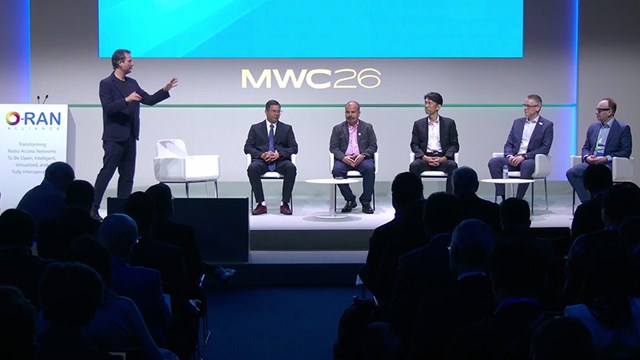
This panel discussion brings together experts from Tide, the Centre for Finance Innovation & Technology, and the UK House of Lords to explore how telcos can better support the fast-growing fintech sector. They delve into the role of secure connectivity, data sharing, fraud prevention and digital ID in enabling financial services innovation. With insights into evolving customer needs, regulatory demands and partnership opportunities, the session highlights where telcos must step up to power the next phase of fintech growth.
Broadcast live 3 June 2025
Featuring:

CO-HOST
Lord Chris Holmes
Member, UK House of Lords

Clare Black
Managing Director, Centre for Finance Innovation and Technology

Zarina Banu
Head of PR and Communications, Tide