Network APIs: Adopting an API-first strategy for service innovation

By Ray Le Maistre
Jun 9, 2025
To embed our video on your website copy and paste the code below:
<iframe src="https://www.youtube.com/embed/Qovyyenlak8?modestbranding=1&rel=0" width="970" height="546" frameborder="0" scrolling="auto" allowfullscreen></iframe>
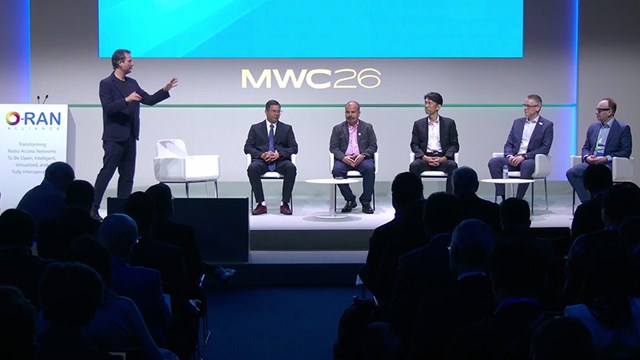
Welcome back for the final two sessions of today, and we start with network APIs and how to adopt an API first strategy for service innovation. Now, APIs are fundamental to modern cloud native service-based architectures, but how can telcos make their APIs more compelling to developers and what go-to market channels should be adopted and how should they prepare for the impact of AG ai? Well, let's meet our guest panelists. I'm going to ask them to briefly introduce themselves starting at the far end with Justin.
Justin Paul, GSMA (01:05):
Hello, I'm Justin Paul. I'm at the GSMA. I'm the program manager for the Open Gateway program and I'm glad to be back here because I went to college very close to here, Royal Holloway, so it brings back a lot of happy memories.
Ray Le Maistre, TelecomTV (01:20):
Good. Share those later over some drinks.
(01:25):
Mark.
Mark Gilmour, ConnectiviTree (01:25):
Mark Gilmour, CTO at connectivitree. Very happy to be on this panel coming at it from a slightly different angle than the cellular base because we're a wholesale operator for high capacity fiber networks. So yeah, looking forward to this discussion.
Ray Le Maistre, TelecomTV (01:44):
Okay, thank you Markus?
Markus Kümmerle, Deutsche Telekom (01:46):
Yeah, Markus from Deutsche Telekom. I'm really here with my two heads. So I'm here with my Magenta hat, my Magenta breast. I'm part of the API exposure team of Deutsche Telekom, but also with my second hat. I was very lucky to have the great chance to drive Kamara from the beginning and now I'm the chair of the outreach, the marketing of Camara. So I have camara feet today.
Ray Le Maistre, TelecomTV (02:13):
Okay, fantastic. And Otilia,
Otilia Anton, Orange LiveNet (02:16):
Hello everyone. I'm Otilia Anton from Orange Director of Orange LifeNet, which is our new business unit dedicated to API exposure and monetization. Very happy to be with you today.
Ray Le Maistre, TelecomTV (02:27):
Okay, fantastic. Well thank you everybody. Now Otilia is our co-host for this discussion and we'll start our session with a special DSP leaders address. So Otilia, if you'd like to make your way to the lectern. Thank you.
Otilia Anton, Orange LiveNet (02:44):
Thank you Ray. We had lots of very interesting discussions today. Every session was inspiring and when we consider APIs, that's very much linked to the cloud native telco and the network evolution. What is API first strategy? API first strategy is not only a technical choice, it's a strategic decision. It's a business decision That means considering the product and the API strategy before actually starting to develop the code. And that is taking different forms in our ecosystem that we'll explore today in this panel. APIs are part of telecom background. For a while we have a longstanding history in it, but until recently it was very much a vertical story while now. And we mentioned earlier today, horizontal models CICD, accelerating innovation. API first design means using APIs to steer service innovation and using them as one of the key capabilities to drive business. In this context, there have been several milestones in the ecosystem that drove us to where we are today.
(04:03):
First of all, we live at a particular moment when our network are much more cloud native 5G SA is a reality on number of markets and we have more and more AI empowered experiences across the network in this context and started back in 2021 by a group of operators. Kamara initiative developed at Linux Foundation some time after in 2022, the GSMA developed open gateway, which was key in bringing us together and making sure that we work together on a simple way to develop and expose APIs that are easy to access. When we look at what has been achieved in this initiative together as an industry, there has been tremendous work with now more than 27 markets that have live APIs, more than 2200, 250 APIs being live on the market with an impressive camera backlog with 50 APIs available and more upcoming in the backlog. It is a tremendous work and we see players from all around the ecosystem being mobilized on this.
(05:23):
That's why most notable initiatives also illustrate how companies engage in this approach to do business. That's why at Orange we decided to support the creation of aona to accelerate market adoption and API availability. And also at Orange we created back in 2024 Orange LifeNet Business Unit because this new domain taps into new capabilities, new skills. Somebody today mentioned HR skills and how do we support the teams to be in this new mindset working on APIs require a different product mindset than our traditional way. And that's why at Orange we decided to put together product business strategy, technical, both software and network together to start to build a core team that can accelerate the development we'll address today. Also, the impact of AI in the API ecosystem. APIs enable conversation. We see today that there is more than there are expectation for AI generated traffic to reach 50% of the network capacity in the next network usage in the next years. That has a huge impact. So APIs are part of that journey. They are part of making our services machine readable, programmable, exploitable, and we have value in the network data. So that's what I would like to address today with my colleagues present.
Ray Le Maistre, TelecomTV (06:57):
Okay. Round of applause for thank you very much. Before we get into the discussion at, I just want to ask one additional thing. We've heard already today, cloud native, AI native, and now we're talking about API first. Do you feel that things are developing and changing more quickly in the industry? I mean, do you imagine that Live Net would've been set up and staffed as quickly as it has been say three or four years ago?
Otilia Anton, Orange LiveNet (07:36):
I feel that when we look at this particular domain on network APIs, we definitely see a much higher velocity than we had in the past. Not only at Orange, but also across multiple organization. We are moving much faster than the traditional operations, but at the same time, if we compare this to the pace of Gent AI or Gen ai, of course there's still quite a wide gap there. So definitely network APIs initiative helped overall the industry to address platforming in a different way and programmable networks. So from my perspective, this is just the beginning of this journey and there's a lot of potential ahead of us provided that we have the proper pace and capabilities that are opening up on the markets.
Ray Le Maistre, TelecomTV (08:25):
So let's open it up now as well to the rest of the panel and talk about what kind of organizational and cultural changes turn an operator from an API enabled to a truly API first company, shrinking release cycles from weeks to days and boosting resilience. What has this looked like? What does it take to have that kind of transformation? Marcus, maybe if we can start with you from the Deutsche Telecom perspective,
Markus Kümmerle, Deutsche Telekom (08:54):
I think it has an inside the company aspect and an external aspect inside the company. The biggest change is a change in the mindset. So in the past times, the network was considered as a black box. It was kept completely separate for security reasons, but also to keep the best network and we have to change it because we have to open the network. And yes, that is a certain risk what we get, but it's often in life you have to make compromises and that's a change in mindset, which is the prerequisite of the whole thing. And then second, to have a real PI first strategy, I think it's key to bring all API people together in one unit, in one effective powerful unit with end-to-end responsibility. And they are supported by the typical cloud native DevOps type of way to work that helps to speed up the things in an external thing.
(09:56):
It's also very important because the change in their mindset should be from a competitional area to a partnership because a lot of these APIs only will work if all the telcos have it in the network. For example, banks, they ask for a coverage of 70%, I'd rather think 90% in the market and one operator does not achieve it. So we have to really partner with the others to develop these similar things to make this business really scalable and possible. And that's also a change in the mindset, which is really, really needed. And in the end also the way how we standardize these things, we should do it differently and we are doing it differently that are my camera socks. We decided to do the standardization, the defactor standardization via code and not via paper, which reduces the times hopefully from years and two days.
Ray Le Maistre, TelecomTV (10:55):
Okay. Justin, from your perspective, you must be seeing this collaboration not in market and across borders as well.
Justin Paul, GSMA (11:07):
Yeah, and I think that's a really important point about the changing the mindset. I think traditionally there's been a lot of focus on operators, rightly thinking about their own markets, thinking about regional themselves maybe as regional groups and trying to build the best solutions they can for them. I think with the API that initiatives like kamara, you are seeing a more global approach. And I think there was the conversation earlier on automotive and it was very clear what we want from automotive is a single API that works globally for everyone in every market. And I think that is a significant change going forwards. It's having that, what can we do to address the global market and have that very, very large addressable market. And I think we'll talk later about why that's important for the developer community as well.
Ray Le Maistre, TelecomTV (12:04):
Yeah, absolutely. And Mark, as you've mentioned, you're coming at this from a slightly different angle, but equally as relevant because for every operator that might have a team working on kamara based APIs, they also probably have a wholesale division that is working with the same kind of APIs that you are addressing. Can you give us a sense of how things are developing there? And I think it's the kind of APIs we're maybe talking about and maybe being developed by the MEF and the TM forum?
Mark Gilmour, ConnectiviTree (12:37):
Yeah, that's correct. I mean it's the same challenge and I think it was articulated really well in the previous panel and that it'ss a global requirement and yet telecom historically, traditionally is a regional play, always has been. We've been governed by regional regulatory environments where we focus in regional experiences. Even a players such as Deutsche Telecom or Orange actually you have individual opcos in those regions. I'm operating under a larger umbrella. So actually it's the same challenges. We just sit in a different part of the market I suppose, which is to be able to connect those regional players into a global footprint to then be able to offer a global solution. And I think Atia and Marcus mentioned about it's a strategic decision to move in that now I came into connectivity right at those very early days when we were starting brand new. And so this is the perfect opportunity to literally be first API first because the last thing I wanted to do as CTO is introduce legacy and technical debt into the network.
(14:10):
Actually it forms one of our three pillars of our business, our business model in that the automation layer is what will enable our services and those services across the global alliance that we're building to be consumed. So it comes about by being fundamentally, I need to produce my services in such a way that they can be consumed by a machine, by others because I'm not selling directly to the consumer, I'm selling to other operators. And those other operators are then selling on to their end enterprise customers. And so I took us down the route of I need to look for an approach and a global approach that will help enable that to happen. Hence working with meth on the LSO APIs, particularly Sonata in terms of ordering and service orchestration capabilities to try and look more horizontally. And it's been intriguing to see my first introduction to the WAS back in 2018 19 at the very early stages when bilateral trials were being done between operators such as at and t and Cult.
(15:37):
And now to see it moved on, it's even got a term these days, it's called NAS network as a service. Its whole buzzword nows, which means that it's definitely making progress and has moved from lab trials to now reality. And there are actually now a number of players that are signed up that are using it, that are using those APIs, but it hasn't reached scale yet. And we can talk a little bit about why that hasn't happened or what's needed to make that happen, but it's a key component now of enabling us as a connectivity solutions provider across as an industry to be able to serve those use cases that we heard in the previous panel I thought was an excellent panel.
Ray Le Maistre, TelecomTV (16:24):
Okay, great. And I know it's still quite early days for Live Net, but are you already seeing the benefits and advantages of a focused team with a particular mindset if you like, you start to see the advantages, things moving on even more quickly?
Otilia Anton, Orange LiveNet (16:44):
Definitely mostly in terms of how do we add APIs as a complimentary model to the traditional connectivity. One, how do we support sales, pre-sales in this initiative, creating that product mindset, supporting sometimes existing product teams to develop their product. So not only because we start with an existing also portfolio of products, how do we drive also transformation on some of them that are relevant for this domain? So it definitely helps having these focus skills and creating that. We're trying to create that snowball effect in the organization in order to be able to touch multiple areas and at the same time provide a consistent offer because there are also elements that are very correlated to APIs like API lifecycle management, how do we handle in life changes, how do we operate, what does that mean in terms of customer support in these scenarios which are completely oriented towards a DevOps and CICD model. So yes, definitely we see the benefits of this approach
Ray Le Maistre, TelecomTV (17:54):
And this is where it all starts to come together, doesn't it? The cloud native network, APIs, AI engagement, et cetera, et cetera, it's all interlinked now of course there is no, these days there's no network API discussion without reference to the developer community. I mean that's been the case for a long time and people have often said to us, can you get developers to come to your events and can you get enterprises to come to your events? Well, we've got the enterprises, we've started to do that, but maybe they're one and the same thing. Now the broader ecosystem is absolutely key to the development and uptake of network APIs. So has the telecom sector finally figured out how to engage with the developer community and how important is the feedback from the enterprise? So in that developer engagement, are we starting to do better by having what the GSMA is doing by creating companies like adona, by having internal groups like Live Net? Is that encouraging that developer engagement?
Otilia Anton, Orange LiveNet (19:05):
When we look at what we did in the past two years together and a special thanks to Justin and Marcus here with us together, we have been addressing consistently new developer communities. So from my perspective, there's not only one way forward, but it's how do we become visible within the developer communities? How do we make this we offers available in a simple ways and that's where aona can help a lot. And we have been engaging, so almost recently we have the CubeCon example in London, in Paris we had the DevOps experience. We work also with larger developer communities and it is a learning journey. So we learn from these experiences, we learn with Kamara and this is an initiative that is meant to be able to integrate continuous feedback. So that is really important in parallel for me, this is also an enterprise play because the developers, most of the developers are part of certain companies. So it's also how do we link the discussion between enterprise play between the product manager or business manager that decide a product shape and then also address developer needs in this journey. Both aspects are important and together we have been consistently learning on developer engagement either via events or developer challenges as well.
Ray Le Maistre, TelecomTV (20:35):
And is that a collective effort? I mean is this something that GSMA is helping with as well, Justin? Is there a group effort to go out to engage the developers?
Justin Paul, GSMA (20:48):
Yes, and I think one of the interesting things is we talk about the developer community as if it's a sort of homogenous mass and there are lots of different types of developers. I think we are very engaged as you'd imagine with the sort of telco software companies that work in this space and they understand telco really well. I think we're starting to have engagement with the cloud companies and other more traditional enterprise-based developers, but I think we barely have a nodding acquaintance with the sort of Fred in their shared entrepreneurial young standalone developers. Not entirely sure whether as an industry we're ready to embrace them yet, but we can't look at the developer community if it's a single homogeneous mass. I think the other thing I'd say is there's a tremendous differentiation across the globe. There are the usual suspects. There are some of the players who are very, very innovative who really grasp this technology. They built up some really good developer programs already. Some have some mediocre programs and some have no programs at all. So there's still a lot of work we need to do and there's a lot of education that needs to take place over the next couple of years.
Ray Le Maistre, TelecomTV (22:07):
And there has been a school of thought that if you want to reach the developer community or a large number of developers at the same time, then you just have to go through the hyperscalers. They already have that engagement. Is that true? Is that fair? Is that correct In some parts of Marcus, what's your perspective there?
Markus Kümmerle, Deutsche Telekom (22:29):
So I would really differentiate if you look on single operator APIs, I think it's difficult to attract a lot of developers to your portal with that sending operator APIs towards customers. I think it's only a niche market. The main business, the scalable business is on the wholesale side that's selling the APIs to the aggregators, to the hyperscalers, and for that you need a couple of people directly connecting the customer and done signing contracts done. So the more interesting thing is then if you are rebuying and reselling the aggregated APIs, being it CPAs or being at network APIs or both or combined, and that's the interesting model we have for that reason, made the partnership with one edge. On the one hand we got the CPAs, we got the aggregated APIs and we got 1.4 million developers immediately and that was a big push for us.
Ray Le Maistre, TelecomTV (23:30):
So it's a really broad ecosystem, but every bit has to fit together essentially.
Markus Kümmerle, Deutsche Telekom (23:35):
Yeah, you have to look on your business models and see for which API for which product on which channel, which sales makes sense if it's active or passive sales, if you need a portal, if you have people for it, you have really to differentiate,
Ray Le Maistre, TelecomTV (23:51):
Okay,
Justin Paul, GSMA (23:53):
Is
Markus Kümmerle, Deutsche Telekom (23:53):
It working?
Justin Paul, GSMA (23:56):
I think there's still quite a lot of work to do and particularly looking at the demand side from enterprises, I think traditionally telcos haven't really understood enterprises and those vertical industries certainly not understanding what their real pain points are and what they want to do, what problems they need to solve. I think conversely, the enterprises don't understand what you can do with a 5G network. The data you can pull out the things you can do. There are some amazing APIs, you can build some incredibly innovative services, but they don't understand any of that. So there's a big piece of education we have to do first and then we have to bring these organizations together and have those conversations. Marriage guidance for telcos.
Otilia Anton, Orange LiveNet (24:46):
If I add on this one, it's also exactly that. How do we build awareness? How do we make this available just to complete on the, I would say layer one or standalone APIs, even though we see the scalability of the business on the bigger platforms and bigger funnels. Every educational step that each one of us can do is important. The way we promote tools that are easy to work with the way we provide developer programs, or if you need access to a full network and have to wait one or two years to have that in production, that is not replying to the need of having faster cycles for innovation. So it's also how together we provide easy access to this new ecosystem and I think that we need to try on all these paths in order to get that critical mass.
Ray Le Maistre, TelecomTV (25:39):
Okay. I'm going to move on now and talk about some of the early learnings and engagement. Which network capabilities should be prioritized for exposure to help drive initial engagement in that the all important new revenue streams. And I'm deliberately not mentioning any numbers and figures that have been shared in the past year or so and what sequencing maximizes early revenues and what have we learned from the early engagements and opportunities? Because there certainly has been some, I mean on telecom TV, just recently we had the four French operators talking about how they were engaging with the banking sector in France. So that's a great example of how this is actually working. But are there particular sectors, are there particular APIs that are the first ports of call and the first revenue generators?
Otilia Anton, Orange LiveNet (26:46):
For sure. So the first ones are around identity and anti-fraud. It was mentioned before that the insurance industry is one of the biggest industries. Banking, FinTech as well. We see a rising fraud in these domains. So for sure APIs can play a strong role here to be able to reach monetization at scale. In this opportunity, it's about creating consistent supply. So I think that the demand is there and the potential is there, but we need to provide the scalable supply to match that and to bring credible offers. On the second side, there are APIs that extract value from network data such as connectivity insights or population density and more advanced APIs as quality on demand. We also look into this in terms of business development because they're closer to the core business and have probably more long-term value and it's important to be able to start making some of this available on the market. It was earlier said that important industries cannot focus on API opportunity if there's only an isolated availability on a couple of markets. So definitely we need to steer the availability here and start probably with the ones that we believe we can make available at scale and start seeing the effects on that. Okay.
Ray Le Maistre, TelecomTV (28:14):
Marcus, any sort of particular learnings or experience that you can share from what Deutsche Telecom has been doing or from the broader kamara perspective?
Markus Kümmerle, Deutsche Telekom (28:25):
Yeah, first of all, I want to agree to Otilia. I think that's a good starting point for us. I want to mention two specific things. The one is about identification. We all know this nice as a mess with the six digit code type of thing, which has a terrible user experience and which is not really safe. We have phishing attacks on it that will go, we will move to silent identification. That will come definitely. And now we have really the choice as telcos to be part of the game, yes or no. So we really should focus us and work on it and provide a good solution for it. That's really key. We will lose the SMS business definitely we now have the option to replace it with API business with more calls, hopefully growing revenues. So now we have the choice. The second thing, which is a new coming up topic from my point of view is H verification.
(29:24):
We see it in the US in a lot of countries that it's not longer allowed to have this nice dialogues in front of adult sites. Are you older than 18? That has to be replaced by real verification of the age. The same we see in Europe. We heard the first statements from the European Commission I think two weeks ago. They also want to bring something in Australia, we have the topic. So H verification is a big topic and we should really focus and work on it not only for the adult sites, also for alcohol topics. You have the elections where you have to be in 25 or 16 and even for myself and you get 65 to get some discounts then it's very interesting.
Ray Le Maistre, TelecomTV (30:13):
Well, just to come back to that point quickly, you mentioned there about the SMS will go away, so this is the time to act, to make sure that the telcos are bringing the alternative. Is that happening? How is that happening? Is everybody of the same mindset and thought here that we need to do something now
Markus Kümmerle, Deutsche Telekom (30:37):
That there's already a group working on it heavily finding the right standards, they find the right partners for it. So it's already ongoing and we have to push and align and work and drive it forward.
Ray Le Maistre, TelecomTV (30:53):
And that's happening in which organization
Markus Kümmerle, Deutsche Telekom (30:58):
It's happening in the background.
Ray Le Maistre, TelecomTV (31:02):
Okay. Alright. We'll get you a drink later. Mark, from your perspective, where are the early victories in terms of new APIs?
Mark Gilmour, ConnectiviTree (31:13):
Well, one thing we're interested about from a crossover point of view, from kind of the cellular into the wholesale into the broader sense is obviously the quality on demand. That's an interesting one that that would allow the experience to be extended internationally, which is the business that I'm in. Perhaps I can tackle the question about some of the things we've learned from the early engagements and opportunities. What we've learned is that in our small segment of the industry, not everybody's ready. In fact, they're mainly not ready to consume APIs on a horizontal piece. And we've had to adapt our strategy to actually enable those that are coming along on that journey. So we rather than augmenting with API, as I said earlier, we've started with the API approach. So all of our automation platform, all of our ordering system and everything is API driven and those that cannot consume that, we've devised a mechanism to allow them to be able to participate in that through essentially manual processes that will eventually lead them that full automated experience across the horizontal piece.
(32:43):
So that's an early learning that we had as we were coming into this. We thought that before the industry, particularly the wholesale industry was further along than it really was, but rather than adopt the legacy approach and then automate later, we've gone with the approach of we will automate and we will use APIs from day one and we will put in place a mechanism that allows you to adapt into that and make that experience easy. Because for us, APIs are not necessarily about monetizing the API itself. It's actually about being able to consume the services easily and reach that out. So that's probably one of the early, the most significant early learning that we've had. We've had to put in place steps and we have a four step program really that allows our alliance partners to be able to move along that automation journey and we meet them at where they are ready to get involved.
Ray Le Maistre, TelecomTV (33:48):
Okay, interesting. And Justin, from the GSM a's perspective being sort of central to the acceleration and movement that's happened in the past couple of years, there must be an awful lot of information coming back, a lot of sharing, this is working, why aren't we tackling this? Can that API be accelerated that particular development? What kind of feedback are you seeing as an organization?
Justin Paul, GSMA (34:13):
Yeah, I think that's the first thing. There's a lot of work we are doing to try and share best practice. There's a lot of really good use cases, commercial cases out there today that people should be copying and I think that's quite simple. I think the other thing is we shouldn't detract from the fact that a lot of the early use cases we see today are in that anti-fraud identity management space and probably utilize five or six key APIs and that's great and we need to see a broader adoption of those. I think what's been really interesting about them is they've driven collaboration because a lot of these anti-fraud initiatives have required all the operators to come together and collaborate on a national basis because if you implement fraud on a single operator space, everyone will just go and commit fraud elsewhere. So the collaboration has been really good and I think we've played a role in the GSMA in helping that, but I think we're going to see things go deeper.
(35:18):
There's a lot more APIs out there. I lose track of the numbers. I think there's 25 stable and 48 and then a huge pipeline in Kamara and some really interesting network capabilities that go deeper into the network. Quality on demand is a really good example, device density. And what I think we'll see is people start to innovate around those and do more and more interesting exciting things using those. So yeah, we want to see more people replicating what's already out there but also experimenting and using these new APIs going forwards, but it's actually moving at a good pace. Could be faster, but it's a good pace.
Ray Le Maistre, TelecomTV (35:58):
Always could be faster, but if we went back five years, I'm sure things would've been moving a lot slower. So incredibly well sort of coming towards the end of our time. But I did want just to get this last question and maybe get some quick thoughts on it because we're getting to the point where AgTech AI systems will start interacting with telco APIs autonomously, especially for QOS on demand or networks slicing purchasing decisions. Are there particular governance or processes needed to allow that to happen to be able to manage that kind of interaction or is that something that isn't quite in the wheelhouse yet? Maybe I can come to the two of you on that.
Otilia Anton, Orange LiveNet (36:51):
First of all, what is really special about the current APIs is that progressively we'll touch APIs that will deal with network configuration. However, very short term ahead of us, we have the authentication identity that have now scale. So we see first use cases that can be relevant for the current AI developments in using this current suite of APIs to enhance customer experience. For instance, user consumers are transforming their way to do online purchases with a high forecast of having future read online experiences driven by AI agents. And from my perspective, that is the first field to tackle in terms of value opportunity because it's really here on the market. And additionally to that, I would say for the network APIs that are changing network status is really considering security by design regardless what is the authority or the identity of the customer behind it. We are here in a new domain, even from regulation perspective and security perspective. So that is currently our core focus is how do we make available first quality on demand experiences and then progressively, I'm sure this will move into agent ai especially for instance, if we look at remote operations or worker safety scenarios, industry for scenarios.
Ray Le Maistre, TelecomTV (38:21):
Right. Okay, great point. Marcus, any thoughts on this? And then Mark as well,
Markus Kümmerle, Deutsche Telekom (38:27):
I think we don't need something specific for a, we need this governance and these processes anyways. So security first, secure identification. We have to do a compliance check for each use case scope purposes of each usage of the API. We are legally obligated to do that. As operator, we have to do a capacity management in our network to safeguard a network. We need a consent management for a couple of APIs to manage the user consent. So all that is needed independent if it's AI or not. And in the end we h to telecom, we put every API in a specific program which we call first mover program, where we have a very close look when the API is new that there are no misuses happening before we give it to the 30 big mass.
Ray Le Maistre, TelecomTV (39:18):
Okay. And Mark,
Mark Gilmour, ConnectiviTree (39:20):
I completely agree with that point actually and it balances out there that it's kind of authentication and scale that the agent AI is kind of going to bring to it, but it's all things that are going to be needed anyway. But those are the two things that really jump out of me when I think specifically of that.
Ray Le Maistre, TelecomTV (39:39):
Okay, excellent. Well incredibly look at that bang on time. We still had other talking points that we were hoping to get to, but we've delved into some very neat ones here today. So we are out of time and we do have another session to come and it's the finance vertical session. So I'm going to ask our API session guests to lead the stage for our next panelists to come up. But let's give a round of applause. Great session. Thank you.
Please note that video transcripts are provided for reference only – content may vary from the published video or contain inaccuracies.
Panel Discussion
This panel discussion explores how telcos can move from application programming interface (API)-enabled to truly API-first strategies to accelerate service innovation and revenue growth. Leaders from Orange LiveNet, Deutsche Telekom, the GSMA and ConnectiviTree discuss the business case for network APIs, the role of initiatives like Camara and Open Gateway, and the cultural, organisational and technical shifts required to engage developers and enterprises alike. Topics include API monetisation, GenAI’s impact and how to scale identity, anti-fraud and quality-on-demand services across markets.
Broadcast live 3 June 2025
Featuring:

CO-HOST
Otilia Anton
Director, Orange LiveNet

Justin Paul
Marketing Director Open Gateway, GSMA

Mark Gilmour
Chief Technology Officer, ConnectiviTree (Europe)

Markus Kümmerle
Tribe Lead MACE Engineering & Production Interface (CAMARA), Deutsche Telekom