- The new CEO of South Korea’s KT Corp has unveiled a three-year investment plan
- It includes billions of dollars for AI infrastructure and supporting connectivity
- The operator also plans to develop AI-related services, including a ‘token factory’
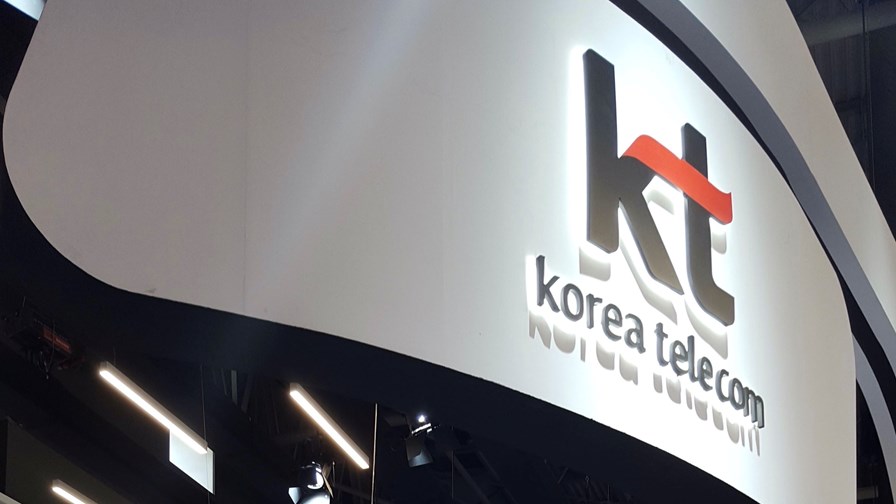
KT’s new CEO Park Yoon-young has unveiled a three-year, 18tn Korean won ($11.73bn) investment plan that includes details of the company’s intended near-term AI infrastructure deployments.
The South Korean operator’s AX (AI transformation) Platform strategy was unveiled by the CEO, who was appointed in March this year, at a media briefing in Seoul on Monday. Park noted at the time of his appointment that there would be a greater focus on AI in the future and now he has laid out what that means for KT Corp.
The plan is to accelerate the company’s transformation into an AI-native operator while shoring up KT’s telecom and security systems, with Park stressing the importance of connectivity in the AI era.
“KT’s fundamental role in connecting the country does not change in the [AX] era, where the focus of connection is expanding from people to AI,” noted the CEO, as reported by The Korea Herald. “We will make our telecom foundation stronger and achieve clear growth on top of that,” he added.
News of the spending spree, which is significant for a telco that generated revenues of about $18.5bn for the full year 2025, came only days after SK Group, the parent company of one of KT’s main domestic rivals SK Telecom, announced major AI infrastructure investments: At its current revenue rate, an average of 6tn won ($3.9bn) in investments per year would be the equivalent of about 21% of revenues.
During the course of the next three years, KT plans to invest about 8tn won ($5.22bn) in next-generation network technologies, including datacentre interconnection (DCI) optical transport infrastructure, 6G and systems to support satellite communications, with the aim of building networks that can meet emerging customer requirements and support national security and disaster recovery capabilities.
In addition, KT is set to invest about 5tn won ($3.26bn) in AI datacentres with a combined capacity of 1GW (gigawatt). Ultimately, KT plans to connect centralised AI infrastructure with edge sites that can support low-latency use cases (autonomous vehicles, physical AI/industrial robotics). For more on the various ways in which telcos are getting involved in AI infrastructure developments, check out TelecomTV’s latest free-to-download 33-page report, Trends In Telco AI Infrastructure.
The CEO told attendees at the media briefing: “There is strong demand for physical AI as the government moves to promote the sector. KT will actively take part in pilot projects and seek to enter areas such as manufacturing and healthcare.”
The operator will also develop new AI-related services, including a “token factory”. The CEO noted (according to The Korea Herald): “The token factory business will combine a gateway that helps customers choose the right AI model and use tokens efficiently with KT’s billing expertise. By linking that with our AI datacentre infrastructure and foundation model partners, we believe it can become a profitable business model.”
‘Tokenisation’ is increasingly being seen as a way for telcos to drive new revenues from the AI economy.
Meanwhile, 1tn won ($650m) will be invested in subsea network cables to add more than 90 Tbit/s in international connectivity capacity to attract even more AI infrastructure investment in the country and help position South Korea as a key AI datacentre hub in South-east Asia.
Importantly, the operator will also be investing 4tn won ($2.6bn) over the next three years on its security and IT infrastructure, representing a 100% increase in the funds allocated to this particular part of its operations. There’s good reason to be investing in such tech, though, as 2025 was an annus horribilis for KT when it comes to cybersecurity and its impact: In September last year, KT admitted hackers were likely to have stolen subscriber information after managing to connect illegal mini base stations to the operator’s network, which resulted in a spate of fraudulent micropayments. It subsequently admitted its internal servers had also been compromised on a number of occasions – see KT’s data breach woes get worse.
Those security lapses and the resulting loss of business and customers contributed to the change in the company’s top management, as the previous CEO Kim Young-seop decided to take responsibility for the company's shortcomings and not seek another term as KT’s head honcho.
- Ray Le Maistre, Editorial Director, TelecomTV
Email Newsletters
Sign up to receive TelecomTV's top news and videos, plus exclusive subscriber-only content direct to your inbox.