- AI has dominated telecom sector discussions and strategies in 2025
- It’s going to do so again next year
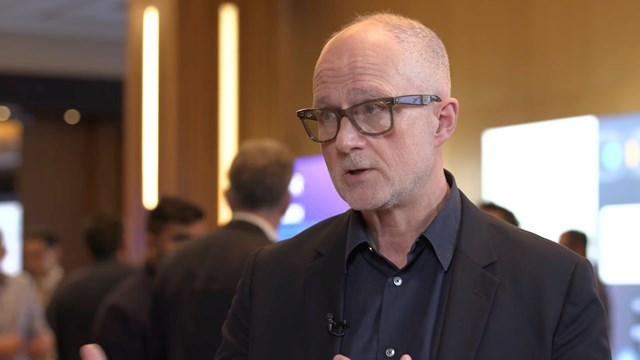
- AT&T’s chief data officer, Andy Markus, has shared his AI predictions for 2026
It’s that time of year when thoughts turn to the coming 12 months in terms of strategy, budgets and industry trends, and AT&T’s chief data officer, Andy Markus, has decided to share his views on the impact that AI will have in 2026 via a blog published by the giant US telco.
He notes that his six expectations revolve around two tech trends – agentic AI and AI-fuelled coding: “The power of these technologies together is democratising AI, putting world-class AI power into even more hands,” he explains.
Here’s a quick rundown of his six AI predictions for the next year:
Fine-tuned SLMs (small language models) will become the most-used models by enterprises
“Purpose-built SLMs very adequately deliver the required accuracy and efficiency when trained for their dedicated job within the agentic workflow. Across the board, businesses will understand the importance of their own data in driving AI value. Fine-tuned SLMs are key to unlocking that value in mature agentic solutions,” noted Markus.
AI-fuelled coding will be the next major development methodology, reducing some development cycles to just minutes
This will bring “the spirit of agile coding into its next evolution. This will tangibly redefine the software development cycle, shortening development timelines, increasing production-grade output and enabling teams to focus on higher-level problem solving,” stated the AT&T man. He added: “We’ve used AI-fuel [sic] coding ourselves to build an internal curated data product in 20 minutes, when it would have taken six weeks without AI. And importantly, our AI-fuelled coding framework is trained to adhere to our rigorous code discipline for quality, security and compliance.”
Businesses will begin building on-demand apps, supported by AI agents
“AI-fuelled coding dramatically accelerates software development cycles, making it feasible for a company to build on-demand apps. Autonomous agents can even independently adapt to new requirements, making redevelopment faster than traditional app cycles. Businesses can respond faster to changing needs, experiment with new solutions, and pivot away from legacy apps that require long-term investment,” noted Markus, though he added that “traditional apps won’t completely disappear… yet.”
Private high-capacity, low-latency fibre networks will connect enterprises to consolidated compute centres
Here, Markus highlights something that is so often forgotten when AI is being discussed: “Computing relies on connectivity… companies are re-evaluating their cloud strategies to make the most out of AI, but they will also be looking at their connectivity.” With that in mind, the AT&T exec expects to see “an increase in private high-speed fibre networks built for major enterprises who are investing in AI. This will connect businesses to their cloud and compute centres with the fastest connectivity speeds and dedicated pathways.” If Markus is correct, this would be great news not only for network operators/connectivity service providers such as AT&T but also the optical and data networking vendors such as Ciena, which, as we recently reported, is currently experiencing a major uptick in demand and revenues thanks to AI-fuelled networking requirements.
Telcos will offer more AI services, such as fine-tuning, to business customers
“I believe the foundation and the market demand is there to extend telco services out of core connectivity and cloud hosting, into productised AI services. By helping business customers tailor their AI needs, telecom companies”, which have a “strong foundation in AI services” such as fine-tuning, “can open up new revenue streams and expand their already essential role in the AI-powered business landscape.”
Metrics for AI accuracy, cost and speed will become the focus across every business sector
“AI is shifting from a novelty into a necessity in every industry, and every department. But it’s not enough to use AI tools. They have to use them well, with measurable AI results. Accuracy is what drives value, and optimisation is what’s needed for generative and agentic AI to measure up across any use case. What are the most important measures of AI? Speed, accuracy and cost. Every organisation, and every department – from marketing to human resources – will start to track return on investment, reliability and scalability for their AI tools,” noted the chief data officer.
Markus had a lot more to say about these predictions and the reasons for his views – you can read his full blog post here.
- Ray Le Maistre, Editorial Director, TelecomTV
Email Newsletters
Sign up to receive TelecomTV's top news and videos, plus exclusive subscriber-only content direct to your inbox.