MWC26: SES on why satellites are on the rise once more

By James Pearce
Mar 13, 2026
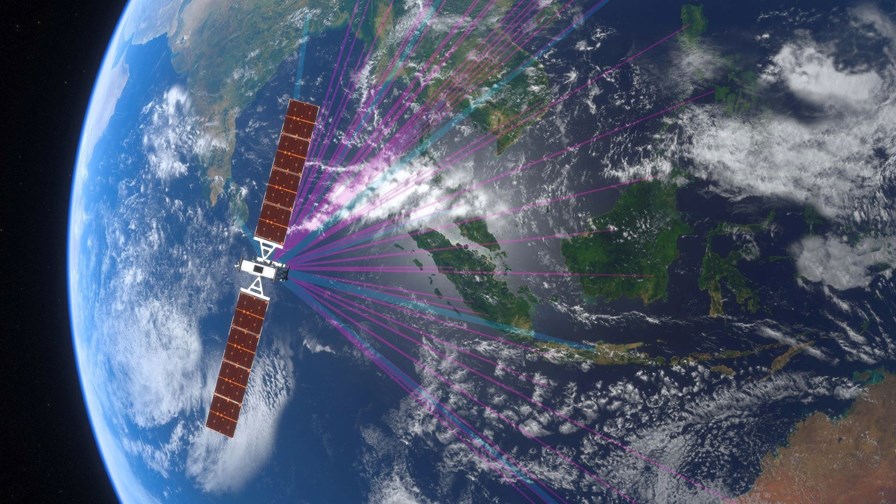
- Satellite communications was one of the key talking points at MWC26
- SES’s Ken Takagi says improved economics and new technology are driving interest in satellites
- He identifies sovereign networks and D2D as major opportunities for satcos
As MWC26 closed its doors, the telecom sector took a look back at the week in Barcelona to try to discern the big themes from the event: AI, of course, dominated, though 5G’s evolution was also in evidence, 6G was more than just a whisper (even if the operators are somewhat wary of the topic), and a few other topics (all beginning with the letter C) also prevailed.
But a shadow from the past has been looming larger in recent years and at MWC26 it was inescapable: Satellites are back, and they underpinned some of the biggest announcements in Barcelona.
Whether it was the new name and first partnerships for Vodafone and AST SpaceMobile’s joint venture, Satellite Connect Europe, or plans for a new constellation from Elon Musk’s SpaceX project, Starlink, satellite news was everywhere – a far cry from MWCs of recent years where satellite communications (satcom) providers might have had a presence but were certainly on the periphery of the action.
Ken Takagi, director of strategy communications and special projects at Luxembourg-based SES, which last year merged with Intelsat, claims there are two vital factors behind why satellites are rocketing up the agenda: Economics and awareness.
“People are definitely more aware of what satellites can offer, but I also think the underlying demand is there now,” he told TelecomTV at SES’s booth on the MWC26 show floor.
“For a long time, people have lived in the countryside with little-to-no connectivity, and they were mostly fine with it. They might have dabbled with some solutions but they got used to not having mobile connectivity. But now they can’t do without it,” he said.
And people who have previously relied on broadband now want mobile connectivity in their rural homes, which is the primary driver behind the success of providers such as Starlink, he added.
That demand, he explained, is also bringing about an increase in interest for business-to-business (B2B) providers such as SES, which operates more than 70 satellites in geostationary (GEO) and medium-earth orbit (MEO) constellations.
Growth is also being driven by economics, with costs and price points falling as more satellites have launched and standards have been adopted across the sector.
“We are seeing greater scale across the industry, which is helping to lower prices overall,” added Takagi. “Customers are more willing to dabble with satellites and know they can now stay connected. Some might start with Starlink or another service but then realise they need a bit more than that.”
As a long-term player in this space, SES is now looking to capitalise on that momentum. SES has been operating since 1985, launching its first satellite in 1988, while Intelsat, which it acquired in a $3.1bn deal last year, is even older, having been instigated by President John F. Kennedy in 1962 and launching its first satellite in 1965.
Takagi acknowledges the challenge of competing as an incumbent in a market where new players – including Starlink, Amazon Leo and AST SpaceMobile – are making a lot of noise, but he says with that disruption also comes opportunity.
“Starlink turned up, and they have a great product,” he told TelecomTV. “They disrupted the industry and some of our business has gone their way, but at the same time they have opened up new opportunities for the industry as a whole. What we need to do is to be smart and start with our scale.”
The bandwidth business, he adds, has become more difficult to compete in on a wholesale level, but some customers who have left SES to try Starlink have come back, because they appreciate the company’s experience with service level guarantees, stable latency and security, he claimed.
For governments and telco partners, satellite needs can go beyond what Starlink or other pure low-earth orbit (LEO) providers have to offer, instead preferring a multi-orbit solution. SES works with Starlink and other LEO providers to integrate their connectivity offerings into its platform. In 2023, for example, SES and Starlink partnered on a multi-orbit product aimed at providing connectivity for cruise ships.
MEO and GEO satellites offer different benefits to LEO spacecraft, explained the SES executive: While LEOs are closer to Earth, thus offering lower latencies, they require more frequent handovers, which potentially increases jitter into connections, something that can impact use cases that require low latencies on steady connections.
Higher orbits also have a wider range of coverage, making it possible to hit a ground station anywhere, while lower orbits have to be more targeted, meaning they may require some terrestrial support.
This also ties into the important role MEO and GEO satellites can play in addressing concerns over sovereign networks, a hot topic in the industry right now.
“If you are a government and involved in a conflict, you will likely need to transmit sensitive data, but if you are operating in enemy territory, you might not want to use terrestrial networks. Satellites can provide the opportunity to bypass that and transmit satellite-to-satellite via optical communications that can reach around the globe. We’re now in a position where we can provide a telecom infrastructure in space that supports the growing space economy.”
Like many other providers, SES is also looking at direct-to-device (D2D) offerings through its relationship with Lynk Global, which is expected to launch its D2D capabilities in 2027. Last year, SES invested in Lynk Global’s LEO constellation and helped to broker merger talks between Lynk and another D2D hopeful Omnispace, in which SES also holds a stake.
“What we can do is, if you have a voice call coming out to the satellite, we can land it at a ground station, but if that isn’t an option, we can use Lynk’s regenerative payload to route the call through space. You uplink to MEO satellites, you route it to another satellite and then downlink into a ground station. That means we can offer services universally with very few ground stations,” explained Takagi.
SES is also finalising designs for its next generation of satellites and is working on building standards within the industry in preparation for next-generation technologies, such as AI and quantum computing – most notably quantum key distribution.
- James Pearce, Contributing Editor, TelecomTV
Email Newsletters
Sign up to receive TelecomTV's top news and videos, plus exclusive subscriber-only content direct to your inbox.