- The Belgian company has trialled its AI-based edge compute on an orbiting satellite
- EGDX launched its Sterna solution aboard SpaceX’s Transporter-16 mission
- Demo comes as interest grows in putting more compute power – and datacentres – in space
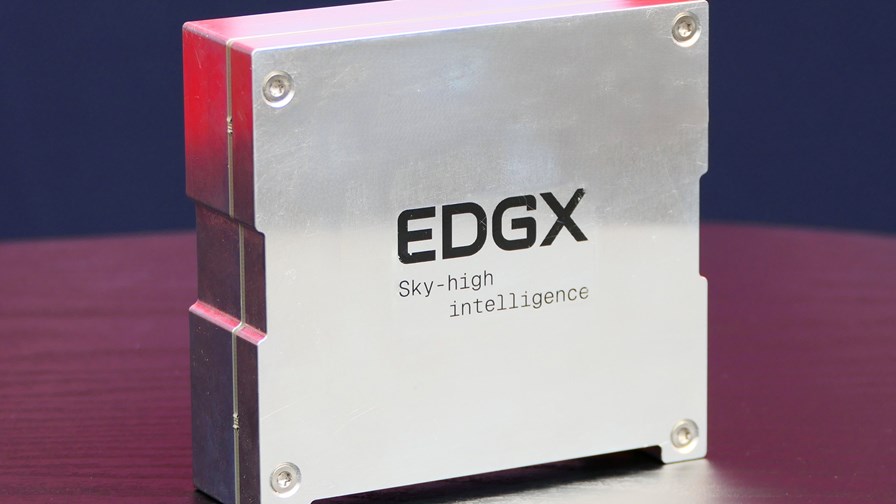
Brussels-based EDGX has collaborated with SpaceX to demonstrate how its AI-powered edge computer, called Sterna, can be hosted and operated on satellite constellations.
The solution enables the deployment of Nvidia-based compute infrastructure aboard satellites, meaning data can be processed in orbit, rather than being sent back to a terrestrial datacentre.
Sterna is specifically designed to run high-performance workloads directly in orbit across a seven-year operational lifetime. It can scale power between 10W and 45W, depending on thermal conditions and in-orbit constraints.
The Belgian company launched the demonstration of its Sterna system on SpaceX’s Transporter-16 mission, which saw a Falcon 9 rocket launch to low-earth orbit from the Vandenberg Space Force Base in California on 30 March.
EDGX CEO Nick Destrycker stated in this announcement: “This launch marks a key milestone for EDGX and for Europe’s position in space-based computing. By bringing high-performance compute directly into orbit, we’re enabling satellites to move from data collection platforms to real-time decision-making systems. Our focus is simple: Deliver reliable, scalable compute infrastructure in space, and this mission is the first step.”
He added: “We believe the next phase of the space industry will be defined by compute in orbit. This mission is the first step in building that infrastructure, turning satellites into intelligent, software-defined systems capable of processing data where it is generated. EDGX is building the compute layer of the space economy.”
The launch follows a €2.3m seed funding round in June 2025 when EDGX also signed a €1.1m commercial contract with an unidentified satellite operator.
Following this first test, EDGX said it now plans to deliver reliable edge compute capacity in space and make it accessible for customers to carry out a range of capabilities, from Earth observation analytics to real-time signal intelligence, directly where the data is generated.
The company also said it plans to build a compute-as-a-service model in orbit, which will allow users to upload their own software and process data in space, with two pilot projects scheduled for later this year.
It comes as interest in space-based computing grows, especially in the telecom market, where satellites have shot up the agenda thanks to recent investments in the infrastructure that supports direct-to-device (D2D) communications.
SpaceX’s owner, Elon Musk, is one of a growing number of notable tech sector names that are promoting the idea of AI factories in space, while last summer, the results of a European Commission-funded feasibility study into orbiting datacentres were published. It found that deploying datacentres in space “could transform the European digital landscape” and be “more eco-friendly”, though questions remain in terms of power sources and heat dispersion.
- James Pearce, Editor, TelecomTV
Email Newsletters
Sign up to receive TelecomTV's top news and videos, plus exclusive subscriber-only content direct to your inbox.