How AI and cloud native are shaping next-gen networks

By Ray Le Maistre
Dec 8, 2025
To embed our video on your website copy and paste the code below:
<iframe src="https://www.youtube.com/embed/f_c6uaicKVA?modestbranding=1&rel=0" width="970" height="546" frameborder="0" scrolling="auto" allowfullscreen></iframe>
Ray Le Maistre, TelecomTV (00:05):
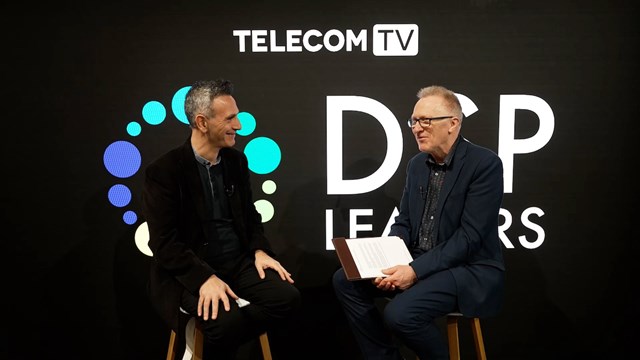
Network operators are faced with endless challenges, but also opportunities as they evolve from communication service providers to digital service providers or DSPs and as the 5G era careers ever. More quickly towards 6G. Now to discuss some of the main considerations on telco agendas right now is Cayetano Carbajo Martín core and transport director at Telefónica's Global CTIO office and a board director at the NGMN Alliance. Cayetano, thanks so much for joining us today. Great to see you again. Now there's a lot of focus, rightly so on the technology and operating model choices that network operators need to make in the near and long-term future. But what are the high level drivers behind such choices? Does the sector need to take a step back and reconsider what it does and should offer to its paying customers?
Cayetano Carbajo Martín, NGMN & Telefónica (01:05):
Considering the operational model, there are a key driver that is increasing the level of automation. Our network has to be more and more automated and the autonomy of the network has to be increased. And it is not only a problem of efficiency but also a problem of quality. A network that is more automated is a network that would provide more quality and will provide new services with shorter time to market. So automation is a mass in the evolution of the network, especially in the evolution of the operational model.
Ray Le Maistre, TelecomTV (01:38):
And do you think up to now that there's been enough flexibility for network operators and service providers to be able to deliver the kind of services that customers need? Or do we need some kind of new approach in the industry to service creation and delivery?
Cayetano Carbajo Martín, NGMN & Telefónica (01:57):
I think in general in our industry, it is very difficult to predict what are the services that will be provided on top of our network. So it is clearly needed flexibility, flexibility from the model, from the operational model, but also from the technology. In the recent evolution of technology, we have seen technologies that has not been defined and developed, taking into account what are the use cases and services that will be implemented on top with the new evolution, talking about 6G, we need to take into account clearly what are the services that we want to implement on top and try to define use cases and evolving the technology accordingly to the need of these use cases and services. These are clearnet.
Ray Le Maistre, TelecomTV (02:48):
Now at the recent FYUZ 25 event in Dublin, you were one of the presenters during an NGMN session that had the title 6G in the hot seat, the debate on innovation. Now we'll talk in a few minutes about some of the specific topics raised during that session, which was really well attended standing room only at some points. But why is it important to be having this discussion right now?
Cayetano Carbajo Martín, NGMN & Telefónica (03:17):
Well, we are now defining what are the requirements that 6G has to fulfill. So it's important that all the industry we discussed together how we want the 6G to be. It is not only a problem of having a new box and a new technology that will drive some investment and nothing else. It is a question of defining the requirement for the new services that I mentioned before for the new automation mechanism that we'll need in the network. So the broader of the discussion is when we are defining the requirement, the different approach will be taking into account and this new standard, this new technology will be fulfilling all these requirements.
Ray Le Maistre, TelecomTV (04:04):
Cloud native. That's a big topic for us here at TelecomTV. This is critical to such discussions and plans. How do you see mobile network operators progressing with their cloud native transformation strategies and how does the work underway in NGMN, for example, the project that's called cloud native next chapter, operating models with gen AI support operators in adopting generative AI at scale?
Cayetano Carbajo Martín, NGMN & Telefónica (04:36):
Well, as I said before, automation is very relevant for us and we need to increase the level of automation of our network. If we take advantage of the cloud technology in the automation technologies and processes, this will be great in certain network segment. We are already taking advantage of many of the cloud technologies. For instance, in the core we have already a containerized core, a cloud native core, and we are using techniques for automating like the CI/CD pipelines or in service of upgrade in certain other network segment. For instance in the radio. The program is not as high and we need to continue working on that. In this case, NGMN is helping us to extending the benefit of the cloud native technology to other network and I think this is really needed. On the other hand, we will not have the right level of autonomy in the network if we are not taking use of AI and we need to implement AI for increasing this level of automation and autonomy. So in we are working as well for checking how we are integrating AI in all our operational process.
Ray Le Maistre, TelecomTV (05:50):
Okay, great. Well obviously that's a topic that's high on the agenda at pretty much every operator, right? As NGMN is currently helping to focus the operator driven guidance for 6G, how do you envision the evolution of AI in next generation networks and what does AI native mean in the context of NGMN's early 6G architecture considerations?
Cayetano Carbajo Martín, NGMN & Telefónica (06:20):
Well, when talking about network and ai, we have two different approaches. One is what we call AI for ops. I mean, what can we automate with AI in our network operation? The other thing is network for ai, how we have to modify our network to provide a better AI service to our customer For the first approach, AI for ops, I think network is a great area for applying AI because we have a lot of data in the network. So AI will work perfectly with so much data. Problem we have is that many times the access to this data is not easy. There are not standardized interfaces. So having a network that will be disaggregated and with the standardized interfaces will help us to make better use of ai and NGMN is helping us in the standardizing this access to the data in proposing this work in the standard for accessing the data for AIOps to work with that.
(07:20):
On the other hand, network for AI is how we should evolve our network, how we should evolve 6G for making the service that our customer will use AI services the better possible. If I look long-term, I think I will see the 6G network as a kind of agent network in which the network element will be agent that will have relations with another agent and will compliment the services of this agent. This is long-term and this will be a huge change in architecture. We should start low and growing from the architecture we have today in the core and progressively adopting ai. But the final photo should be that our network should be immersed in this AI relationship and agent to agent relationship.
Ray Le Maistre, TelecomTV (08:18):
Yeah, no, absolutely. Agent to agent is becoming an increasingly hot topic in telecom circles for sure. Now, considering NGMN's end-to-end network guidance, what role do you expect AI ran to play in future generations such as 6G, particularly regarding efficiency, flexibility and new service capabilities?
Cayetano Carbajo Martín, NGMN & Telefónica (08:46):
Well, I think AI will play a key role. I said before will help us in many areas, will help us in automation, will help us in increasing efficiencies, will help us in reducing our electricity consumption. So there are many areas in which AI can help our network. The problem is where to implement ai. When talking about AI run, I don't see the benefit of implementing AI in the rank today, but using AI from whatever it is implemented, the extra cause of having the artificial intelligent implementing in the same network node has to be profitable. So the benefit of having this implementation should be clear. I don't see them clear now, but in the future, maybe this will be another thing. My point is we should be prepared for implementing AI in any network area and even implementing the compute for AI in any ne element. But we have to do that only if it is convenient and we have the benefit of implementing the compute for the AI in that element.
Ray Le Maistre, TelecomTV (09:57):
Yeah, no, absolutely. That makes a lot of sense. A lot of considerations to be made there over the years about how this platform plays out and what makes sense for network operators. And we look forward to hearing more from the NGMN Alliance in the future on these kind of things because obviously you are network operator led. So a lot of good guidance coming from the Alliance. So Cayetano, thanks very much for joining us today. Great to talk to you and look forward to talking to you again in 2026.
Cayetano Carbajo Martín, NGMN & Telefónica (10:29):
It has been my pleasure. Happy to talk to you, whenever. Thank you.
Network operators are faced with endless challenges, but also opportunities as they evolve from communication service providers to digital service providers or DSPs and as the 5G era careers ever. More quickly towards 6G. Now to discuss some of the main considerations on telco agendas right now is Cayetano Carbajo Martín core and transport director at Telefónica's Global CTIO office and a board director at the NGMN Alliance. Cayetano, thanks so much for joining us today. Great to see you again. Now there's a lot of focus, rightly so on the technology and operating model choices that network operators need to make in the near and long-term future. But what are the high level drivers behind such choices? Does the sector need to take a step back and reconsider what it does and should offer to its paying customers?
Cayetano Carbajo Martín, NGMN & Telefónica (01:05):
Considering the operational model, there are a key driver that is increasing the level of automation. Our network has to be more and more automated and the autonomy of the network has to be increased. And it is not only a problem of efficiency but also a problem of quality. A network that is more automated is a network that would provide more quality and will provide new services with shorter time to market. So automation is a mass in the evolution of the network, especially in the evolution of the operational model.
Ray Le Maistre, TelecomTV (01:38):
And do you think up to now that there's been enough flexibility for network operators and service providers to be able to deliver the kind of services that customers need? Or do we need some kind of new approach in the industry to service creation and delivery?
Cayetano Carbajo Martín, NGMN & Telefónica (01:57):
I think in general in our industry, it is very difficult to predict what are the services that will be provided on top of our network. So it is clearly needed flexibility, flexibility from the model, from the operational model, but also from the technology. In the recent evolution of technology, we have seen technologies that has not been defined and developed, taking into account what are the use cases and services that will be implemented on top with the new evolution, talking about 6G, we need to take into account clearly what are the services that we want to implement on top and try to define use cases and evolving the technology accordingly to the need of these use cases and services. These are clearnet.
Ray Le Maistre, TelecomTV (02:48):
Now at the recent FYUZ 25 event in Dublin, you were one of the presenters during an NGMN session that had the title 6G in the hot seat, the debate on innovation. Now we'll talk in a few minutes about some of the specific topics raised during that session, which was really well attended standing room only at some points. But why is it important to be having this discussion right now?
Cayetano Carbajo Martín, NGMN & Telefónica (03:17):
Well, we are now defining what are the requirements that 6G has to fulfill. So it's important that all the industry we discussed together how we want the 6G to be. It is not only a problem of having a new box and a new technology that will drive some investment and nothing else. It is a question of defining the requirement for the new services that I mentioned before for the new automation mechanism that we'll need in the network. So the broader of the discussion is when we are defining the requirement, the different approach will be taking into account and this new standard, this new technology will be fulfilling all these requirements.
Ray Le Maistre, TelecomTV (04:04):
Cloud native. That's a big topic for us here at TelecomTV. This is critical to such discussions and plans. How do you see mobile network operators progressing with their cloud native transformation strategies and how does the work underway in NGMN, for example, the project that's called cloud native next chapter, operating models with gen AI support operators in adopting generative AI at scale?
Cayetano Carbajo Martín, NGMN & Telefónica (04:36):
Well, as I said before, automation is very relevant for us and we need to increase the level of automation of our network. If we take advantage of the cloud technology in the automation technologies and processes, this will be great in certain network segment. We are already taking advantage of many of the cloud technologies. For instance, in the core we have already a containerized core, a cloud native core, and we are using techniques for automating like the CI/CD pipelines or in service of upgrade in certain other network segment. For instance in the radio. The program is not as high and we need to continue working on that. In this case, NGMN is helping us to extending the benefit of the cloud native technology to other network and I think this is really needed. On the other hand, we will not have the right level of autonomy in the network if we are not taking use of AI and we need to implement AI for increasing this level of automation and autonomy. So in we are working as well for checking how we are integrating AI in all our operational process.
Ray Le Maistre, TelecomTV (05:50):
Okay, great. Well obviously that's a topic that's high on the agenda at pretty much every operator, right? As NGMN is currently helping to focus the operator driven guidance for 6G, how do you envision the evolution of AI in next generation networks and what does AI native mean in the context of NGMN's early 6G architecture considerations?
Cayetano Carbajo Martín, NGMN & Telefónica (06:20):
Well, when talking about network and ai, we have two different approaches. One is what we call AI for ops. I mean, what can we automate with AI in our network operation? The other thing is network for ai, how we have to modify our network to provide a better AI service to our customer For the first approach, AI for ops, I think network is a great area for applying AI because we have a lot of data in the network. So AI will work perfectly with so much data. Problem we have is that many times the access to this data is not easy. There are not standardized interfaces. So having a network that will be disaggregated and with the standardized interfaces will help us to make better use of ai and NGMN is helping us in the standardizing this access to the data in proposing this work in the standard for accessing the data for AIOps to work with that.
(07:20):
On the other hand, network for AI is how we should evolve our network, how we should evolve 6G for making the service that our customer will use AI services the better possible. If I look long-term, I think I will see the 6G network as a kind of agent network in which the network element will be agent that will have relations with another agent and will compliment the services of this agent. This is long-term and this will be a huge change in architecture. We should start low and growing from the architecture we have today in the core and progressively adopting ai. But the final photo should be that our network should be immersed in this AI relationship and agent to agent relationship.
Ray Le Maistre, TelecomTV (08:18):
Yeah, no, absolutely. Agent to agent is becoming an increasingly hot topic in telecom circles for sure. Now, considering NGMN's end-to-end network guidance, what role do you expect AI ran to play in future generations such as 6G, particularly regarding efficiency, flexibility and new service capabilities?
Cayetano Carbajo Martín, NGMN & Telefónica (08:46):
Well, I think AI will play a key role. I said before will help us in many areas, will help us in automation, will help us in increasing efficiencies, will help us in reducing our electricity consumption. So there are many areas in which AI can help our network. The problem is where to implement ai. When talking about AI run, I don't see the benefit of implementing AI in the rank today, but using AI from whatever it is implemented, the extra cause of having the artificial intelligent implementing in the same network node has to be profitable. So the benefit of having this implementation should be clear. I don't see them clear now, but in the future, maybe this will be another thing. My point is we should be prepared for implementing AI in any network area and even implementing the compute for AI in any ne element. But we have to do that only if it is convenient and we have the benefit of implementing the compute for the AI in that element.
Ray Le Maistre, TelecomTV (09:57):
Yeah, no, absolutely. That makes a lot of sense. A lot of considerations to be made there over the years about how this platform plays out and what makes sense for network operators. And we look forward to hearing more from the NGMN Alliance in the future on these kind of things because obviously you are network operator led. So a lot of good guidance coming from the Alliance. So Cayetano, thanks very much for joining us today. Great to talk to you and look forward to talking to you again in 2026.
Cayetano Carbajo Martín, NGMN & Telefónica (10:29):
It has been my pleasure. Happy to talk to you, whenever. Thank you.
Please note that video transcripts are provided for reference only – content may vary from the published video or contain inaccuracies.
Cayetano Carbajo, NGMN Alliance & Telefónica
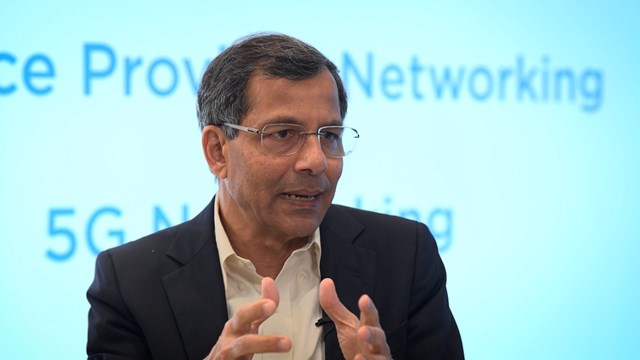
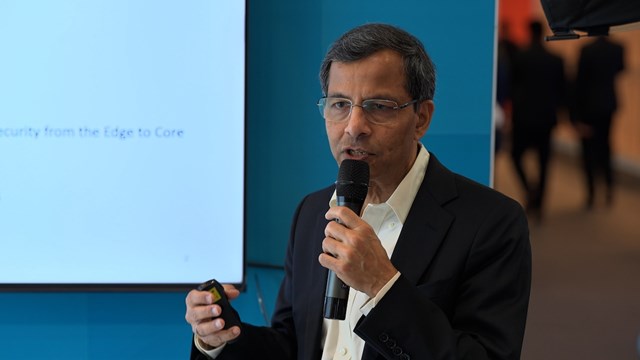
Cayetano Carbajo of Telefónica and the NGMN Alliance explores the importance of automation, the flexibility of service delivery, the integration of AI, and the adoption of cloud-native technologies as telecom operators transition from traditional communication services to digital service providers.
To see highlights from the NGMN at FYUZ25, click here.
Recorded November 2025
Email Newsletters
Sign up to receive TelecomTV's top news and videos, plus exclusive subscriber-only content direct to your inbox.