With Artificial Intelligence (AI) adoption skyrocketing across enterprises and individual users worldwide, there is a growing realization in the telecom industry and that the emerging AI-driven traffic places higher demands on the network.
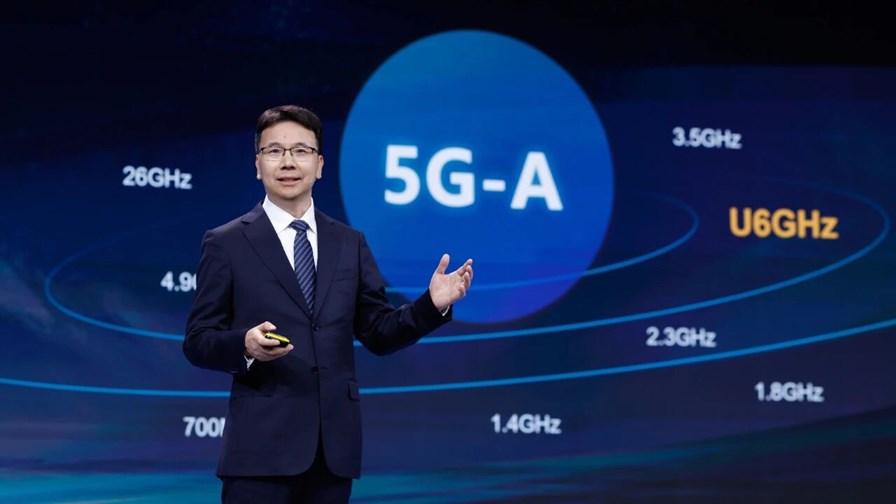
“The intelligent era is approaching fast. New AI applications are emerging every day, and so it is time for the industry to come together to unleash the full potential of 5G-A,” said Yang Chaobin, CEO of Huawei’s ICT Business Group, while delivering a keynote speech during the Mobile World Congress 2026.
5G-Advanced (5G-A) is emerging as a clear pathway to evolve the network. Positioned as the next evolutionary step of 5G, 5G-A is expected to help service providers address the massive growth in AI-led traffic without impacting performance.
AI traffic reshapes mobile networks
According to GSMA, by some estimates, AI-led data traffic is likely to lead to a threefold increase in cellular data traffic by 2030 compared to 2024 base. Yang mentioned that the number of tokens consumed daily has grown by 300 times over the last two years.
The growing popularity of AI tools and applications creates massive opportunities for service providers. However, realizing this potential depends on the evolution of the network infrastructure to effectively support the rising volume and complexity of AI-driven traffic.
AI-generated traffic is fundamentally different from typical mobile traffic. Traditionally, mobile networks have been designed for more downlink consumer traffic, such as video streaming. However, AI inference traffic is prone to sudden spikes, is request-response intensive, and requires millisecond-level response times.
“In the low-growth scenario, the downlink remains predominant at around 85% of total traffic, with uplink at 15%. However, in the medium- and high-growth scenarios, the share of uplink increases to around 25% and 35%, respectively, by 2040,” says a GSMA report, Vision 2040, while offering three scenarios for future growth of traffic on mobile networks. “Such a shift would have important implications for spectrum planning, as uplink and downlink capacity requirements must be balanced through appropriate frequency allocations and network design,” it adds.
This means the existing networks may not be able to address the demands of surging AI traffic, preventing enterprises and individuals from realizing the complete potential of AI technology. While 5G has significantly improved mobile broadband performance, most commercial deployments today remain constrained in ways that limit their ability to support AI-driven traffic at scale.
Uplink speeds continue to be far below peak downlink performance, creating challenges for uplink-intensive applications such as AI inference and XR streaming.
5G-A: Bridge to the AI era
With 6G standards not expected to be finalized until 2029, the next five years provide a crucial window for service providers to evolve their networks to meet the AI-driven requirements.
“The industry needs to unlock the potential of 5G-A technologies and leverage new spectrum values, such as U6 GHz, to meet real-world needs while laying the foundation for 6G evolution,” suggested Yang.
5G-A is the next step in the evolution of 5G technology and is a stepping stone to 6G. It is designed for ultra-low latency and high uplink capacity, which are critical to derive value from real-time AI inference.
“Compared to 5G, 5G-A delivers a significant improvement: downlink speed will increase from 1 Gbps to 10 Gbps, and uplink, which today is similar to 4G, will surge to 1 Gbps. 5G-A also introduces new IoT [Internet of Things] technologies like RedCap and Passive IoT, enabling a fully connected world,” explained Yang. 5G-A has been deployed in over 300 cities and has 70 million subscribers globally.
While existing frequency bands, such as n41, n78 and n79, are helping in the large-scale deployment of 5G-A, the introduction of new bands, particularly U6 GHz (Upper 6GHz), is also crucial for the growth of 5G-A. The U6 GHz band is not just helping service providers with improved capacity and coverage, but is also critical for supporting uplink-intensive services such as immersive XR, industrial digital twins and real-time AI usage, at scale. 3GPP standards on 5G-A standards support this spectrum band.
Unlike millimetre wave, which requires dense small-cell deployment due to propagation constraints, U6 GHz can provide higher capacity density while maintaining comparable coverage to existing mid-band spectrum. Several countries, including the United Arab Emirates and China, have released U6 GHz spectrum. Availability of chips and terminals implies that the U6 GHz ecosystem is developing quickly.
“In the next five years, we must work together to meet the demands of AI services through the large-scale commercialization of 5G-A. This will also allow for early validation of more use cases and scenarios, building the foundation for 6G after 2030,” urged Yang.
Huawei is creating AI-Centric Network solutions to enable intelligent services, networks and network elements to fast-track the large-scale deployment of Level-4 autonomous networks.
Beyond performance and capacity, Yang raised the concern that the rapid expansion of AI services risks widening the digital divide. He urged the industry to adopt inclusive connectivity strategies, such as diversified frequency-band combinations and more cost-effective solution design, to serve the underserved regions. Huawei has rolled out its RuralStar solutions to expand mobile access to over 170 million people in 80 countries.
Email Newsletters
Sign up to receive TelecomTV's top news and videos, plus exclusive subscriber-only content direct to your inbox.